Business
Book on business development documentation
- Fundraising
- Fundraising Tracker
- Recoverable Grant Term Sheet - 50k Example
- Google for Startups Accelerator –Application
- Google.org Impact Challenge: AI for Government Innovation
- Sezibwa Homes
- Microgrid Design
- Budget - Phase 1: Sezibwa Homes
- Site Layout
- Procurement Pictorial
- Monthly Finances
- Sezibwa Site Plan for Phase 2
- Ownership (Membership)
- Phase 1 Pictorial
- Customer Registry
- Inspection Document
- Welcome Note to Customers
- Outage log
- Phase 1.1
- Phase 2.0
- PDU layout
- Nansana Community Microgrid Pilot
- Microgrid Cabinet Line Diagram
- Business Model
- Business Models for the NFE Microgrid OS
- Solar Plus Battery Economic Case (Sezibwa)
- Battery Arbitrage Economic Case (Sezibwa)
- Optimal Solar and Battery Allocation (Sezibwa)
- Battery Price Break-Even (Sezibwa)
- NFE Commercial Reliable Power Microgrids
- NFE Commercial RPM Finance Glossary
- Solar Sizing Re-run, Sept 2026 (600 Wp panels)
- Potential Customers
Fundraising
Fundraising Tracker
| Name | Type | Priority | Status | Owner | Remarks |
| Arinda Family | Recoverable Grant | High | 1k Contributed | ||
| Kimbowa Family | Recoverable Grant | High | Offered 1k USD, not yet contributed | ||
| Tushabe Family | Recoverable Grant | High | 10k USD Contributed on Dec 1st 2024 |
Added an addition ~1800 USD in October 2025 | |
| Mercy Corp Ventures | Equity |
medium |
Reviewed the deck in May 2025.
Requested to be added to investor newsletter |
Aaron Tushabe | We are no longer pursuing equity funders because as a co-op, we don't have equity to offer. |
| Energy Sector Management Assistance Program - ESMAP (World bank) | Grant | medium | |||
| Recoverable Grant | high | Submitted on October 7th 2025 |
Aaron Tushabe | Waiting for feedback in March 2025 | |
| Grant | high | Closed for 2025, planning to apply for 2026. Not sure when it opens again | Aaron Tushabe | ||
| Grant | |||||
| Grant + Debt | |||||
| Grants + Debt | high | Send an email to info@africa50.com on August 23rd. | Aaron Tushabe | ||
|
No open applications yet
https://beyondthegrid.africa/funding-rounds/ |
|||||
| Grants | |||||
| Debt | Needs at least 2 years of business to pass loan application | Aaron Tushabe | |||
| low | Focusing on power for remote and off grid communities so no aligned with our early stage objectives |
||||
| Equity | We are no longer pursuing equity funders because as a co-op, we don't have equity to offer. | ||||
|
Kiva.org |
Debt | Check back on August 15th | |||
| Digital Africa | ? | Applied on June 17th 2025. Waiting for Feedback | Aaron Tushabe | ||
| Aquarious Foundation | Grant or Debt | Applied on June 17th 2025. Waiting feedback | Aaron Tushabe | ||
| Start-coop | Grant |
Applied on June 18th.
We did not qualify because we are not (yet) based in North America |
Aaron Tushabe | Expect $5k to $50k | |
| LabStart | Grant |
Submitted application on July 7th. Not Accepted |
Aaron Tushabe | ||
| CataCap | Grant / DAF | medium | Aaron Tushabe | ||
| Mission300 | Grant? | Aaron Tushabe | |||
| Energy IoT Open Source | Grant | Pledged 3k by Arila Barnes (founder and CEO) | Aaron Tushabe | Received 2.8k in April 2026 | |
| Project Spark EU | Grant | high |
Submitted on September 15th 2025 with EnAccess and The Gym Rwanda |
Aaron Tushabe | Got feedback on Nov 21st 2025 that we did not meet the eligibility criteria but they didn't elaborate on which criteria |
| AMAP | medium |
|
|||
| Praxis | High |
Submitted on September 20th 2025. |
Aaron Tushabe | We did not get in. They thought we were among the top applicants and recommended we apply again next year. | |
| UGEFA | medium |
|
Aaron Tushabe / Dansturn | Requires 2+ years of operations so we would need to apply via green volta | |
| Green Volta | Recoverable Grant | high |
Waiting on Budget from NFE to confirm how much they can contribute |
Dansturn | |
| Samuel Tondo | Recoverable Grant | high |
Waiting on Budget from NFE to confirm how much they can contribute |
||
| Digital Energy Challenge | Grant | high |
Waiting on Call for Applications to open up in March 2026 |
Aaron Tushabe | |
| D-Prize | Grant | high |
Opens October 13th |
Aaron Tushabe | Submitted on October 28th 2025, expecting to hear back in 4 to 6 months |
| MSISV | Grant and Equity | high |
Email sent on Oct 16th 2025 to find out when applications will be open again |
Aaron Tushabe | |
| Sunbird AI | Fellowship |
They are offering a research program that could help us develop V1 of our autonomous microgrid |
Aaron Tushabe | ||
| Grant | low |
No links to getting involved |
Aaron Tushabe | ||
| Donations | medium |
EIoT can service as a fiscal sponsor to receive tax deductible US donations on our behalf. |
Need to register a US entity for this | ||
|
Funding Hope |
Crowd funding | medium |
|
Aaron Tushabe | |
| Grant matching | medium |
Uganda not eligible right now |
Aaron Tushabe | Closes Dec 31 2025 | |
|
Carbon Credits |
low |
Initial meeting with Ashaba told us that this is going to be a long lead time option to explore.. at least 7 years before any credits are verified and bankable |
Aaron Tushabe | ||
| high |
Focusses on post pilot, pre-scale. I think we are not yet post pilot |
Aaron Tushabe |
Recoverable Grant Term Sheet - 50k Example
1. Grantor (Funder):
Green Future Foundation (GFF)
2. Grantee (Recipient):
Nearly Free Energy Co-op (NFE)
3. Purpose of Grant:
To fund the capital expenditure and initial setup of a 20 kW solar microgrid serving 50 households in [Community Name], Uganda.
4. Grant Amount:
$50,000 USD
5. Disbursement Schedule:
-
40% upfront upon signing agreement
-
30% upon installation of core infrastructure
-
30% upon commissioning and first billing cycle
⚖️ 6. Recoverability Clause (Repayment Terms):
|
Trigger |
Repayment Terms |
|---|---|
|
If the microgrid achieves ≥ $1,000/month in net revenue for 6 consecutive months within 3 years |
Grantee repays the full grant amount over 4 years, at 0% interest |
|
If the project is not commercially viable by year 3 (e.g., < $1,000/month in net revenue) |
No repayment is required |
|
If the grantee secures follow-on grant investment of > $100,000 |
Grantee repays full grant or 10% of the investment value, whichever is lower |
7. Use of Funds:
-
Solar panels, batteries, smart meters, inverters
-
Site preparation and installation labor
-
Community training and billing setup
- Product development for Microgrid OS
8. Reporting Requirements:
Quarterly reports for 3 years on:
-
Energy generated and distributed
-
Financial performance
-
Number of customers served
-
Maintenance issues and resolutions
9. Intellectual Property (IP):
All software or monitoring systems developed under this project must remain open-source and licensed under AGPL or GPL or any other Free Software license
10. Dispute Resolution:
Mediation first, then arbitration in Uganda under the Uganda Centre for Arbitration and Dispute Resolution (CADER).
Google for Startups Accelerator –Application
1. Applicant Contact Information
-
What is your full name (first and surname)?
-
Your Business/Company Email Address
-
What is your role?
-
Preferred Contact Number
-
Contact Number Type
4. Additional Information
-
Why are you interested in joining this program? How can Google help?
Response:
Nearly Free Energy builds community-owned microgrids to deliver affordable, reliable electricity in underserved communities. Our mission is to lower energy costs while improving resilience through decentralized systems.
As we scale beyond pilots, we are increasingly using software and AI for distribution, forecasting, billing, and reliability. Google can help us accelerate this by enabling scalable microgrid OS development on GCP with advanced analytics and AI.
-
How did you hear about this program?
Response:
LinkedIn startup and AI founder community.
-
If selected, are you interested in participating in possible interviews with local press outlets, as requested?
Response:
Yes.
-
Please list any past accelerator or startup program participation.
Response:
Please list links to any press coverage, awards or nominations.
n/a
https://enaccess.org/open-source-energy-access-community-showcase-with-aaron-tushabe/
-
Do you want to receive updates or communication from the Accelerator program about other programs within Google?
Response:
Yes.
5. AI & Technology
-
How is your company primarily leveraging AI?
Response:
We are building AI as an intelligent grid operator for our microgrids—optimizing distribution, forecasting demand, managing battery dispatch, and detecting anomalies. We are also developing agents to automate support, billing, and outage notifications.
-
What are the key 1–3 challenges that your company is facing in adopting AI?
Response:
(1) Limited high-quality real-time energy data; (2) Integrating AI with physical infrastructure and edge devices; (3) Cost-efficient deployment in low-resource environments.
-
What kind of data does your AI model use?
Response:
Energy consumption data; meter readings; system performance data; environmental and load patterns.
-
What data do you use as part of your AI solution?
Response:
Smart meter data, usage logs, battery and solar performance data, and system telemetry.
-
How would you categorize your product?
Response:
AI-enabled energy infrastructure platform.
-
Do you have a dedicated AI team?
Response:
Cross-functional team with growing AI specialization.
-
In 2 sentences, explain what problem you are solving with AI.
Response:
Energy systems lack real-time intelligence to manage distributed supply, storage, and demand, leading to outages and inefficiency. We use AI as a grid operator to optimize distribution, forecast demand, manage storage, and automate customer interactions.
-
AI maturity
Response:
Early production-stage AI with live data pipelines and initial models in deployed microgrids, transitioning toward autonomous operations.
-
What kind of AI does your product use?
Response:
Currently AI-assisted development; roadmap includes predictive analytics, time-series forecasting, and optimization models for demand, dispatch, and anomaly detection.
-
Cloud platform
Response:
Google Cloud Platform (GCP).
-
Which Google products are you using?
Response:
GCP (Compute Engine, Cloud Run, Cloud Storage) and BigQuery.
-
Do you use AI/ML today?
Response:
Yes—AI-assisted development and early data-driven monitoring, with planned rollout of forecasting, optimization, and automated operations.
-
System architecture
Response:
Edge devices (smart meters via RS-485/Modbus) feed data to local controllers, then to GCP (Cloud Run, Storage). BigQuery supports analytics. We are adding AI for forecasting, anomaly detection, and optimization within a modular microgrid OS.
-
Accelerator goal
Response:
Build an AI-driven microgrid OS that autonomously balances supply/demand, forecasts load, optimizes battery use, and manages operations. This includes agent workflows for forecasting, anomaly response, billing, support, and outage alerts, targeting improvements in uptime, cost/kWh, and customer experience.
6. Traction & Financials
-
Investors
Response:
Founder, friends, and family.
-
MRR
Response:
~$120–$150 MRR from a live pilot (~UGX 450,000–550,000/month), with expansion pipeline.
-
Revenue source
Response:
Electricity sales (NFE-owned) plus upcoming SaaS fees and revenue share from partner-owned microgrids.
7. Product & Market
-
Stage
Response:
Live pilot with revenue (10 customers) and active expansion pipeline.
-
Customer
Response:
Primary: developers, landlords, and community operators. End users: residents benefiting from reliable power, automated billing, and improved service.
-
Customers now
Response:
10 paying customers on a live pilot microgrid, with expansion pipeline.
-
Business model
Response:
(1) NFE-owned: revenue from electricity sales; (2) Partner-owned: SaaS fee per connection + % of energy sales; plus maintenance and value-added services.
-
Industry
Response:
Energy / Climate Tech
-
Verticals
Response:
Climate tech; energy infrastructure; smart grids.
-
Company description
Response:
Nearly Free Energy advances energy resilience, reliability, and abundance through community-owned solar and battery-backed smart microgrids. Grid-connected systems improve stability by managing peak load.
-
Problem
Response:
Electricity is unreliable, costly, and lacks real-time intelligence. Peak demand strains grids, while communities lack local control.
-
Solution
Response:
Grid-connected, community-owned microgrids with an AI-driven OS that optimizes distribution, manages peak load, automates operations, and improves reliability and cost.
8. Team
-
Full-time founders
Response:
1
-
Founder
Response: Aaron Tushabe – Co Founder
Hillary Arinda - Co founder
Dansturn Kimbowa - Co Founder
-
Employees
Response: 2
9. Uploads
-
Pitch deck
Response:
[]NFE Pitch - Funders.pdf
-
Links
Response:
N/A
-
Photos
PXL_20251217_100220589~2.jpg
[PENDING]
-
Logo
Response:
NFE site logo.png
10. Consent
-
Submit
-
Communications
Google.org Impact Challenge: AI for Government Innovation
Nearly Free Energy (NFE) – Draft Application
I. Organization and Submitter Info
1. Organization Name
Nearly Free Energy
2. Country
Uganda (with operations expanding to East Africa and pilot work in the United States)
3. Classification
Social Enterprise
4.a Founded
2024
4.b Annual Budget (USD)
~$50,000 (early-stage, pilot operations)
4.c Full-time Employees
2
5.a Website
https://nearlyfreeenergy.com (or placeholder)
6. Google.org funding before
No
8. Primary Contact
Aaron Tushabe – Co-Founder
II. Impact
11. Project Name
AI-Powered Distributed Grid Intelligence for Public Infrastructure
12. Topics
Resilience; Economy (public infrastructure and affordability)
13. Geographic Scope
County / Municipal; National (scalable)
14. Regions
EMEA; North America
15. Stage
Prototype (live pilot with paying users)
16. Problem Statement
16.a
Public electricity systems in rapidly growing urban and peri-urban areas are increasingly unreliable, expensive, and unable to manage real-time demand fluctuations. Utilities lack visibility into distributed consumption and have limited tools to optimize load, leading to frequent outages, inefficient infrastructure investment, and constrained economic activity.
16.b
This project directly affects grid load balancing, demand forecasting, outage response, and infrastructure planning workflows within utilities and regulatory bodies. It introduces real-time decision support and automation into how public electricity systems are monitored, managed, and optimized.
16.c
The challenge is significant and growing at a global scale. In 2013, approximately 1 billion people lacked access to electricity, with another 1 billion connected to unreliable grids. By 2023, global electrification efforts reduced those without access to ~600 million, but the number of people connected to unreliable grids has surged to an estimated 3 billion. In South Africa, recurring load shedding disrupts economic activity and essential services, while in Lagos, Nigeria, widespread reliance on 24/7 diesel generators drives high costs and severe air pollution. These trends highlight a critical gap: expanding access alone is not enough—there is an urgent need to improve reliability through intelligent, flexible grid systems.
17. Proposed Solution
17.a
We are building an AI-powered distributed grid intelligence platform that serves as a real-time control layer for national electricity systems—turning community-scale microgrids into coordinated assets that improve reliability, reduce peak demand, and expand affordable access.
17.b
The platform integrates smart meter and telemetry data (RS-485/Modbus), edge controllers, and GCP (Cloud Run, BigQuery) with AI models for time-series forecasting, demand optimization, anomaly detection, and agentic workflows. These AI agents continuously analyze grid conditions and autonomously trigger actions such as battery dispatch, demand response, outage alerts, and customer support, enabling dynamic, real-time system optimization.
17.c
We have demonstrated feasibility through a live pilot microgrid with paying users, where we collect real-time energy data and operate a working system that improves uptime, visibility, and load balancing. Early results show smoother demand curves and reduced dependence on unstable grid supply.
17.d
To ensure adoption, we are designing the platform as a government-integrated system with dashboards, APIs, and reporting aligned to utility workflows such as grid planning, outage management, and demand response. We are engaging regulators and utilities to enable distributed energy resources to function as coordinated grid assets within national systems.
18. End Beneficiaries
18.a
Urban and peri-urban households, small businesses, utilities, and regulators.
18.b
We incorporate feedback through pilot deployments, user billing data, and direct engagement with communities and operators.
18.c
Initial reach: hundreds of users, scaling to tens of thousands across multiple deployments over 36 months.
19. Expected Outcomes
19.a
Improved electricity reliability, reduced outages, and more efficient grid utilization.
19.b
Metrics: uptime, cost per kWh, peak load reduction, customer satisfaction.
19.c
Failure signals: no measurable improvement in reliability, low adoption by utilities, or inability to integrate with existing workflows.
19.d
Expected improvements include 20–40% reduction in peak load stress and significant improvements in uptime.
19. Expected Outcomes
19.a
This solution will improve public electricity services by increasing reliability, reducing dependence on diesel generation, and enabling governments and utilities to manage distributed energy resources as coordinated grid assets. It will expand access to clean, affordable, and reliable electricity while improving planning and operational efficiency.
19.b
Key metrics include: number of people with improved reliable electricity access; MWh of distributed energy storage deployed; reduction in peak grid load (%); uptime improvements (%); reduction in diesel generator usage; and number of utilities/regulators actively using platform data for planning.
19.c
Failure indicators include: inability to scale deployments; low adoption by utilities or regulators; no measurable improvement in reliability or peak load reduction; or lack of engagement from DER operators and ecosystem partners.
19.d
Within 12 months, we aim to enable deployment of at least 1 MWh of distributed energy storage across Africa through direct deployments and partner-led adoption. Within 36 months, we target improving access to reliable, clean electricity for at least 1 million people by scaling autonomous microgrids and supporting an open ecosystem of DER operators using our platform.
III. Innovative Use of Technology
21. Why is your proposed solution necessary to address the problem versus currently available alternatives?
Current approaches either expand centralized grid capacity (slow, capital-intensive) or deploy isolated off-grid systems (limited coordination, no grid support). Existing tools lack real-time, system-wide intelligence and cannot integrate distributed energy resources (DERs) into utility operations. Our solution introduces an AI-driven control layer that coordinates microgrids as grid assets—enabling forecasting, automated dispatch, and demand response. This uniquely improves reliability at scale, reduces peak stress without new generation, and provides governments with actionable, real-time planning data.
20. Technologies
GCP (Cloud Run, BigQuery), smart meters, edge computing, time-series AI models, optimization algorithms.
21. Why needed
Existing systems lack real-time intelligence and integration of distributed energy resources.
22. Dataset
Yes
23. Data access
Through smart meters, utility collaboration, and anonymized operational data.
24. Ethics
We use anonymized data, ensure transparency, and align with responsible AI principles.
25. Open source
Yes
26. How might you leverage Google's pro bono technical support and expertise to accelerate project outcomes?
We will leverage Google’s AI and cloud expertise to build and scale our distributed grid intelligence platform. Specifically, we seek support in developing robust time-series forecasting and optimization models, designing agentic AI workflows for autonomous grid operations, and optimizing our architecture on GCP (BigQuery, Cloud Run) for real-time data processing at scale. We also aim to learn from Google’s experience operating highly reliable, large-scale infrastructure (e.g., data centers) to inform how we design resilient, fault-tolerant energy systems. Additionally, we would benefit from guidance on responsible AI deployment, model evaluation, and integration with public sector data workflows to ensure reliability, scalability, and government adoption.
We will leverage Google’s AI and cloud expertise to build and scale our distributed grid intelligence platform. Specifically, we seek support in developing robust time-series forecasting and optimization models, designing agentic AI workflows for autonomous grid operations, and optimizing our architecture on GCP (BigQuery, Cloud Run) for real-time data processing at scale. We would also benefit from guidance on responsible AI deployment, model evaluation, and integrating our system with public sector data workflows to ensure reliability, scalability, and government adoption.
AI model optimization, scaling infrastructure, and system architecture design.
IV. Feasibility
27. Why is your organization uniquely positioned to lead this project?
Nearly Free Energy uniquely combines hands-on microgrid deployment with AI-driven software development in emerging markets. We operate a live pilot with real users and data, giving us practical insight into grid constraints, customer behavior, and operational challenges. Our team spans energy systems, embedded hardware, and cloud/AI engineering, enabling end-to-end execution from meters to models. We are also actively engaging regulators and utilities on DER policy and integration, positioning us at the intersection of infrastructure, data, and government adoption—where this problem must be solved.
29. Describe the work you have done to demonstrate the technical feasibility of your approach.
We have deployed a live pilot microgrid with ~10 paying customers, instrumented with smart meters (RS-485/Modbus) and cloud ingestion to GCP (Cloud Run, BigQuery). We collect continuous telemetry (kWh, voltage, load profiles) and run initial analytics for load visibility and anomaly detection. We have tested controlled battery dispatch to smooth peak demand and validated end-to-end data pipelines (edge → cloud → dashboards). Success metrics include sustained data uptime (>95%), accurate load measurement, improved peak smoothing on pilot circuits, and reliable billing/alert workflows. These results demonstrate feasibility of real-time data-driven operations and AI-assisted optimization.
30. Key technical risks, dependencies, maintenance, and mitigation strategies
Key risks include hardware integration variability, intermittent connectivity, data quality gaps, and model performance in low-data environments. Adoption depends on utility/regulatory alignment and integration with existing workflows. Ongoing needs include device maintenance, data pipeline reliability, and model monitoring. Mitigations: modular, standards-based design (Modbus/REST); offline-first edge control with local fallbacks; redundancy and buffering for connectivity; continuous data validation and monitoring; phased model rollout with human-in-the-loop; training and SLAs with partners; and close coordination with regulators/utilities to ensure smooth integration and sustained operations.
31. Policy, administrative, privacy, and logistical risks and mitigation
Policy risk: delays or uncertainty in DER interconnection and PPA frameworks. Mitigation: early engagement with ERA/utility stakeholders, alignment to existing codes, and pilot-based regulatory sandboxes.
Administrative risk: slow procurement/adoption within public entities. Mitigation: lightweight pilots, clear ROI metrics, and integration with existing workflows and reporting.
Privacy/data risk: handling consumer energy data. Mitigation: data minimization, anonymization, role-based access, encryption in transit/at rest, and compliance with local data protection laws.
Logistical risk: installation/maintenance at scale. Mitigation: standardized hardware kits, local partner installers, remote monitoring, and SLA-driven support.
32. How will public servants be trained, supported, and incentivized to adopt and use this solution as part of their regular workflows?
Government entities are not primary users of the platform; their role is to create enabling regulatory frameworks that build trust in DER operators. We will support regulators through targeted briefings, data-sharing dashboards, and policy workshops that translate system insights into actionable regulation. By providing clear visibility into demand patterns, grid impact, and reliability improvements, we enable regulators to confidently design and enforce DER policies. Incentives for adoption come from improved oversight, better planning data, and the ability to expand reliable electricity access without additional public infrastructure investment.
33. Provide additional detail about 3-5 key project team members, especially those in technical roles.
Microgrid/Energy Systems Engineer – designs and operates DER systems, battery dispatch, and grid integration.
Backend/Cloud Engineer – builds scalable data pipelines and APIs on GCP (Cloud Run, BigQuery).
Data Scientist/ML Engineer – develops forecasting, optimization, and anomaly detection models.
Embedded/IoT Engineer – integrates smart meters (Modbus/RS-485) and edge controllers.
Operations/Deployment Lead – manages field installation, partner coordination, and system reliability at scale.
Policy & Partnerships Lead – drives regulatory engagement (e.g., ERA), supports DER policy development, secures government buy-in, and enables partner operators in new markets to navigate regulation and scale deployments.
VI. Scalability
36. Based on your previous selection, detail how you’d replicate success beyond your initial proposal.
We will scale through a dual approach: direct deployments and an open ecosystem model. We will standardize our microgrid architecture (hardware + AI software) into repeatable deployment kits and publish the platform as open source, enabling local DER operators to adopt and deploy in their markets. We will partner with utilities and regulators to integrate these systems into national grids, creating a coordinated network of distributed assets. As we scale, we will expand our team across engineering, partnerships, and operations to support multi-country deployments and ecosystem growth.
37.a Financial sustainability
Sustained via electricity sales (10–30% gross margins) from NFE-owned microgrids, plus SaaS fees and revenue share from partner-operated systems. As deployments scale, recurring revenues from energy and platform services cover operations, maintenance, and continued expansion without grant funding.
37.b Technical sustainability
Cloud-native architecture on GCP with automated monitoring and CI/CD; offline-capable edge controllers ensure resilience. Open-source platform enables contributions from partners/operators. Standardized hardware kits and SLAs support maintenance, while local partners handle installation and support at scale.
38. What key learnings, datasets, models, codebases, or other artifacts will your project generate, and how will you share them with other organizations to help advance the field?
We will generate real-world energy datasets (anonymized usage, demand response, grid performance), AI models for forecasting and optimization, and an open-source microgrid OS. Our company culture is to work in the open—we already publish our work via our website and public wiki (nearlyfreeenergy.com; bookstack.nearlyfreeenergy.com). We will continue sharing code, documentation, and operator playbooks to enable other DER operators and governments to replicate and build on our approach globally.
VII. Project Budget and Timeline
41. Funding Request
$2,500,000
42. Personnel & Staffing — $600,000
Covers salaries for core team: AI/ML engineers, backend/cloud engineers, energy systems engineers, and operations staff. Includes hiring additional technical talent to build forecasting, optimization, and agentic AI systems, as well as project management and field deployment coordination.
43. Technology Development — $300,000
Development of AI models (forecasting, optimization), software platform (microgrid OS), APIs, dashboards, and data pipelines. Includes costs for software engineering, model training, testing, and integration with edge devices and utility systems.
44. Infrastructure & Deployment — $1,900,000
Procurement and deployment of smart meters, edge controllers, and battery-integrated systems for pilot and scale-up sites. Battery storage is a primary cost driver, with an estimated requirement of ~1.5 kWh per household at approximately $450 per kWh deployed. This category covers battery capacity, installation materials, field operations, connectivity, and cloud infrastructure (GCP compute, storage, and data processing).
45. Partnerships & Ecosystem Growth — $150,000
Government engagement, regulatory workshops, and partnership development with utilities and DER operators. Includes ecosystem-building activities, training sessions, and support for onboarding partners to deploy and operate microgrids using the platform.
46. Monitoring, Evaluation & Overhead — $50,000
Measurement of impact metrics (uptime, peak reduction, access), reporting, and program evaluation. Includes minimal indirect costs such as administration, coordination, and compliance (kept under 5%).
Sezibwa Homes
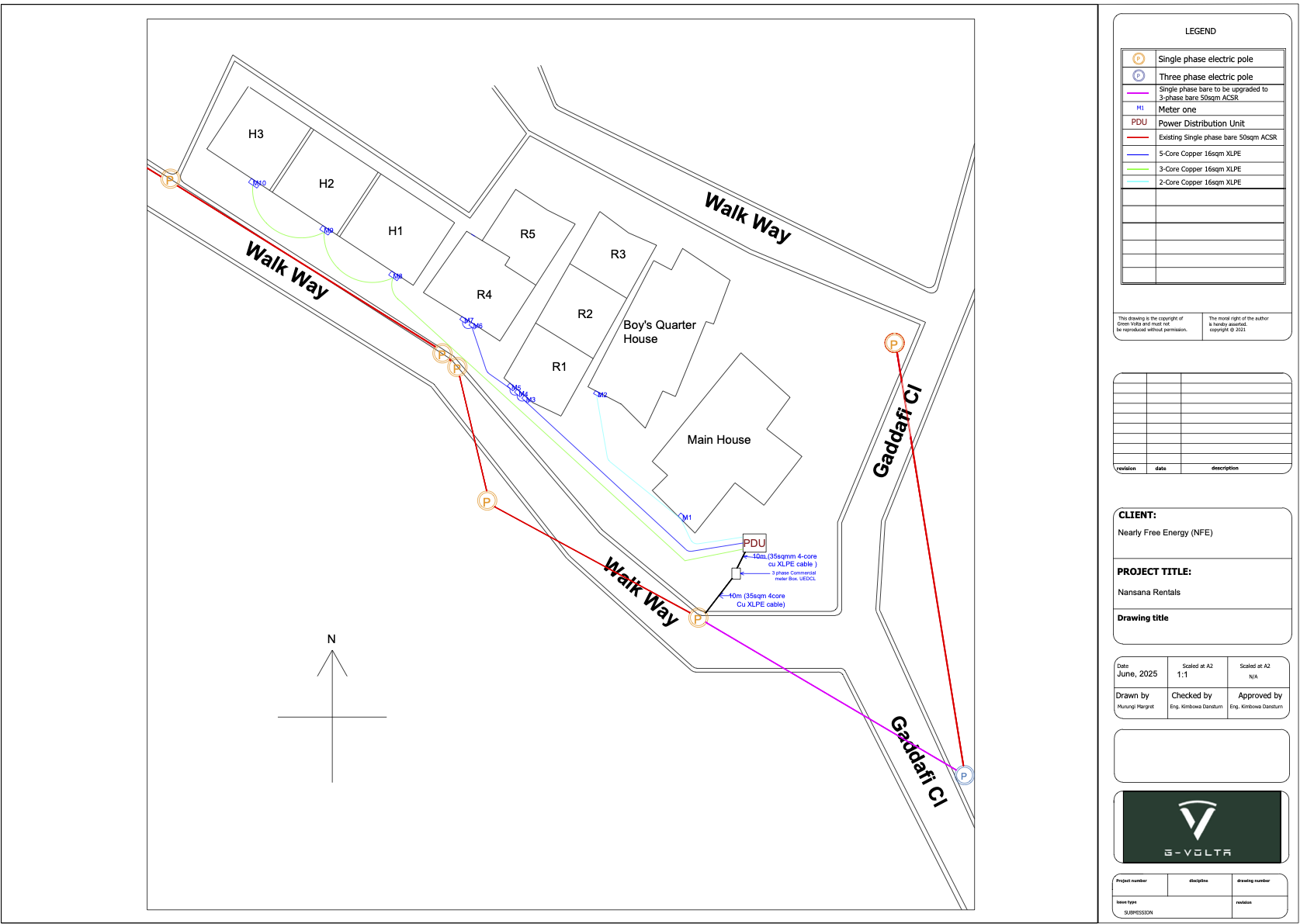
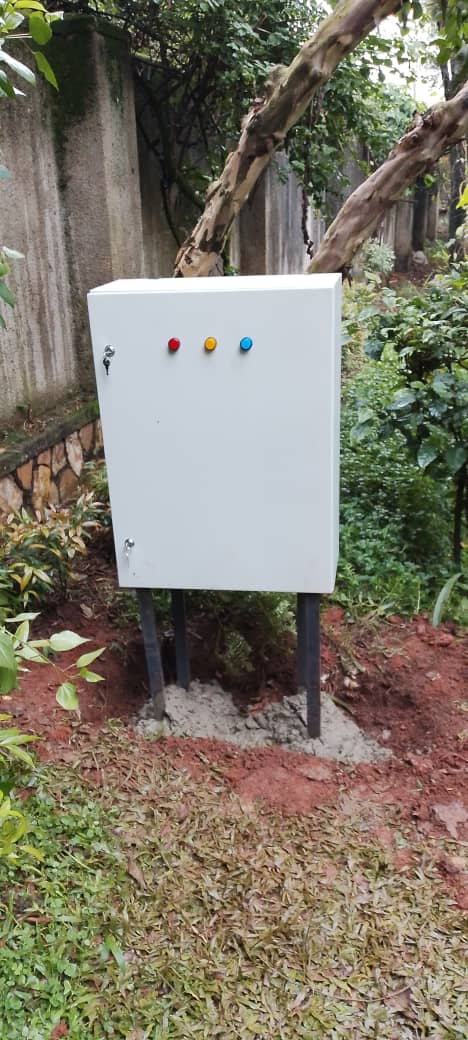
This is a community of 10 homes in Nansana, Gadaffi close. It is the location of NFE's first Reliable Power Microgrid (RPM) in Uganda
Microgrid Design

Budget - Phase 1: Sezibwa Homes
Realtime financials tracked via open collective here: https://opencollective.com/nfe/projects/sezibwa-homes-nfe-pilot
| Bill of Quantity NFE-Nansana | ||||||
| S/No | Item | Specifications | Quantity | SI Unit | Rate(UGX) | Amount (UGX) |
| 1 | Enclosure box for the PDU | 80cm*60cm*25cm | 1 | box | 550,000 | 550,000 |
| 2 | Single phase MCCB | 160A ABB | 3 | pc | 120,000 | 360,000 |
| 3 | Three phase Smart meter | 80A Chint | 1 | pc | 400,000 | 400,000 |
| 4 | Busbars (Red, Yellow, Blue, Black and Green Yellow) | 200A | 5 | pc | 150,000 | 750,000 |
| 5 | Circuit breakers | 80A | 10 | pc | 30,000 | 300,000 |
| 6 | Enclosure Trunkings (Slotted grey truncking) | 2 | pc | 30,000 | 60,000 | |
| 7 | Din rail | 1 | pc | 10,000 | 10,000 | |
| 8 | Self tapping screws | 0.5" | 1 | pkt | 35,000 | 35,000 |
| 9 | Cable lugs ring | 16mm pin | 18 | pc | 3,000 | 54,000 |
| 10 | Cable lugs ring | 25mm ring | 18 | pc | 5,000 | 90,000 |
| 11 | Sleeves | 25mm | 2 | m | 5,000 | 10,000 |
| 12 | Sleeves | 16mm | 2 | m | 3,000 | 6,000 |
| 13 | Flexible Cable Red | 25mm | 2 | m | 15,000 | 30,000 |
| 14 | Flexible Cable Blue | 25mm | 2 | m | 15,000 | 30,000 |
| 15 | Flexible Cable Yellow | 25mm | 2 | m | 15,000 | 30,000 |
| 16 | Flexible Cable Red | 16mm | 4 | m | 8,000 | 32,000 |
| 17 | Flexible Cable Yellow | 16mm | 4 | m | 8,000 | 32,000 |
| 18 | Flexible Cable Blue | 16mm | 4 | m | 8,000 | 32,000 |
| 19 | Flexible Cable Yellow Green | 10mm | 2 | m | 5,000 | 10,000 |
| 20 | Flexible Cable Black | 2.5mm | 2 | m | 1,500 | 3,000 |
| 21 | Flexible Cable Green | 2.5mm | 2 | m | 1,500 | 3,000 |
| 22 | Flexible Cable | 2.5mm | 2 | m | 1,500 | 3,000 |
| 23 | Communication Cable | 1.5mm | 6 | m | 1,500 | 9,000 |
| 24 | Indicator lamps | 230V | 3 | pc | 5,000 | 15,000 |
| 25 | Double Socket | Pcs | 1 | pc | 10,000 | 10,000 |
| 26 | Insulating tape | Pcs | 5 | pc | 3,000 | 15,000 |
| 27 | Pin lugs 25sqmm for different colours | Pkt | 1 | 4,000 | 4,000 | |
| 28 | Pin lugs 16sqmm for different colour | pkt | 1 | 3,000 | 3,000 | |
| 29 | Airal Cable | 35sqmm ABC Cable | 100 | m | 15,000 | 1,500,000 |
| 30 | IPC | 35-70sqmm | 8 | EA | 6,000 | 48,000 |
| 31 | Armoured Cable | 25qmm | 10 | m | 65000 | 650,000 |
| 32 | UEDCL 3phase Commercial Meter | TOU Code 10.2 | 1 | EA | 3,500,000 | 3,500,000 |
| 33 | Service Cable | 16sqmm 2 Core cable | 30 | m | 15,000 | 450,000 |
| 34 | Service Cable | 16sqmm 3 Core cable | 150 | m | 30,000 | 4,500,000 |
| 35 | Service Cable | 16sqmm 5 Core cable | 100 | m | 50,000 | 5,000,000 |
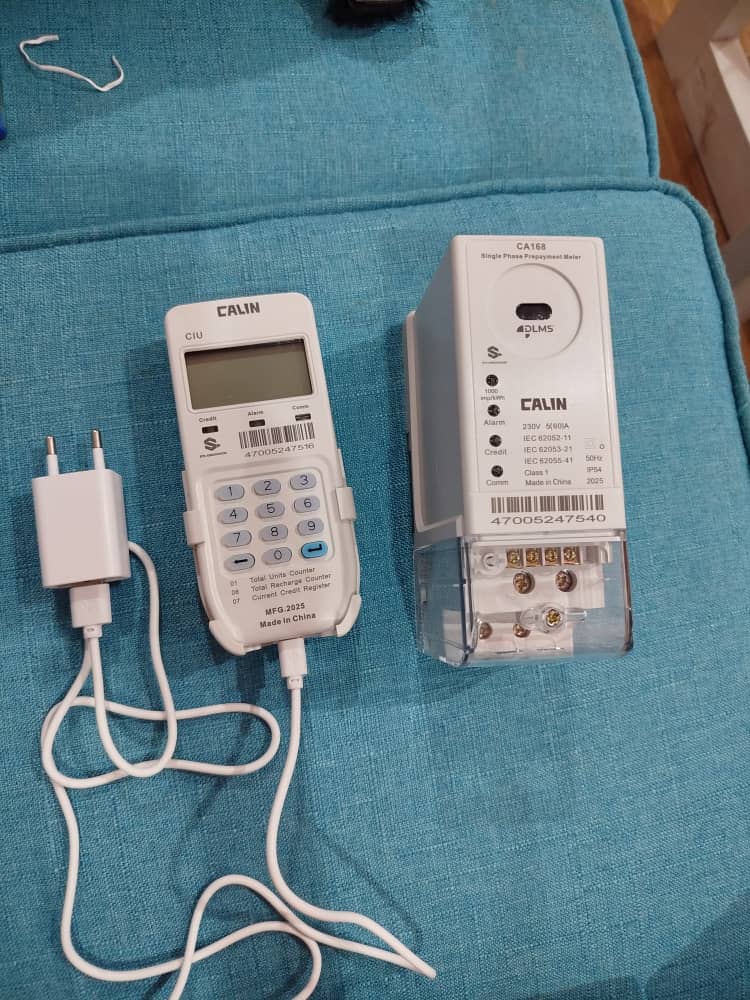
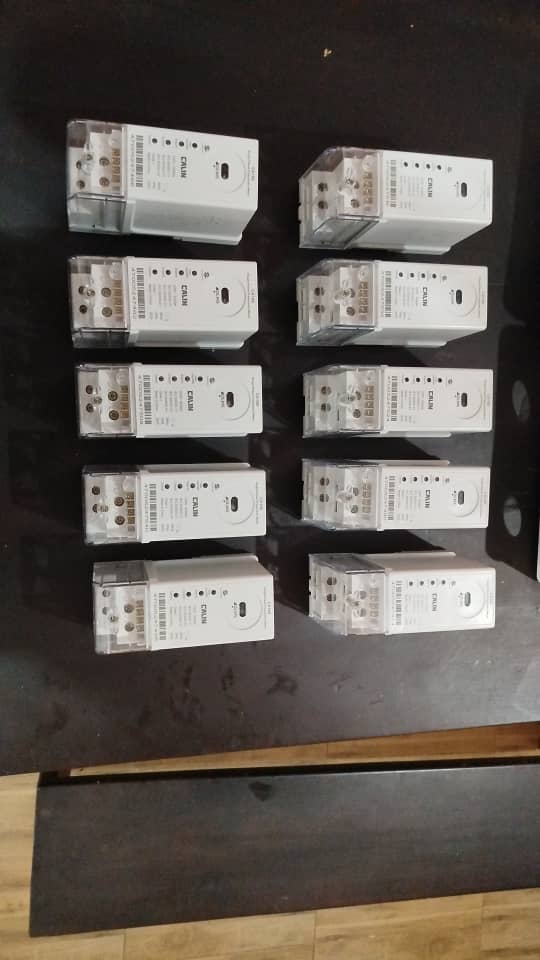
| 36 | Smart Meters | 1 Phase DinRail Split prepaid meter-1.pdf | 10 | 290,000 | 2,900,000 | |
| 37 | LoraWAN gateway | CAL-025.pdf | 1 | 1,803,000 | 1,803,000 | |
| 38 | Labor (installation) | Green Volta | 2,000,000 | 2,000,000 | ||
| Total | 25,237,000 | |||||
Reconciled budget attached 1RECONCILIATION NFE-NANSANA.pdf
Site Layout
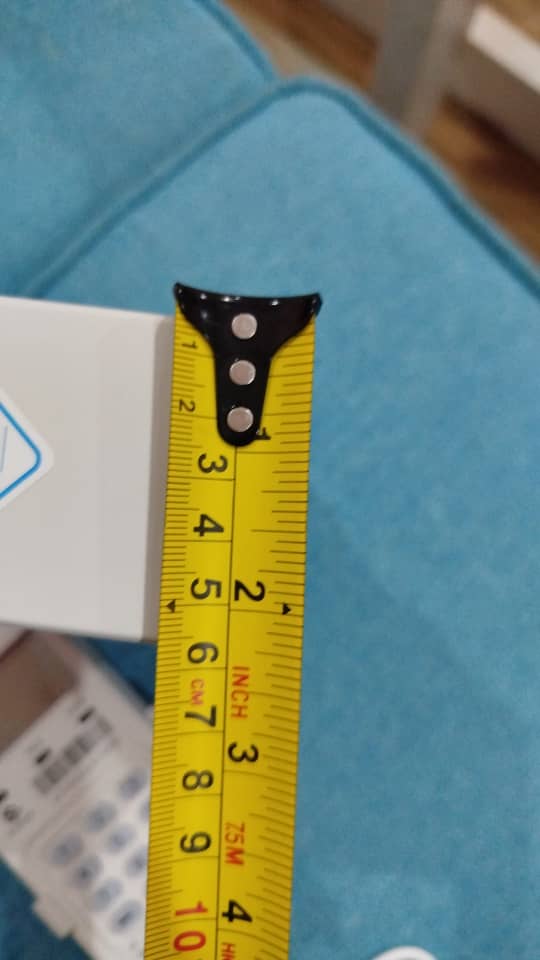
Procurement Pictorial
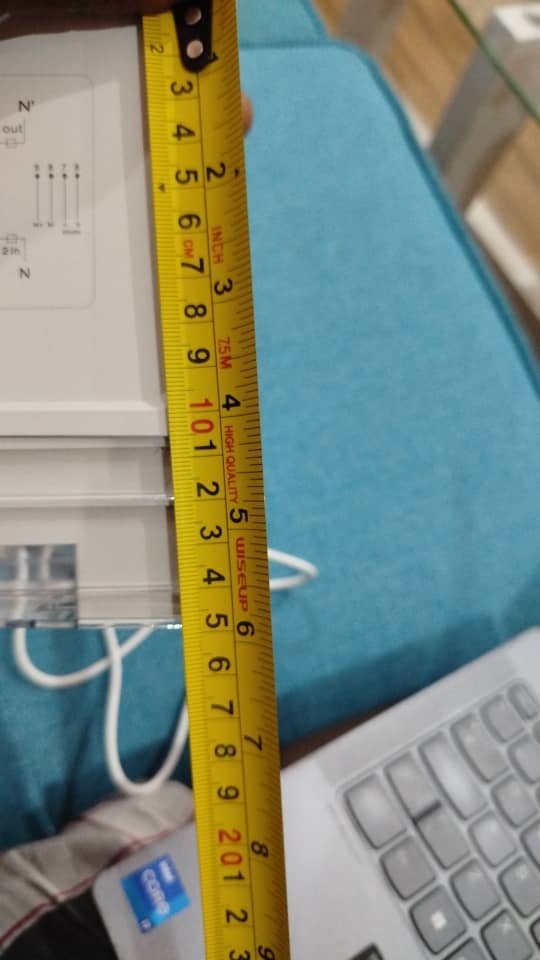
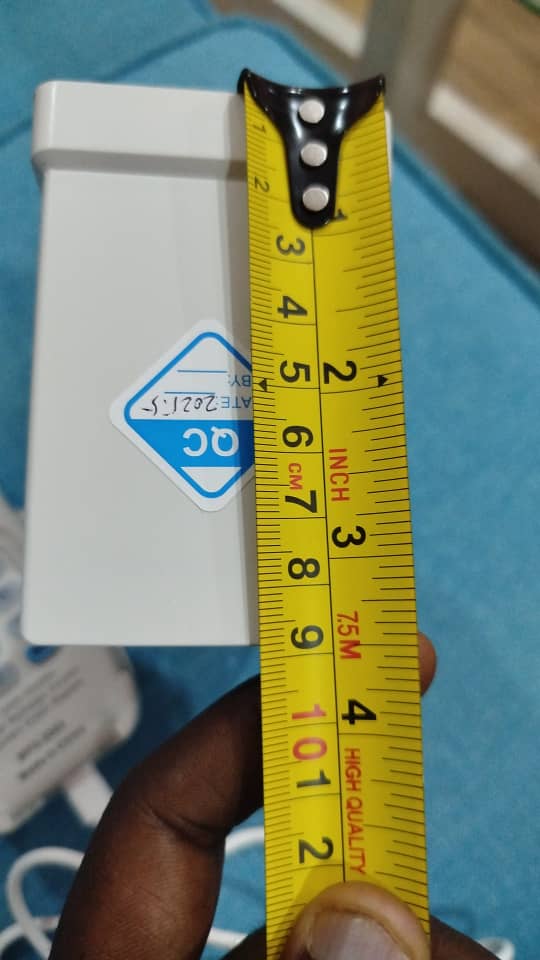
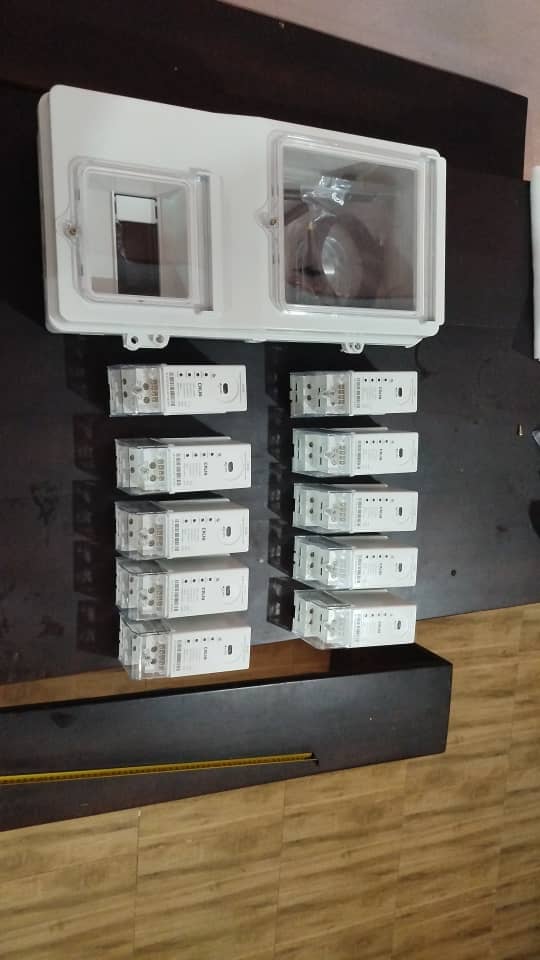
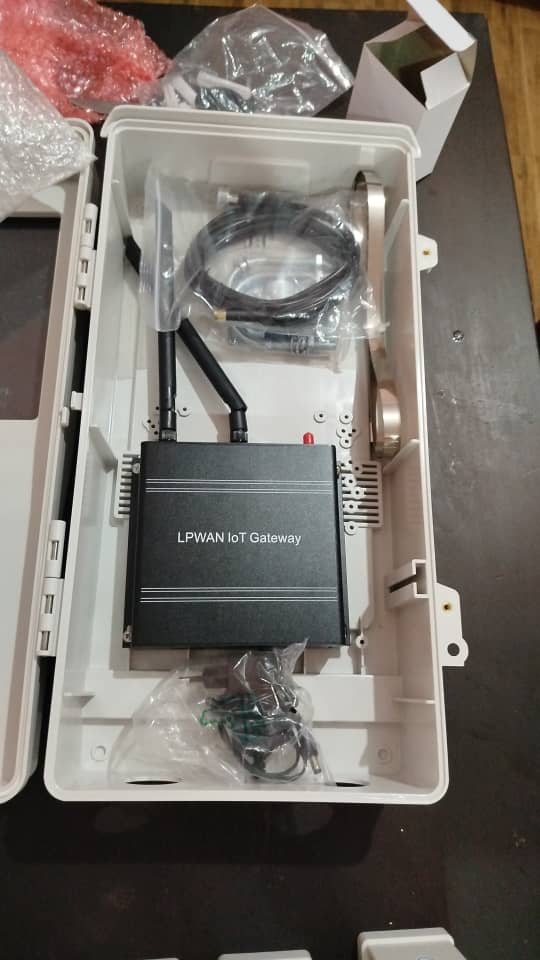
Monthly Finances
Energy Sales
We are making these sales projects based on what they spend today and not the power they use.
- Number of Customers: 10
- Average historical spend per customer: 80,000 UGX per month (about 3kWh per day, for 30 days)
- Total Revenue: 800,000 UGX per customer (800 UGX per kWh)
Expenses
- Bulk Purchase of power: 491,760 UGX (546.4 per kWh at 3kWh per day for 30 days for 10 customers)
- Taxes (18% VAT) - Charge to customer?
- Operations: 100,000 UGX
- Real time expenses tracked here on Open Collective
Net Returns
- Sales - Expenses: 308,240 UGX
Sezibwa Site Plan for Phase 2

Ownership (Membership)
This project is community owned as per the model described here.
Funders
- NFE - 21,300,071 UGX
- Unallocated - 3,936,929 UGX
Workers
- NFE
Customers
- Non Eligible yet
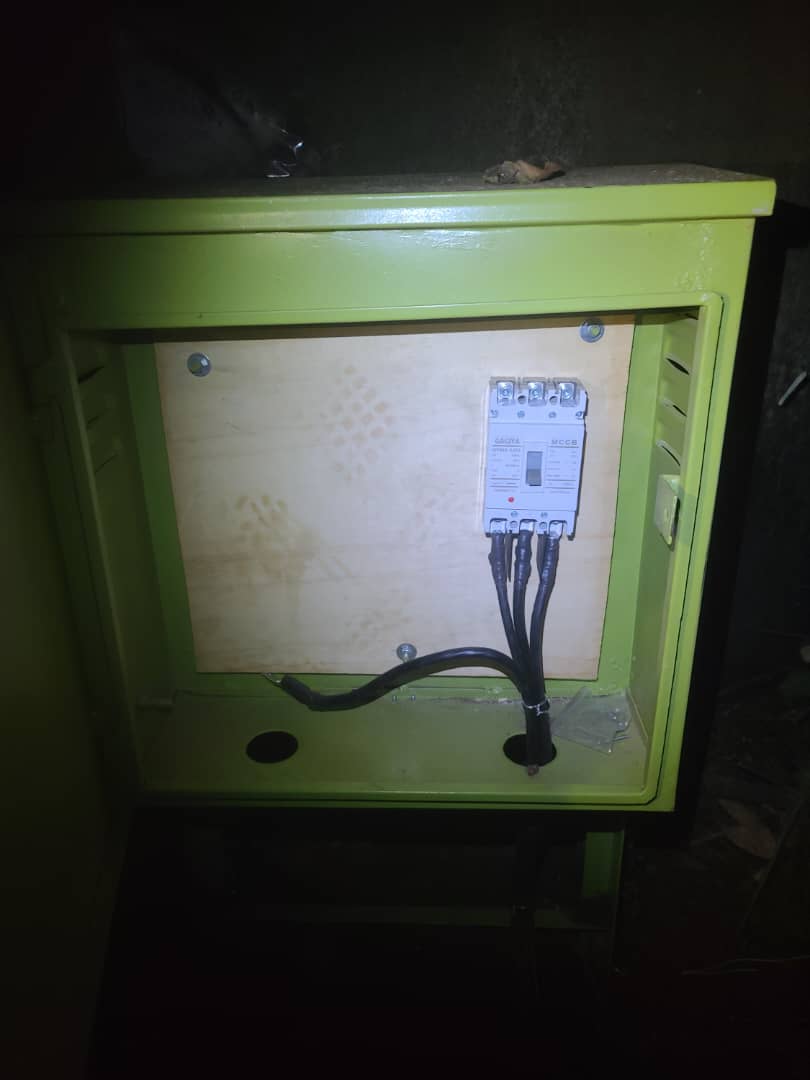
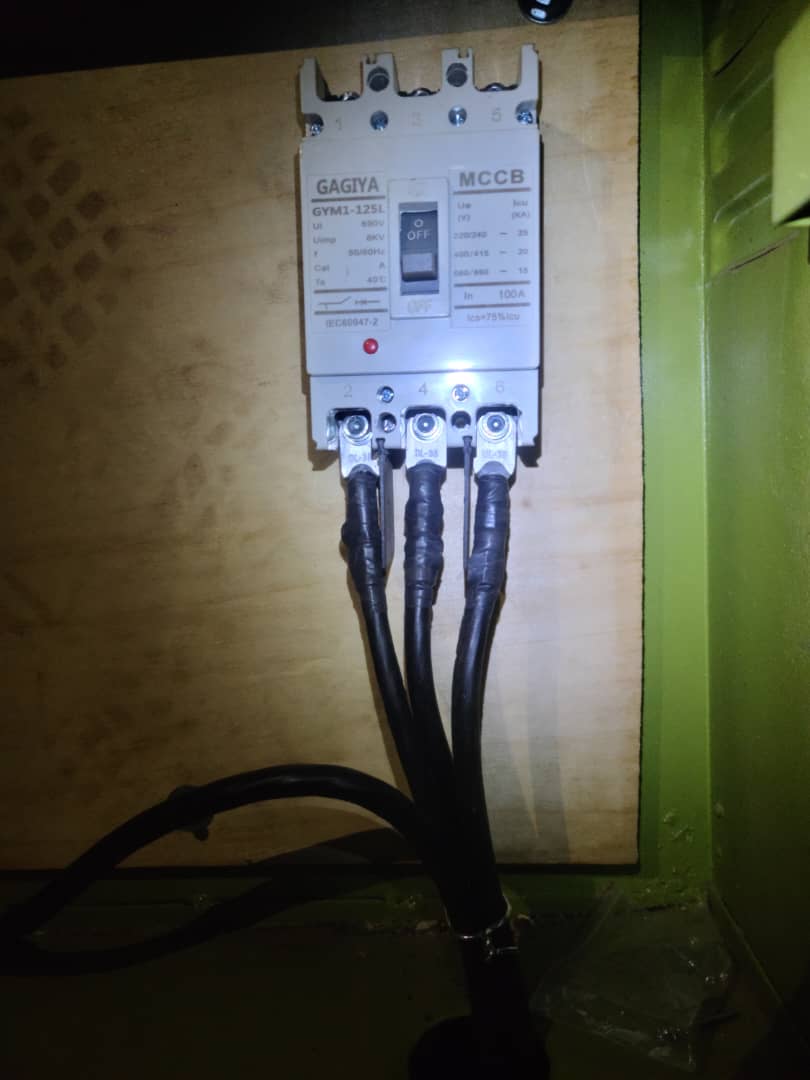
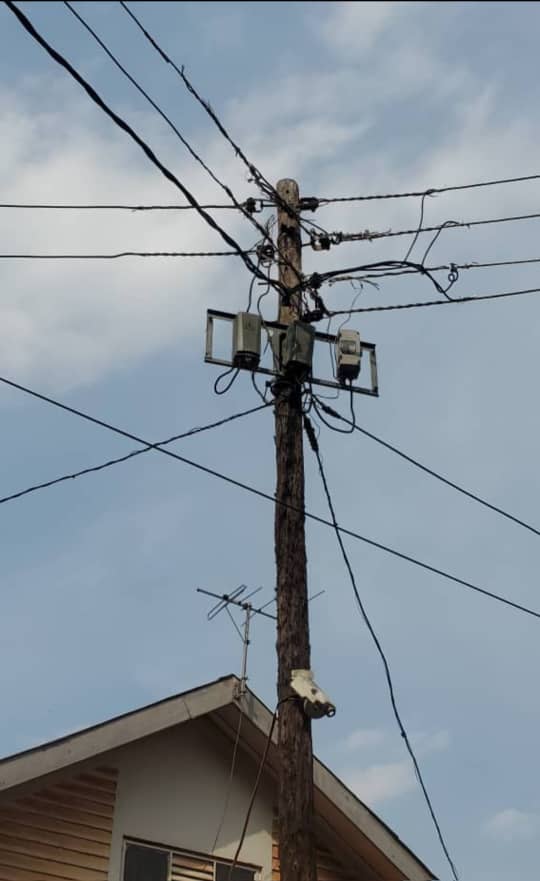
Phase 1 Pictorial
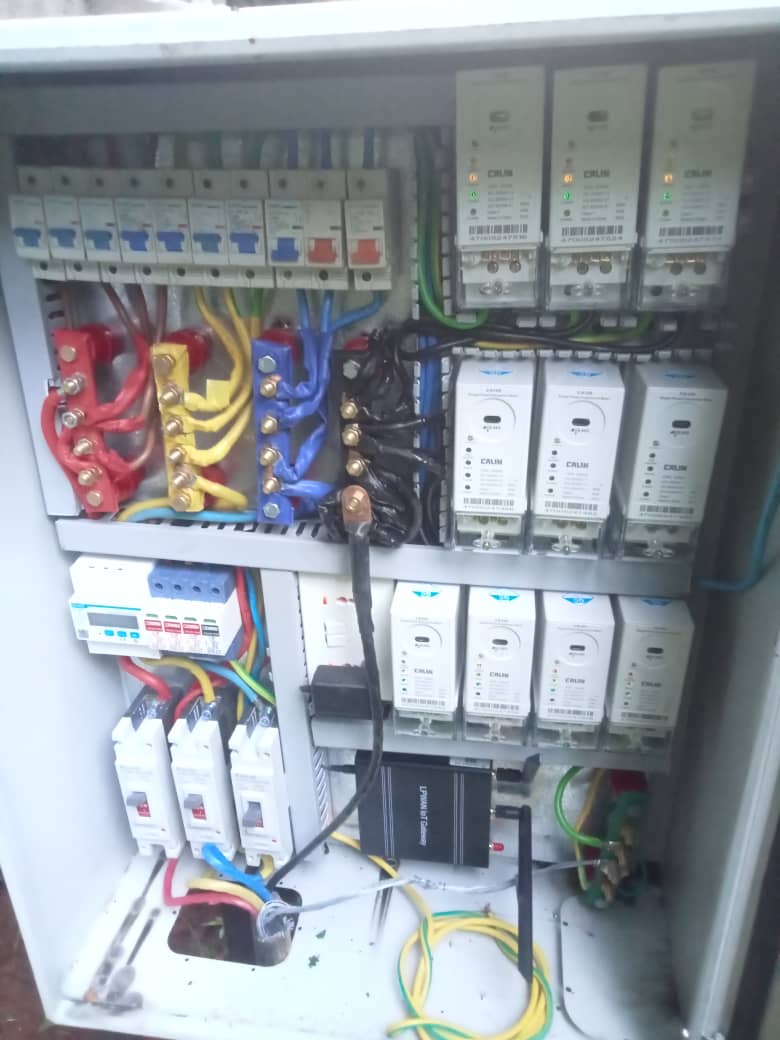
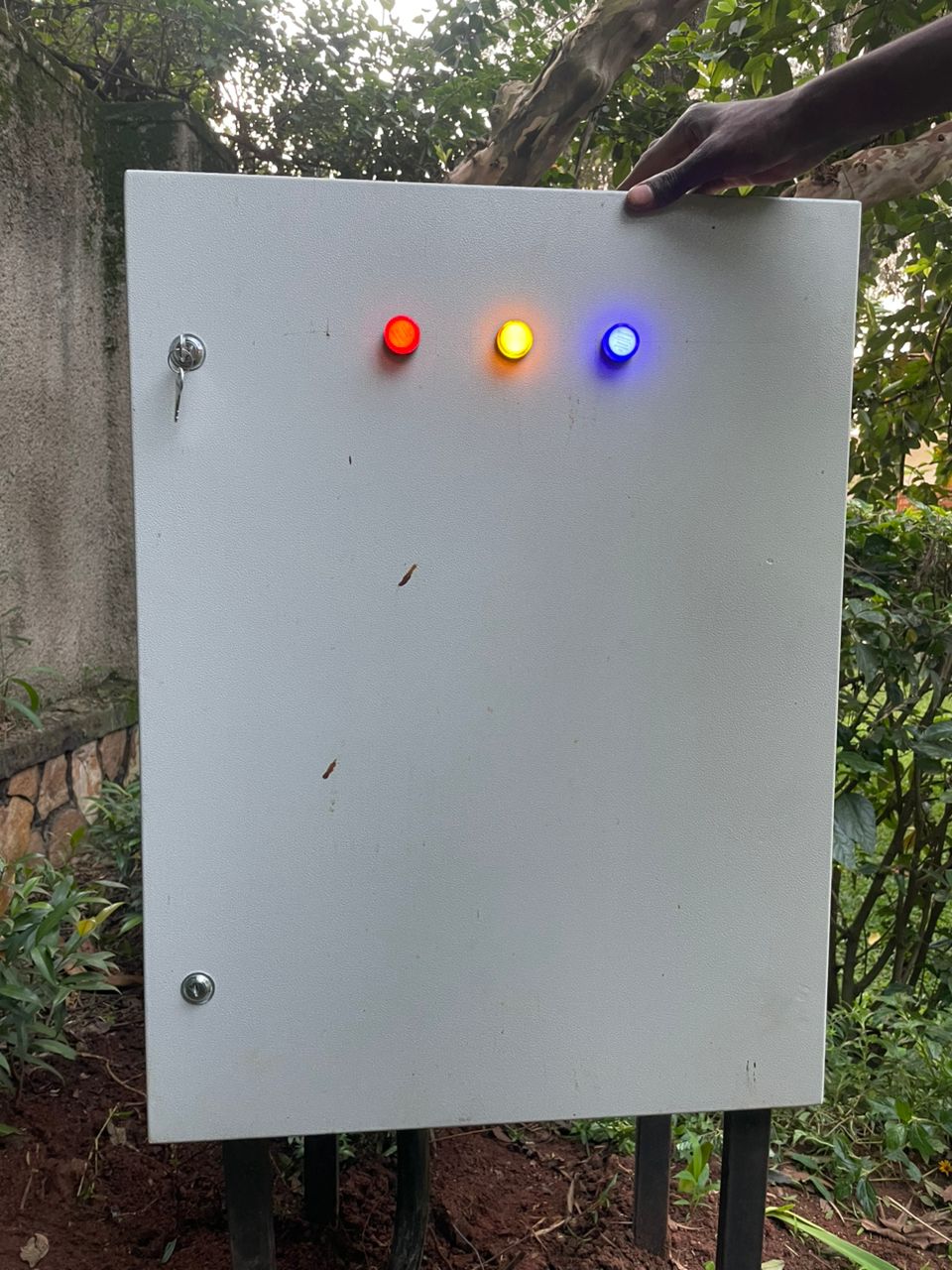
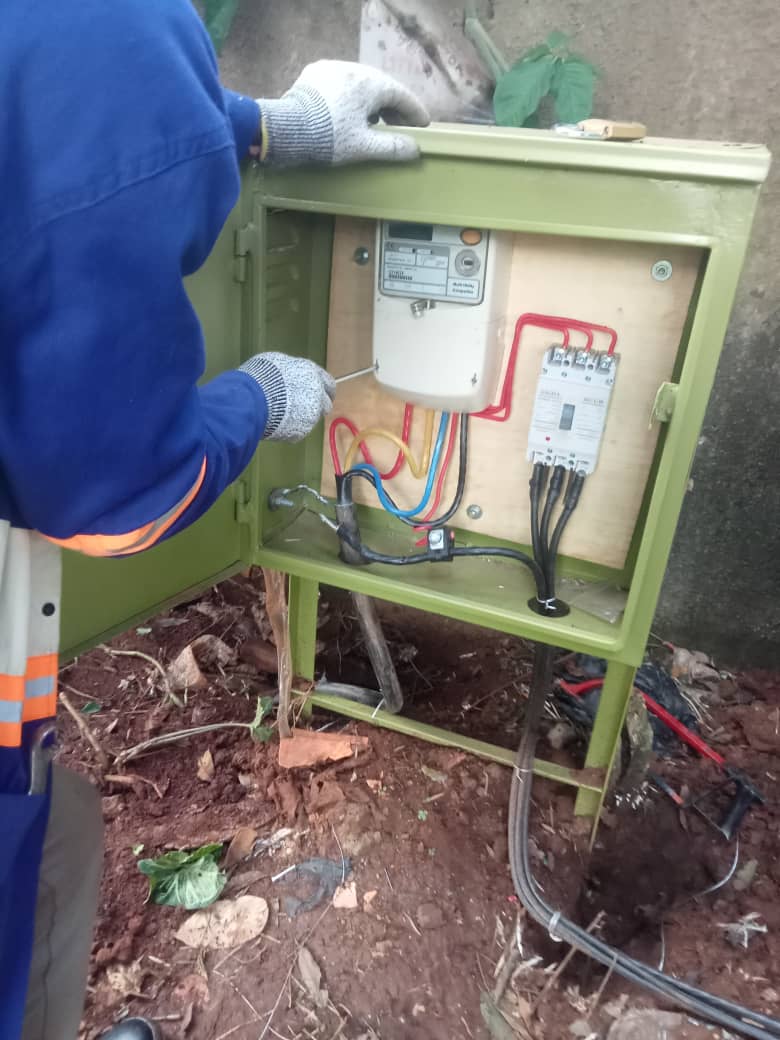
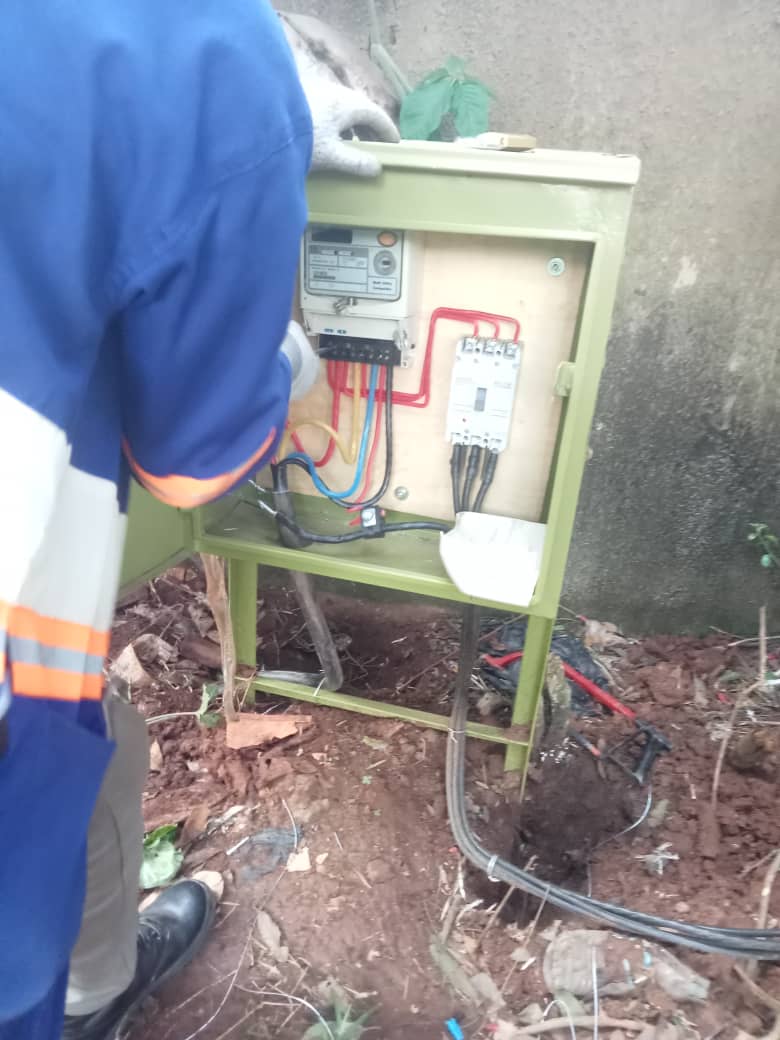
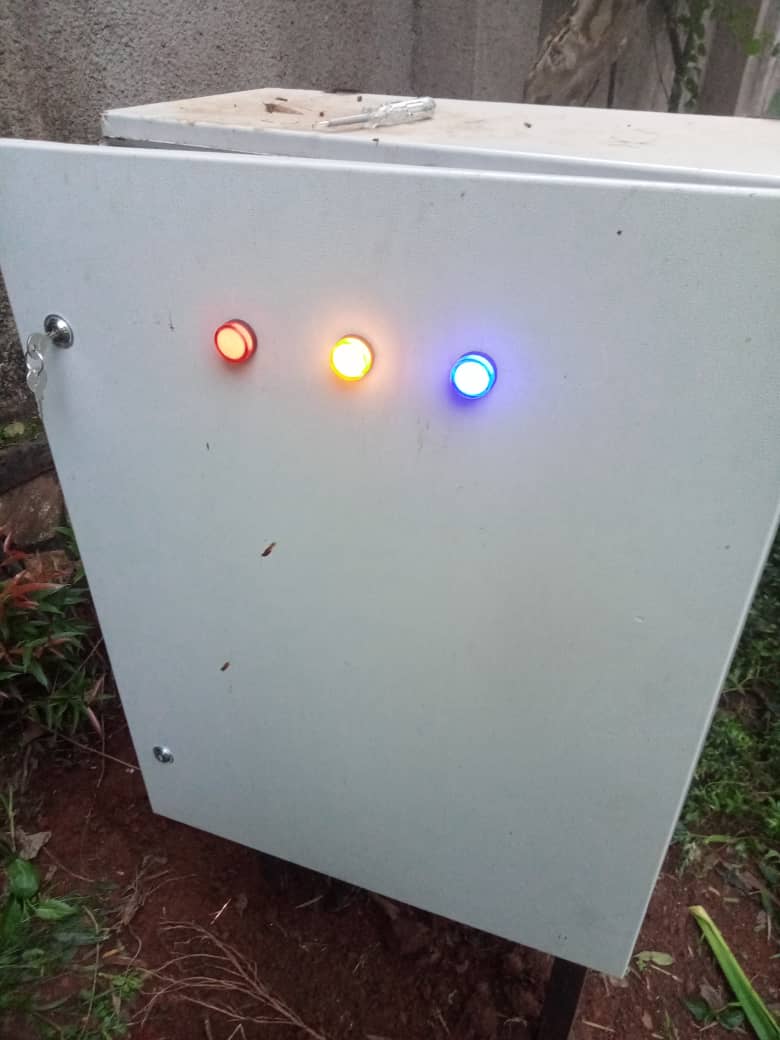
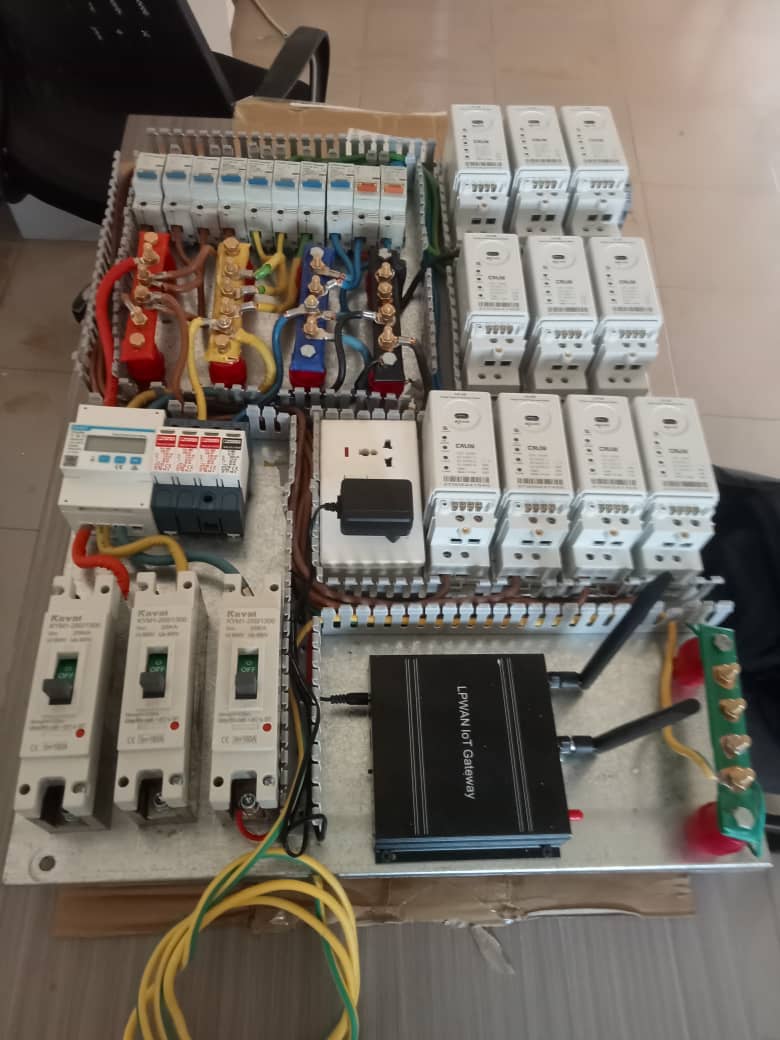
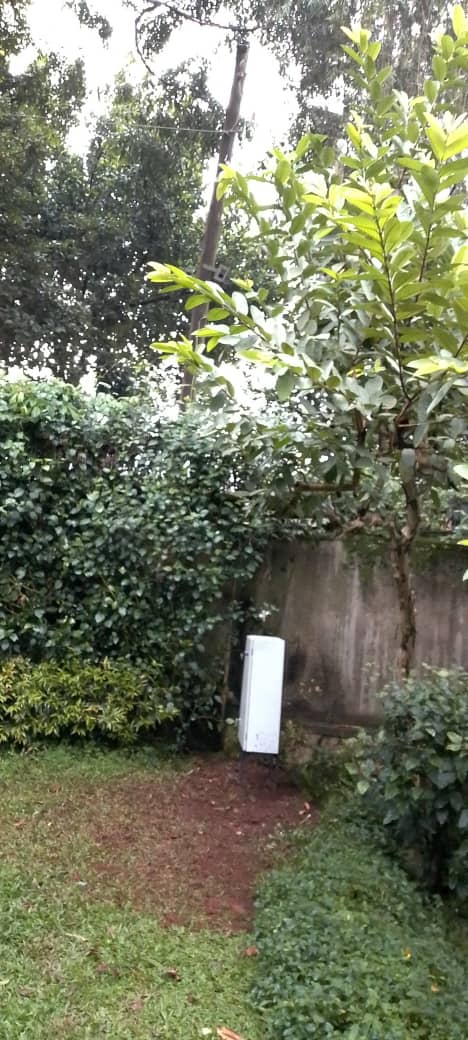
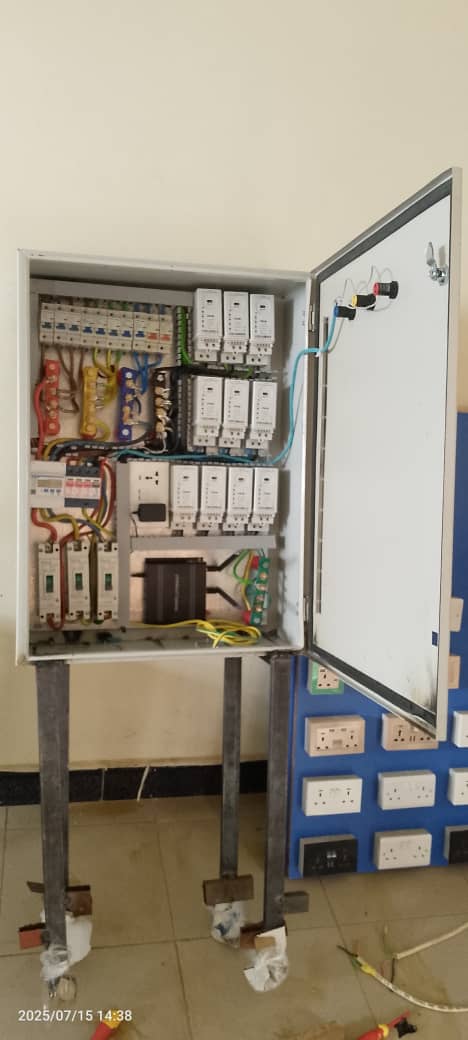
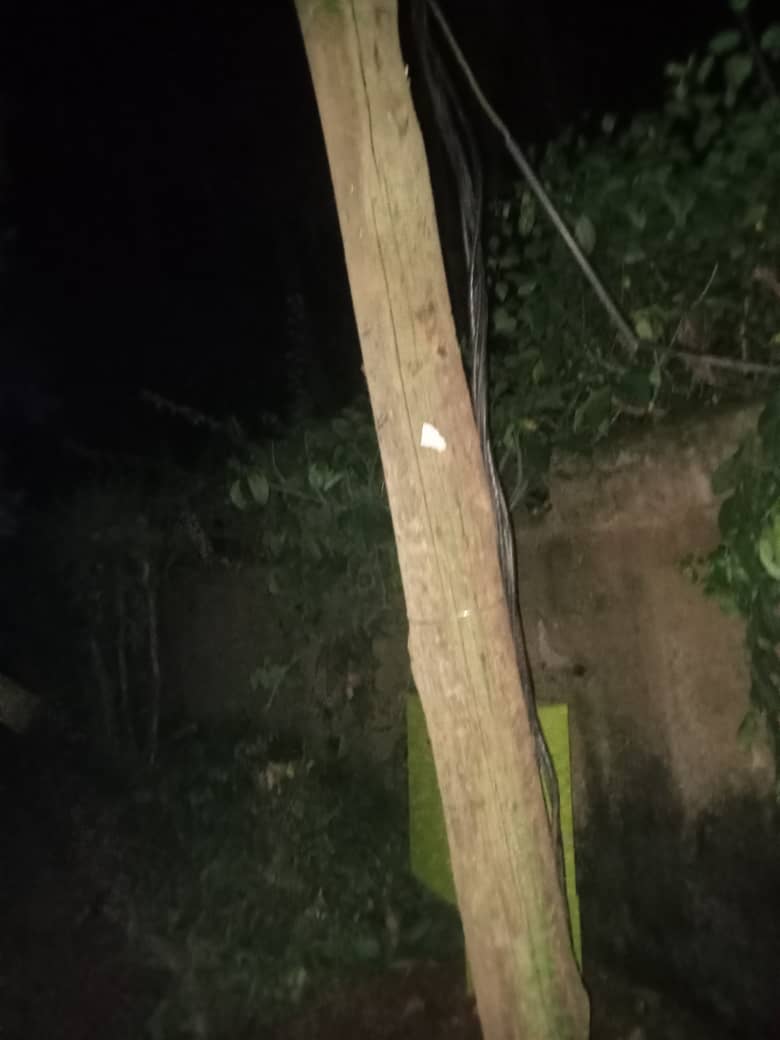
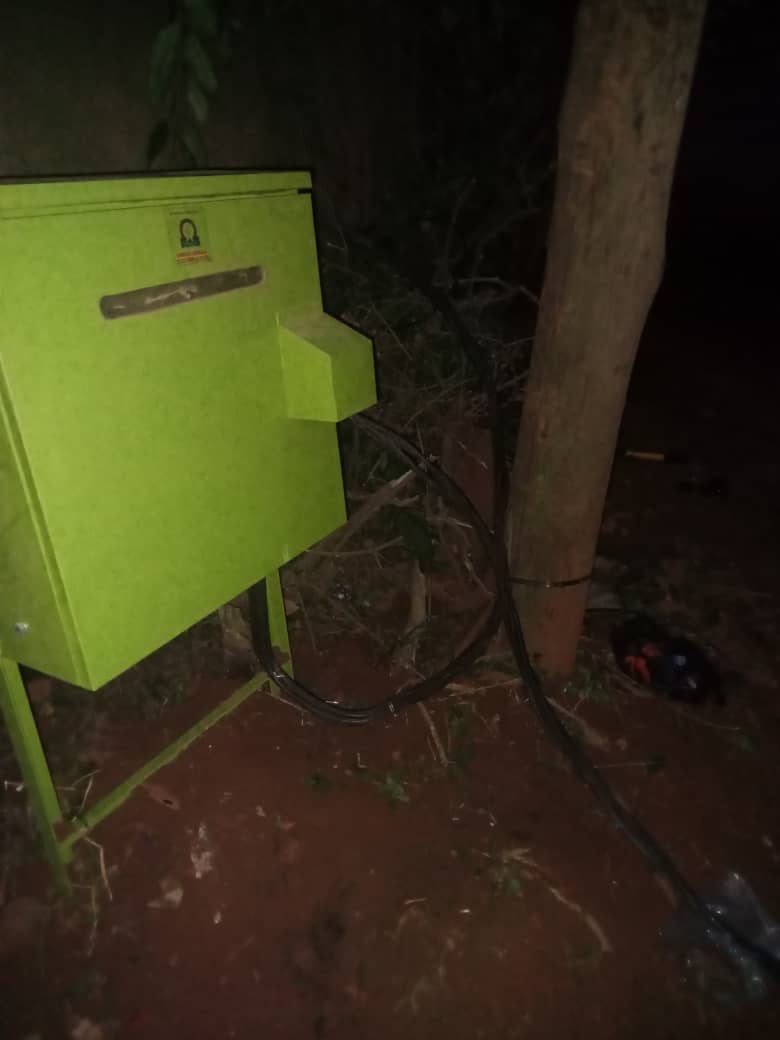
Customer Registry
| Name | House Number | Contact | Meter Number |
Inspection Document
Welcome Note to Customers
Hello, This is Aaron from Nearly Free Energy. We provide reliable electricity to neighbourhoods like yours.
Your landlady has agreed to work with us to bring reliable power to your neighborhood. This will be done in the a 3 phase process.
Phase 1: Smart Metering:
We will switch you from Yaka to Smart Meters. This is needed in order for us to monitor when UEDCL power goes off so that we can size your neighbourhood backup correctly.
Phase 2: Backup installation:
We will install the right sized battery backup so that when UEDCL goes off, you power remains on. These batteries will be charged when UEDCL is on so that they can be ready when UEDCL is off. This backup will come on automatically so you should not notice when UEDCL is off.
Phase 3: Solar Generation:
We will install solar panels on your roof to help charge the batteries when UEDCL is off for much longer periods like several weeks.
Frequently asked Questions
If Yaka is gone, how will I pay for power?
You will switched from prepaid to postpaid. This is the same way you pay for your water bill. You receive a monthly bill from us via SMS and you will have 5 days to pay the bill via Mobile Money, Visa or Mastercard.
How can I know how much I have used at anytime during the month?
Please contact us on our Whatsapp business account. We shall check your smart meter and share with you our usage.
What happens when I don't pay my monthly bill by the 5th day of the month?
Your smart meter will automatically turn off power to your house. Once you pay the bill, the meter automatically turns power back on.
When will Phase 1 be completed?
Phase 1 is currently in progress. We are targeting to complete phase 1 by end of this week.
When will Phase 2 be completed?
We are targetting to start Phase 2 in December 2025, I should be completed within a month depending on transport logistics of the batteries. They are being imported from supplier overseas.
When will Phase 3 be completed?
The timelines for Phase 3 are not yet determined but will likely be within 2026.
How much will I be paying for power?
The cost of power will not change. IT is determined by ERA (Electricity Regulatory Authority). You will be paying the same domestic rate you are paying today: https://www.uedcl.co.ug/approved-tariffs. You will charged domestic rate fees per unit you use + VAT (18%) + monthly service charge (5320 UGX). All these charges exist on your Yaka bills. The only change here is that it's postpaid not prepaid.
What if I want to still pay using prepaid token like Yaka?
At this time, our system doesn't support this payment mode. But we think postpaid is better for most customers so we think you will find it more convenient than yaka tokens.
What happens to my current yaka balance and yaka meter?
UEDCL will entually reposes that yaka meter. The timelines for this are unclear. However please contact us and share your current Yaka balance, we will credit the units to your monthly bill for next month.
How can I contact you?
You can email us on team@nearlyFreeEnergy.com or Whatsapp us on 077
Outage log
| Date | Duration | Reason | Impact | Remarks |
| 1 September 2025 | 8 hours | 2/3 phases with voltage too low due to a broken link, this one impacted a wider area (whole of Nansana) | all 10 customers impacted because deployment was still in progress | Known to happen fairly often and could we temporarily resolved locally with a phase selector |
| 6th September 2025 | 1 hour | Meter Alarm triggered for Main house | Main house only | Need to investigate reason why alarm/relay was triggered |
| 9th September 2025 | 6 hours | Transmission team doing substation maintenance so they shut down the line | 10/10 houses impacted. |
Phase 1.1
Goal
- Install phase selectors to increase reliability when some phases have low voltage
| Item | Specification | Quantity | Unit Price | Amount | Remarks |
| PDU | 80cm*60cm*25cm | 1 | 900,000 | 900,000 | We need a bigger PDU in order to fit the phase selectors |
| Phase selectors | 3 | 300,000 | 900,000 | ||
| Labor | - | - | |||
| Total | 18,000,000 |
Phase 2.0
Goal: Adding Battery Capacity. We are estimating that we need to add 15 to 25 kWh of battery capacity. We are yet to do some analysis on the consumption and outage profile for the community to determine what would be the ideal capacity.
PDU layout

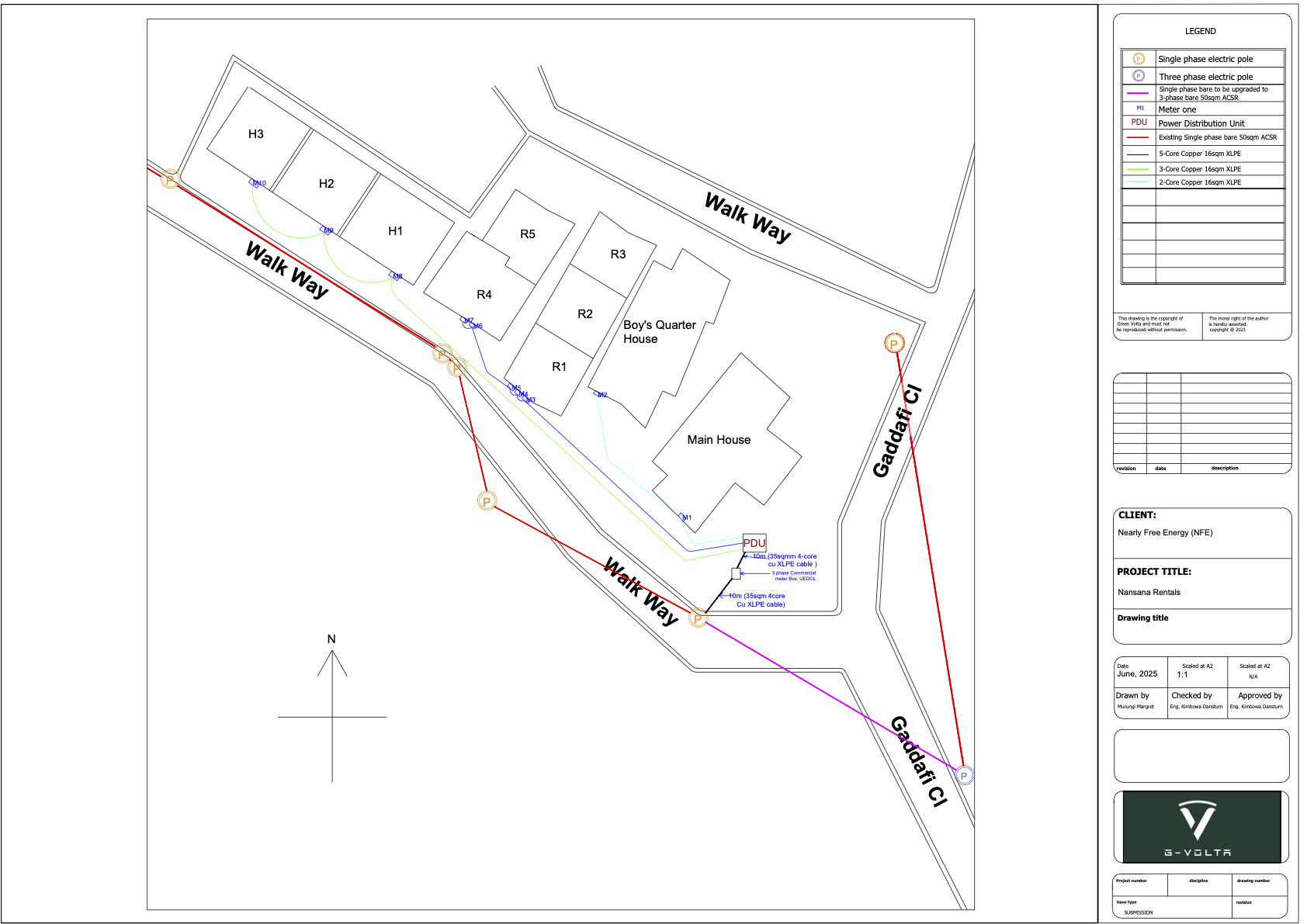
H3 - 200326020209
H2 - 210302003356
H1 - 200326020101
R1 - 250902040216
R2 -
R3 - 200326020199
R4 - 250902040373
R5 - 200326019807
Boys Q - 200326019929
Main House - 200326020128
Nansana Community Microgrid Pilot
Demonstrating Open-Source Community Energy Systems on Unreliable Grids
Executive Summary
Nearly Free Energy (NFE) is developing a new generation of community-owned microgrids designed for urban and peri-urban communities connected to unreliable electricity grids. Unlike traditional rural electrification microgrids, NFE's approach focuses on improving reliability, resilience, and long-term energy abundance for communities that already have a grid connection but experience frequent outages and poor service quality.
To validate this approach, NFE deployed its first pilot microgrid in Nansana, Uganda. The pilot currently serves 10 households and provides a real-world environment for testing smart metering, distributed energy resource (DER) management, battery-backed reliability services, and open-source microgrid control technologies.
The pilot has successfully demonstrated the technical feasibility of NFE's Microgrid OS architecture and provided valuable operational data that is informing the design of larger community deployments.
The Problem
Over the past decade, electricity access has improved significantly across Africa. However, millions of households remain connected to grids that suffer from frequent outages, voltage instability, and poor reliability.
Nansana reflects this challenge. While households are connected to the national grid, they regularly experience power interruptions that affect household activities, communications, education, and small businesses.
Traditional backup solutions such as petrol and diesel generators are expensive, noisy, polluting, and inaccessible to many households.
NFE believes that community microgrids can provide a more affordable, scalable, and sustainable alternative.
Project Objectives
The Nansana pilot was established to:
-
Validate NFE's Microgrid Cultivation Blueprint.
-
Test open-source energy management technologies in real operating conditions.
-
Evaluate customer demand for improved electricity reliability.
-
Develop and test smart metering infrastructure.
-
Demonstrate battery-backed community energy services.
-
Generate operational data for future commercial deployments.
Pilot Configuration
Location
Nansana, Wakiso District, Uganda
Community Served
10 households
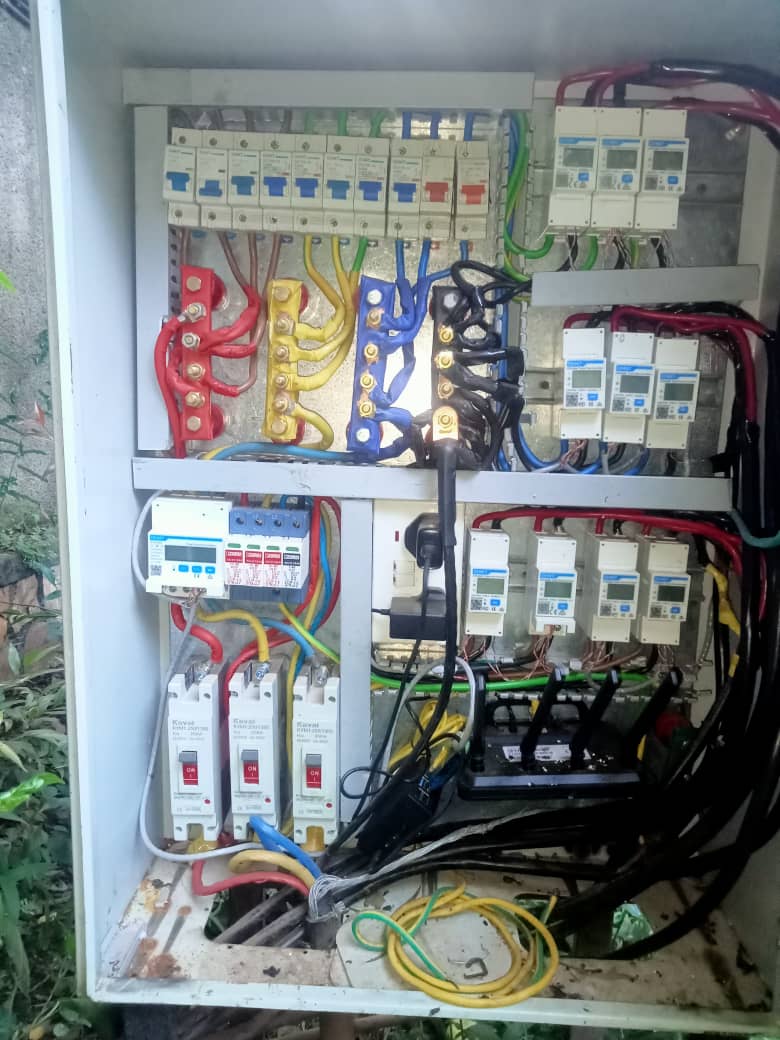
System Components
-
Smart meters installed at participating households.
-
Community battery storage system.
-
Backup power infrastructure.
-
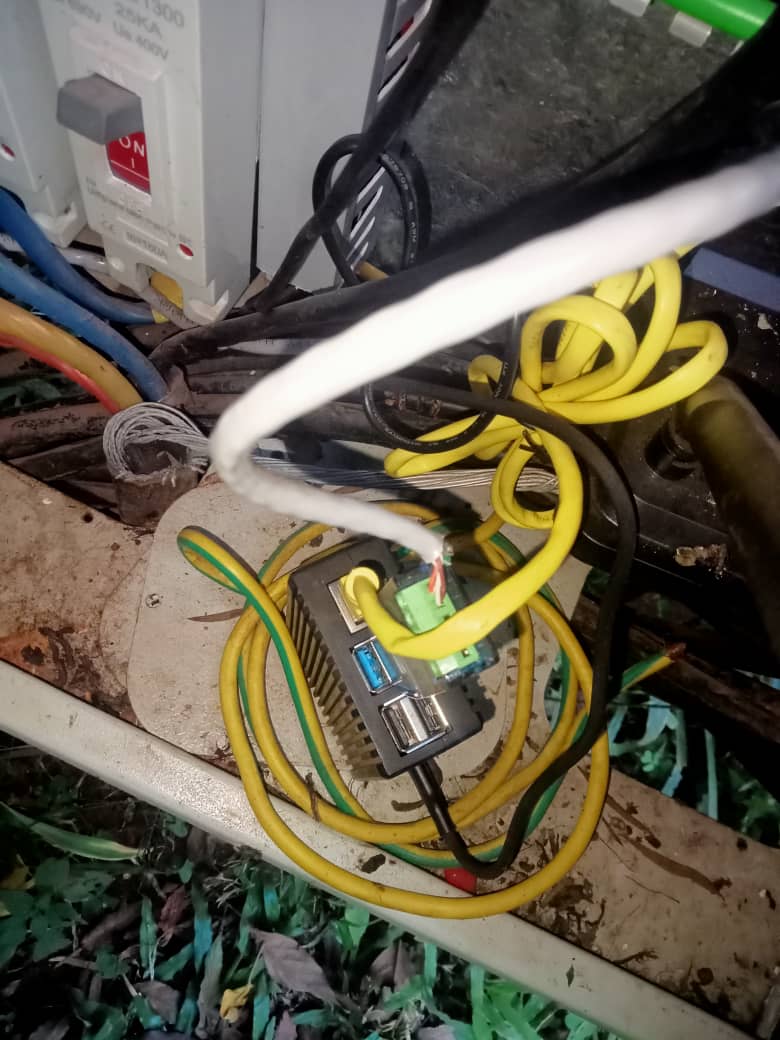
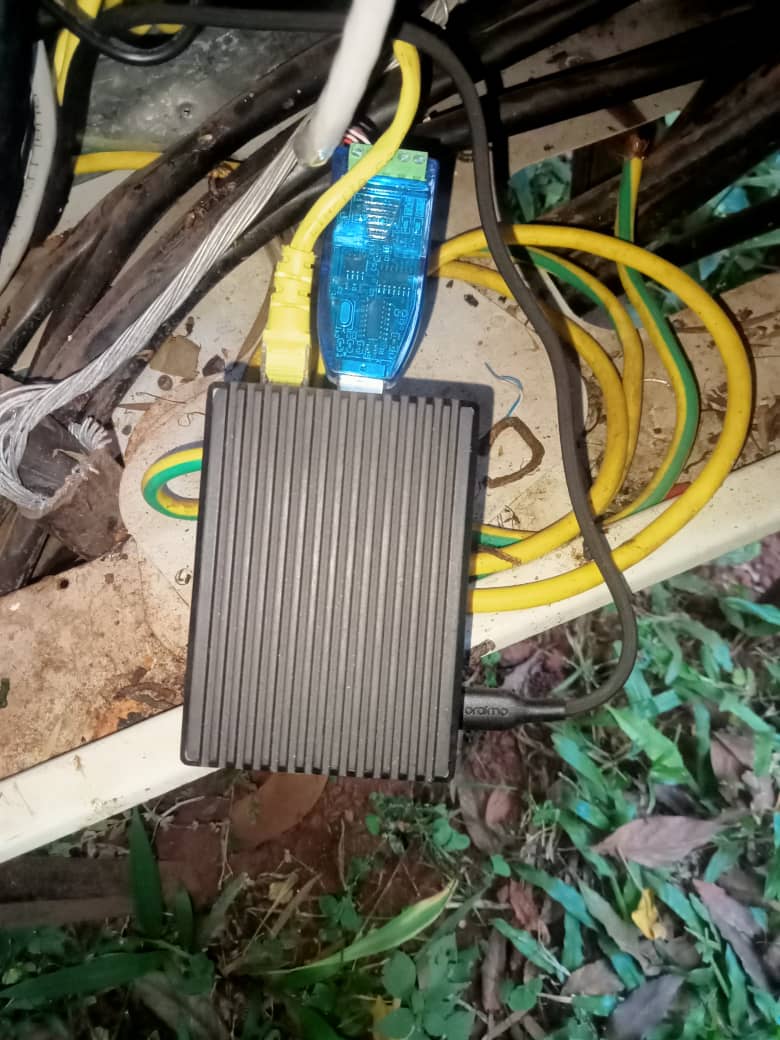
Raspberry Pi 4B controller running OpenEMS.
-
Communications network for remote monitoring and management.
-
MicroPowerManager integration for metering and operational functions.
Operational Phase
The pilot currently operates within the Monitor and Backup phases of NFE's Microgrid Cultivation Blueprint.
Technical Innovation
One of the most important outcomes of the pilot was the transition from a proprietary gateway architecture to an open-source Microgrid OS architecture.
Initial Architecture
The original system relied on a proprietary gateway capable of communicating only with specific smart meter vendors.
This approach limited flexibility, interoperability, and scalability.
Current Architecture
The pilot now uses a Raspberry Pi 4B running OpenEMS.
This controller can communicate with:
-
Smart meters using Modbus.
-
Battery systems.
-
Inverters.
-
Future distributed energy resources.
This transition has significantly improved interoperability and established the foundation for NFE's Microgrid OS platform.
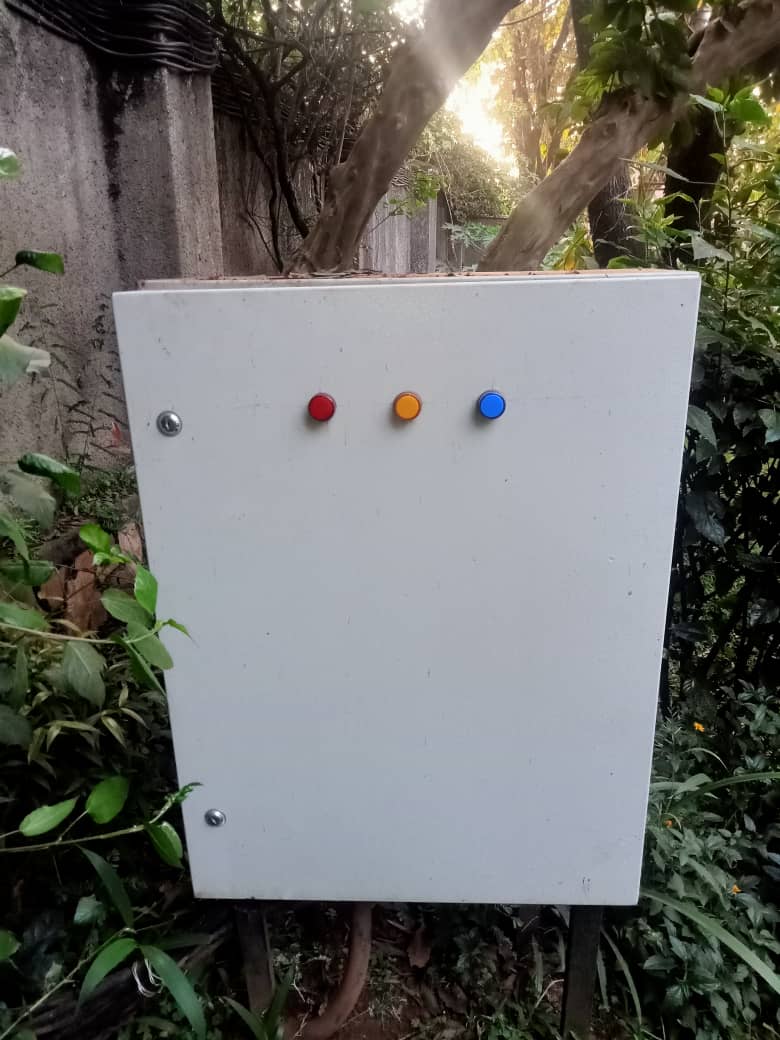
Images from site
Key Learnings
Open Standards Enable Scalability
The pilot confirmed that open standards such as Modbus can support interoperability across multiple device types and vendors.
Communities Value Reliability
Participating households consistently identified reliability as a higher priority than simply having access to electricity.
Software is as Important as Hardware
The ability to monitor, orchestrate, and automate distributed energy resources is essential for scalable community microgrids.
Phased Adoption Reduces Risk
The Monitor → Backup → Backbone → Community Power Plant progression allows communities to adopt advanced energy services gradually while minimizing technical and financial risks.
Next Phase
The next phase of development will expand the solution from 10 households in Nansana to approximately 100 households in Garuga.
Key objectives include:
-
Development of an open-hardware controller based on the NPE X500 CM4 platform.
-
Deployment of additional battery and solar assets.
-
Expansion of smart metering infrastructure.
-
Enhancement of Microgrid OS capabilities.
-
Validation of autonomous microgrid operation.
-
Progression toward the Backbone phase of the Microgrid Cultivation Blueprint.
Long-Term Vision
NFE's long-term vision is to enable thousands of households across Africa to benefit from reliable, resilient, and increasingly abundant clean energy through community-owned microgrids.
The Nansana pilot represents the first step toward a scalable platform that combines:
-
Open-source software.
-
Open-hardware controllers.
-
Distributed energy resources.
-
Community ownership.
-
Autonomous microgrid operations.
By demonstrating these capabilities in a real-world environment, the pilot has established the technical and operational foundation for future deployments and broader adoption across Africa.
Microgrid Cabinet Line Diagram

Business Model
Business Models for the NFE Microgrid OS
[!info] Current working basis — August 2026
Tariff: UEDCL Code 10.2, Q3 2026: Peak 666.5 / Shoulder 562.1 / Off-Peak 429.7 UGX/kWh. The full tariff schedule must remain a configurable model input because ERA/UEDCL rates change periodically. Sezibwa base case: zero export value until site eligibility, interconnection terms, and the applicable export credit are confirmed. All commercial offers should be re-run with site-specific load, tariff, capex, financing, and reliability assumptions before commitment.
Purpose
NFE Microgrid OS needs a business model that creates durable recurring revenue while improving the economics and reliability of community energy systems. Two ownership models remain viable, but the current Sezibwa evidence suggests a clear sequencing principle: scale first through partner-owned deployments, while using NFE-owned projects selectively where the project return and strategic value justify tying up capital.
The operating system is the common product in both models. Ownership determines who funds the assets, carries performance risk, and receives the energy margin.
Current evidence from Sezibwa
The Sezibwa analysis is not a universal tariff card, but it gives NFE a grounded reference case for product and commercial decisions:
| Question | Current finding | Business implication |
|---|---|---|
| What should be added to the existing inverter and 8.9 kWh battery? | Solar first. Adding battery at today's price lowers NPV. | The OS should recommend marginal investments based on the assets already installed, not sell a standard hardware bundle. |
| How much solar? | 4 kWp is the low-spill efficiency sweet spot; 5 kWp is the maximum-NPV optimum. | The recommendation depends on the customer's objective: capital efficiency and minimal curtailment versus maximum total value. |
| What does battery arbitrage contribute? | About 22,000–40,000 UGX/month before fully pricing degradation, depending on backup reserve. | Arbitrage is incremental value from sunk hardware, not the core investment case. Dispatch must exceed marginal degradation cost and preserve the agreed reserve. |
| When does more storage pay? | At the 5 kWp anchor, the first added unit breaks even around 367,000 UGX/kWh, versus about 626,000 UGX/kWh today. | Treat battery price as a procurement trigger. Additional storage may still be justified separately for outage resilience. |
| Can surplus solar be sold? | Not assumed in the Sezibwa base case. | Use zero export value until site-specific arrangements are confirmed; show export as a separate upside scenario. |
Detailed evidence: Solar Plus Battery Economic Case, Battery Arbitrage Economic Case, Optimal Solar and Battery Allocation, and Battery Price Break-Even.
1. NFE-owned energy-service model
NFE finances and owns the supported microgrid assets and sells an energy and reliability service to a landlord, estate, community entity, or other contracted counterparty. The exact structure—PPA, lease, energy-service agreement, or another permitted form—must be confirmed against the applicable licensing, tariff, consumer-protection, and metering requirements.
Assets and responsibilities
NFE funds, owns, and operates the contracted system: submeters, solar, batteries where justified, inverters, communications, and the NFE Microgrid OS control and billing layer. NFE carries financing, asset-performance, collections, maintenance, and technology-obsolescence risk.
Revenue and value capture
- Energy-service revenue: contracted charges for electricity supplied or bills avoided, subject to the approved commercial structure.
- Reliability service: an explicit availability or backup tier rather than an assumed premium hidden inside the energy price.
- Operating efficiency: lower losses, better collections, solar self-consumption, reserve-aware dispatch, and tariff-aware control increase project margin.
- Optional services: installation, maintenance, reporting, or financing fees where separately contracted.
Optimization is not revenue by itself. It improves the margin or service quality of a contracted energy product. The commercial model should therefore distinguish customer charges from internally generated savings.
Investment test
Approve an NFE-owned project only when the site-specific model shows acceptable NPV, IRR, downside resilience, and debt-service capacity after turnkey capex, losses, degradation, maintenance, collections, taxes, and financing. At Sezibwa, the attractive next investment is solar on hardware already owned; that result should not be generalized to a greenfield site where inverter and battery costs are not sunk.
Best fit
- High-confidence load and collections data.
- A creditworthy counterparty or enforceable payment mechanism.
- Strong solar self-consumption and limited dependence on unconfirmed export revenue.
- A strategically important reference site or a return high enough to justify NFE capital.
Key tradeoff
This model captures the most project economics and operational learning, but it is capital-intensive and concentrates construction, credit, regulatory, and long-term asset risk on NFE.
2. Partner-owned managed-platform model
A developer, landlord, estate, community entity, or energy-service partner finances and owns the physical assets. NFE supplies the operating platform, supported controls, deployment services, and ongoing technical operations.
Partner role
The partner funds and owns solar, batteries, submeters, inverters, communications hardware, and other site infrastructure. The partner retains asset-financing risk and receives the energy margin, subject to the commercial agreement.
NFE role
- NFE Microgrid OS licensing and supported device integration.
- Metering, customer accounts, billing, collections data, and settlement reporting.
- Monitoring, alerts, remote operations, and performance reporting.
- Tariff-aware, forecast-aware, reserve-aware, and degradation-aware dispatch.
- Site modelling, investment recommendations, commissioning, and lifecycle support.
NFE revenue
- Deployment fee: site assessment, modelling, integration, commissioning, and training.
- Recurring platform fee: a base site fee plus a usage driver such as connected meters, managed assets, or energy settled.
- Managed-operations fee: optional monitoring, dispatch, incident response, reporting, and maintenance coordination.
- Performance component: only where savings can be baselined and audited; use a share of verified incremental value rather than gross electricity sales.
Hardware support and maintenance
NFE should publish a supported-hardware list and define responsibility by asset. Partner-owned equipment remains the partner's financial responsibility. NFE may provide maintenance directly or coordinate approved providers under a separate service level. Unsupported third-party assets, including generators, are excluded unless explicitly integrated and contracted.
Key tradeoff
This model produces less revenue per site than ownership but requires much less NFE capital, limits balance-sheet exposure, and can scale faster across heterogeneous sites.
Common modelling and operating rules
- Keep tariffs configurable. Store the entire time-of-use schedule, effective dates, fixed charges, taxes, and export credit separately from model logic. Re-run forecasts whenever ERA/UEDCL publishes a revision.
- Model the actual site. Use interval load, outages, collections, existing assets, weather, and installed quotations. Do not transfer Sezibwa results unchanged to another microgrid.
- Separate sunk and new capital. Dispatching an owned battery can create incremental value; buying another battery requires a separate investment case.
- Separate energy and resilience value. Energy NPV should stand on its own. Backup reserve, outage avoidance, and service availability should be quantified and priced explicitly where possible.
- Use a Sezibwa-specific zero-export-value base case. Add export value only as a documented scenario with confirmed eligibility, interconnection limits, and credit terms.
- Price degradation at the margin. Arbitrage should run only when avoided tariff cost exceeds conversion losses, marginal battery wear, and the opportunity cost of reducing backup reserve.
- Treat second-life storage as a hypothesis. Recycled batteries may become attractive, but require a second-life-specific techno-economic model covering acquisition, testing and grading, BMS and pack integration, safety, warranty, heterogeneous health, remaining life, and replacement.
Strategic recommendation
| Situation | Preferred approach |
|---|---|
| Partner has capital and wants operating capability | Partner-owned managed platform |
| Site has strong verified economics, reliable collections, and strategic value | Consider NFE ownership after investment committee review |
| Demonstration or product-learning site | NFE-owned or co-invested, with an explicit learning budget |
| Economics depend on unconfirmed export revenue or speculative battery pricing | Do not finance on the upside case; validate first |
The near-term portfolio should therefore be partner-led and platform-first, with a small number of deliberately selected NFE-owned or co-invested sites. This builds recurring software and operations revenue, expands the data set behind the optimizer, and preserves NFE capital for projects where ownership offers exceptional return or strategic learning.
Decisions and evidence still required
- Define the minimum recurring platform fee and its pricing driver: site, meter, managed asset, or energy settled.
- Define a measurable baseline and audit method before offering performance-based fees.
- Set NFE-owned project hurdle rates, concentration limits, credit requirements, and downside tests.
- Confirm the permitted contracting and electricity-resale structures for each customer segment.
- Publish supported hardware, warranty boundaries, maintenance responsibility, and service levels.
- Build the second-life-specific techno-economic model before presenting recycled batteries as a validated strategy.
- Turn the current optimizer into a repeatable site proposal that reports energy value, resilience value, capex, financing, NPV, IRR, payback, tariff sensitivity, and export sensitivity separately.
Solar Plus Battery Economic Case (Sezibwa)
Data provenance
Underlying data: the aggregate meter meter_100 plus the 10 customer sub-meters, over 2026-03-19 to 2026-08-10, from the modbus energy-logger archive (sources: pi-direct and nextcloud-import), i.e. the pre- and early-OpenEMS period. Load basis is a conservative 21.3 kWh/day.
Note (2026-08-20): the site has since migrated to OpenEMS, which is now the live source. OpenEMS-sourced daily figures from mid-August show inconsistencies (the aggregate roughly doubled exactly at the source switchover, and on some days the customer-meter sum exceeds the aggregate), so they are treated as a data-quality issue to resolve before use; this analysis stays on the validated archive. Phase assignments reflect the wiring as observed up to about May 2026 and should be re-verified against the current OpenEMS setup if any connections have been changed.
Battery Arbitrage Economic Case (Sezibwa)
Data provenance
Underlying data: the aggregate meter meter_100 plus the 10 customer sub-meters, over 2026-03-19 to 2026-08-10, from the modbus energy-logger archive (sources: pi-direct and nextcloud-import), i.e. the pre- and early-OpenEMS period. Load basis is a conservative 21.3 kWh/day.
Note (2026-08-20): the site has since migrated to OpenEMS, which is now the live source. OpenEMS-sourced daily figures from mid-August show inconsistencies (the aggregate roughly doubled exactly at the source switchover, and on some days the customer-meter sum exceeds the aggregate), so they are treated as a data-quality issue to resolve before use; this analysis stays on the validated archive. Phase assignments reflect the wiring as observed up to about May 2026 and should be re-verified against the current OpenEMS setup if any connections have been changed.
Optimal Solar and Battery Allocation (Sezibwa)
Data provenance
Underlying data: the aggregate meter meter_100 plus the 10 customer sub-meters, over 2026-03-19 to 2026-08-10, from the modbus energy-logger archive (sources: pi-direct and nextcloud-import), i.e. the pre- and early-OpenEMS period. Load basis is a conservative 21.3 kWh/day.
Note (2026-08-20): the site has since migrated to OpenEMS, which is now the live source. OpenEMS-sourced daily figures from mid-August show inconsistencies (the aggregate roughly doubled exactly at the source switchover, and on some days the customer-meter sum exceeds the aggregate), so they are treated as a data-quality issue to resolve before use; this analysis stays on the validated archive. Phase assignments reflect the wiring as observed up to about May 2026 and should be re-verified against the current OpenEMS setup if any connections have been changed.
Battery Price Break-Even (Sezibwa)
Data provenance
Underlying data: the aggregate meter meter_100 plus the 10 customer sub-meters, over 2026-03-19 to 2026-08-10, from the modbus energy-logger archive (sources: pi-direct and nextcloud-import), i.e. the pre- and early-OpenEMS period. Load basis is a conservative 21.3 kWh/day.
Note (2026-08-20): the site has since migrated to OpenEMS, which is now the live source. OpenEMS-sourced daily figures from mid-August show inconsistencies (the aggregate roughly doubled exactly at the source switchover, and on some days the customer-meter sum exceeds the aggregate), so they are treated as a data-quality issue to resolve before use; this analysis stays on the validated archive. Phase assignments reflect the wiring as observed up to about May 2026 and should be re-verified against the current OpenEMS setup if any connections have been changed.
NFE Commercial Reliable Power Microgrids
Commercial Reliable Power Microgrids (RPMs)
Phase 2 financial and bankability model | Worship Harvest worked example
|
STATUS |
VERSION |
DATE |
|
Core proposition |
1. Purpose of this document
This pack is intended to support the NFE weekly team review on the emerging Commercial RPM model. It captures the current product logic, a worked Phase 2 case, preliminary financing structure, customer-screening thresholds, model definitions and the decisions still required before NFE treats the model as investment-ready.
-
Reference customer: Worship Harvest Ministries, using customer-supplied UEDCL bills and account movements.
-
Benchmark: Sawa Energy's Bellavista solar + battery lease-to-own proposal was used as a commercial-structuring reference, not as NFE's pricing model.
-
Status: Pre-feasibility / internal investment model. Site metering, EPC quotations, regulatory confirmation and credit underwriting remain required.
2. The Commercial RPM model
|
Phase |
Customer outcome |
NFE activity |
|
1 - Measure & Manage |
Establish an evidence-based load and outage baseline. |
Install interval metering, characterize peak/shoulder/off-peak demand, identify critical loads and quantify current backup costs. |
|
2 - Reliable Power |
At least the contracted critical load remains powered through normal outages. |
Deploy storage, inverter/control infrastructure and enough PV to help finance the reliability layer. |
|
3 - Energy Optimization |
Lower grid dependence and optimize energy cost/reliability. |
Expand PV/storage, optimize dispatch and progressively use the grid as a secondary source. |
|
4 - Ownership Option |
Customer may choose to acquire the installed system. |
Execute a predefined buyout/transfer mechanism that first protects any outstanding lender obligations. |
3. Worship Harvest: current evidence base
|
Metric |
Working value |
How to treat it |
|
Average monthly electricity consumption |
~6.9 MWh/month |
Derived from four supplied detailed UEDCL bills; use as the current baseline, not a guaranteed future load. |
|
Annualized electricity consumption |
~82.9 MWh/year |
Used for the current screening model. |
|
Observed load mix |
~29% peak / 52% shoulder / 19% off-peak |
Useful because the 18:00-24:00 peak period exactly matches the requested six-hour backup window. |
|
Recent utility payment behavior |
Bills in the supplied statement were substantially/fully cleared within the billing cycles shown. |
Positive early credit signal, but not a substitute for full credit underwriting. |
|
Phase 2 reliability target |
At least 6 hours during 18:00-24:00 |
Must be validated with interval data and critical-load definition. |
4. Preliminary Phase 2 technical design
|
Component |
Working design |
Rationale |
|
LFP battery |
120 kWh nominal |
Provides headroom above historical average peak-period energy, plus usable-depth, conversion-loss and reliability reserve allowances. |
|
Hybrid inverter |
50 kW, three-phase |
Provides headroom for instantaneous demand and motor/other transient loads that monthly bills cannot reveal. |
|
Solar PV |
36-40 kWp preferred |
PV is not needed to make a 6-hour evening battery work technically; it is included because avoided daytime/peak grid purchases finance the reliability infrastructure. |
|
Controls / EMS |
NFE Microgrid OS + metering |
Required for dispatch, monitoring, billing, alarms, asset health and later portfolio management. |
|
Important engineering caveat |
5. Commercial model: where the RPM margin comes from
The RPM margin is not a surcharge on the customer tariff. It is the economic spread created when NFE can supply a portion of the customer's electricity at a lower effective cost than the utility tariff while preserving the customer-facing price anchor.
|
Cash-flow layer |
Illustrative annual value |
Meaning |
|
Customer electricity revenue |
~UGX 47.0m |
Energy sold at the utility-equivalent weighted tariff assumption. |
|
Gross avoided utility purchases |
~UGX 34.8m |
Value created by direct PV plus PV shifted through storage to displace grid purchases. |
|
Routine O&M allowance |
~UGX 2.1m |
Annual operating/maintenance budget. |
|
Battery + inverter lifecycle reserve |
~UGX 6.9m |
Explicit reserve contribution for major component replacement rather than assuming these costs disappear. |
|
NFE monitoring/billing/site overhead |
~UGX 1.2m |
Site-level software, monitoring, billing and operating support allowance. |
|
CFADS (internal screening definition) |
~UGX 24.5m |
Cash flow available for debt service after the above conservative operating and reserve provisions, before debt service. |
6. Base-case bankability structure
|
Item |
Working assumption |
|
Installed Phase 2 CAPEX |
~UGX 143m |
|
Customer contract term |
15 years |
|
Senior debt |
50-55% of CAPEX preferred for early projects |
|
Sponsor / investor equity |
45-50% of CAPEX |
|
Target debt tenor |
10 years minimum |
|
Target UGX debt rate |
<=12% if possible; concessional/project finance preferred |
|
Debt Service Reserve Account (DSRA) |
6 months of scheduled debt service |
|
Customer upfront equipment payment |
Zero |
|
Customer tariff |
Utility-equivalent energy tariff, with contractually defined indexation |
|
Ownership |
NFE/SPV during service term; Phase 4 buyout option subject to lender discharge |
7. Illustrative 55% debt case
|
Metric |
Illustrative result |
Interpretation |
|
Senior debt |
~UGX 78.5m |
55% of ~UGX 142.8m CAPEX. |
|
NFE/investor equity |
~UGX 64.3m |
Before DSRA funding. |
|
Annual debt service |
~UGX 13.9m |
Assumes 12% debt over 10 years with level annual debt service. |
|
Base DSCR |
~1.76x |
CFADS / scheduled debt service. Provides material cushion above 1.0x. |
|
6-month DSRA |
~UGX 7.0m |
Liquidity buffer equal to half a year of scheduled debt service. |
|
Unlevered project IRR |
~15.1% |
Return on the project before debt financing, under the current simplified 15-year constant-real-cash-flow assumptions. |
|
Equity IRR |
~15.6-16.0% |
Approximate result depending on how/when DSRA is released. |
|
Financing conclusion |
8. Customer qualification threshold
The current model suggests a theoretical break-even/target-return threshold near 1.5 MWh/month for a customer with a load shape similar to Worship Harvest. For sales screening, NFE should use a more conservative threshold because fixed costs, site complexity, credit quality, solar yield and load shape vary.
|
Monthly usage |
Screening interpretation |
|
< 1.5 MWh |
Usually below current economic threshold for a stand-alone Commercial RPM Phase 2. |
|
1.5-2.0 MWh |
Possible but marginal; requires especially favorable site/load/credit conditions. |
|
>= 2.0 MWh |
Recommended first-pass Commercial RPM qualification threshold. |
|
>= 3.0 MWh |
Strong candidate, subject to solar-compatible demand and site/credit quality. |
|
Worship Harvest: ~6.9 MWh |
Comfortably above the consumption threshold; the remaining work is engineering, regulatory, credit and financing validation. |
9. Bankability risks and mitigations
|
Risk |
Why it matters |
Proposed mitigation |
|
Volume risk |
Customer pays for energy used; NFE debt service does not fall if customer consumption contracts. |
Lower leverage for early sites; strong customer underwriting; termination protection; consider a modest minimum annual energy commitment only where financing requires it. |
|
Tariff/indexation risk |
A fixed customer tariff can become uneconomic as utility prices and operating costs change. |
Contractually mirror the applicable utility tariff structure or define a transparent indexation formula. |
|
Credit/collection risk |
Energy revenue is the project cash flow. |
Credit review, payment history, deposits, remote metering, clear default/curtailment procedures and diversified portfolio. |
|
Technology/lifecycle risk |
Battery/inverter replacement can destroy economics if omitted. |
Explicit replacement reserve, manufacturer warranties, standardized equipment and remote health monitoring. |
|
Performance risk |
PV yield or storage availability may underperform assumptions. |
Conservative yield, performance guarantees where available, commissioning tests and reserve margins. |
|
Regulatory risk |
The legal structure for on-site generation/resale/EaaS must be valid. |
Obtain Uganda-specific regulatory/legal confirmation before financial close and standardize the compliant contract structure. |
|
EPC / construction risk |
Cost overruns or poor installation can impair returns and safety. |
Competitive RFQ, fixed-price scope where feasible, commissioning acceptance tests and appropriate EPC warranties. |
10. Proposed cash-flow waterfall
-
Customer pays NFE for metered electricity under the EaaS contract.
-
NFE/SPV pays utility/grid energy costs and other variable energy costs.
-
NFE/SPV funds routine O&M and operating expenses.
-
NFE/SPV funds the agreed battery/inverter lifecycle reserve.
-
Remaining operating cash is CFADS for lender purposes under the internal screening model.
-
Scheduled senior debt service is paid.
-
Required DSRA top-up, if any, is funded.
-
Residual distributable cash is available to NFE / equity investors.
11. Decisions requested from the NFE team
|
Decision |
Current working position |
Team discussion |
|
Commercial Phase 2 product definition |
Battery reliability + enough PV to support the economics. |
Confirm whether this becomes the standard default or remains site-specific. |
|
Customer tariff promise |
Utility-equivalent tariff, not an equipment lease. |
Define exactly which utility charges are mirrored and how tariff changes flow through. |
|
Reliability promise |
6-hour outage coverage for contracted critical load. |
Decide whether the product SLA should be framed as hours, availability %, or both. |
|
Debt strategy |
50-55% debt for early projects; target <=12%, 10+ years. |
Confirm acceptable leverage and target lender categories. |
|
Customer minimum usage |
No hard minimum in the preferred customer proposition. |
Decide whether a soft minimum annual energy commitment is acceptable when a lender requires it. |
|
Phase 4 ownership |
Predefined buyout from a stated year, subject to lender discharge. |
Agree lockout year and buyout methodology. |
|
Commercial screening threshold |
>=2 MWh/month first-pass screen. |
Confirm and add load-shape, credit and site criteria. |
|
Portfolio/SPV structure |
Preferred long-term financing architecture. |
Decide when to establish the first RPM project/portfolio SPV. |
12. Immediate next steps
-
Install/obtain interval metering for Worship Harvest and identify critical vs. discretionary loads.
-
Request at least two local EPC/vendor quotations for the 120 kWh / 50 kW / 36-40 kWp design range.
-
Refresh the model with quoted CAPEX, warranty terms, installation scope and realistic replacement assumptions.
-
Confirm the legally compliant Uganda EaaS / on-site resale structure and required permits/licences/exemptions.
-
Complete a customer credit review and obtain a longer utility-payment history if available.
-
Develop the standard Commercial RPM EaaS term sheet: tariff indexation, SLA, deposit, termination, access, insurance and Phase 4 buyout.
-
Prepare a lender-facing model with monthly cash flows, debt amortization, downside cases and covenant tests.
-
Build a pipeline scorecard so NFE can screen commercial leads consistently before spending engineering time.
Appendix A - Model assumptions that must be refreshed before investment approval
|
Assumption |
Current working value |
Validation method |
|
Annual load |
~82.9 MWh |
12 months of bills + interval metering |
|
Solar yield |
~1,500 kWh/kWp/year |
Site-specific PV simulation / irradiation dataset |
|
Installed CAPEX |
~UGX 143m for 120 kWh + 50 kW + 40 kWp |
Competitive EPC/vendor RFQs |
|
Project term |
15 years |
Customer contract negotiation |
|
Debt cost / tenor |
12% / 10 years illustrative |
Lender term sheets |
|
Lifecycle reserve |
Modelled explicitly |
Warranty, cycle-life and replacement-price analysis |
|
Utility-equivalent tariff |
Working weighted energy price from current tariff structure |
Refresh at proposal date and define indexation |
|
Customer load shape |
Historical TOU shares from bills |
Interval metering |
|
Regulatory structure |
Not yet confirmed |
Ugandan legal/regulatory review |
Appendix B - Interpretation discipline
-
All figures are preliminary and intended for internal screening, not a customer quote or investment commitment.
-
Do not present IRR, DSCR or the 2 MWh/month threshold without the underlying assumptions; they are outputs of this model, not universal constants.
-
Equipment prices, tariffs and financing costs are time-sensitive and must be refreshed before every investment decision.
-
The model should eventually move from annual averages to monthly/hourly dispatch so reliability and cash flow are tested together.
NFE Commercial RPM Finance Glossary
Commercial RPM Finance & Energy Glossary
Plain-English reference for NFE commercial microgrid discussions
|
STATUS |
VERSION |
DATE |
|
How to use this glossary |
1. Core product and engineering terms
|
Acronym |
Stands for |
Plain-English meaning |
|
RPM |
Reliable Power Microgrid |
NFE's product model for providing reliable electricity as a service, with NFE owning/operating the enabling infrastructure during the service term and an optional later ownership path. |
|
EaaS |
Energy as a Service |
A commercial model in which the customer buys an energy service (for NFE, metered electricity and reliability) rather than buying the underlying solar, battery and inverter equipment. |
|
C&I |
Commercial and Industrial |
Customer segment covering businesses and institutions such as offices, schools, hotels, clinics, supermarkets, churches and factories. |
|
CAPEX |
Capital Expenditure |
Upfront investment in long-lived assets: batteries, inverters, PV modules, switchgear, cabling, controls, installation and commissioning. |
|
OPEX |
Operating Expenditure |
Recurring costs of running the RPM after construction, such as monitoring, service visits, insurance, communications, billing/admin and some maintenance. |
|
O&M |
Operations and Maintenance |
Activities needed to keep the system safe and performing: monitoring, inspections, cleaning where applicable, repairs, warranty administration and maintenance. |
|
EPC |
Engineering, Procurement and Construction |
The party/scope responsible for final engineering, purchasing equipment, constructing/ installing the system and commissioning it. |
|
BoS |
Balance of System |
All supporting equipment beyond the main PV modules/batteries/inverters: mounting, cabling, protection, switchgear, combiner boxes, earthing and related hardware. |
|
PV |
Photovoltaic |
Solar-electric generation technology that converts sunlight directly to electricity. |
|
BESS |
Battery Energy Storage System |
The complete battery system, including cells/modules and associated controls/safety systems. Often used interchangeably with “battery storage” at project level. |
|
LFP |
Lithium Iron Phosphate |
Lithium-ion battery chemistry commonly used in stationary storage because of its cycle life, thermal characteristics and cost profile. |
|
kW |
kilowatt |
A unit of power: the instantaneous rate at which electricity is being produced or consumed. Inverter size and maximum facility demand are power quantities. |
|
kWh |
kilowatt-hour |
A unit of energy: one kilowatt used for one hour. Customer bills and battery energy capacity are expressed in kWh. |
|
kWp |
kilowatt-peak |
The rated DC output capacity of a PV array under standard test conditions. |
|
DoD |
Depth of Discharge |
The percentage of a battery's nominal capacity that is used before recharging. A 90% DoD on a 120 kWh battery implies up to roughly 108 kWh discharged before other conversion losses/reserves. |
|
RTE |
Round-Trip Efficiency |
The ratio of energy recovered from storage to energy put into it. If 100 kWh charges a battery and 90 kWh is later delivered, RTE is 90%. |
|
EMS |
Energy Management System |
Software/control layer that decides how grid, PV, batteries and other resources operate, and provides monitoring, alarms, data and dispatch logic. For NFE this is part of the Microgrid OS. |
|
TOU |
Time of Use |
A tariff structure in which electricity prices differ by time period, such as peak, shoulder and off-peak. TOU pricing can make stored solar particularly valuable during expensive evening hours. |
|
SLA |
Service Level Agreement |
Contractual definition of the service NFE promises, such as availability, supported critical load, response time or outage-coverage duration. |
|
PPA |
Power Purchase Agreement |
A contract under which one party sells electricity to another under agreed pricing and terms. RPM is broader than a conventional PPA because reliability, storage and operations are central to the service. |
|
SPV |
Special Purpose Vehicle |
A separate legal entity created to own one project or a portfolio of projects. An RPM SPV could hold the equipment, customer contracts, debt and project cash flows separately from NFE's general corporate balance sheet. |
2. Project-finance terms
|
Acronym / term |
Stands for |
Plain-English meaning |
|
CFADS |
Cash Flow Available for Debt Service |
Cash generated by the project that is available to pay principal and interest after defined operating costs. In the current NFE screening model we conservatively calculate CFADS after routine O&M, NFE site overhead and lifecycle reserve contributions, but before debt service. |
|
DSCR |
Debt Service Coverage Ratio |
CFADS divided by scheduled principal + interest for the same period. Example: UGX 24.5m CFADS / UGX 13.9m debt service = about 1.76x. Above 1.0x means modeled cash flow exceeds scheduled debt service; lenders normally require additional cushion. |
|
DSRA |
Debt Service Reserve Account |
Cash reserve maintained to cover debt service if operating cash flow is temporarily insufficient. A 6-month DSRA holds roughly half a year of scheduled debt service. |
|
IRR |
Internal Rate of Return |
The discount rate at which the net present value of an investment's projected cash flows equals zero. In plain English, it is a time-adjusted measure of the return generated by investing capital today and receiving future cash flows. Compare IRR with NFE/investor return requirements and the risks in the assumptions; it is not the same as annual profit margin. |
|
Project IRR |
Project / unlevered Internal Rate of Return |
IRR calculated on the project's operating cash flows before debt financing. It answers: “Does the asset itself generate an adequate return regardless of how we finance it?” |
|
Equity IRR |
Equity Internal Rate of Return |
IRR on the cash invested by NFE/equity investors after accounting for debt drawdown and debt service. Leverage can increase or decrease equity IRR depending on the cost and terms of debt relative to project returns. |
|
NPV |
Net Present Value |
Today's value of future project cash flows after discounting them at a chosen required return. Positive NPV means the modeled project creates value above that required return; negative NPV means it does not. |
|
ROI |
Return on Investment |
A simpler return metric comparing gain to amount invested. Unlike IRR, basic ROI does not inherently account for when cash flows occur. |
|
WACC |
Weighted Average Cost of Capital |
The blended required return/cost of a project's debt and equity capital, weighted by how much of each is used. It is often used as a discount rate or hurdle reference. |
|
LLCR |
Loan Life Coverage Ratio |
Present value of CFADS available during the remaining loan life divided by outstanding debt. It looks beyond a single year's DSCR to the debt coverage over the loan period. |
|
PLCR |
Project Life Coverage Ratio |
Present value of CFADS over the remaining project life divided by outstanding debt. It includes cash flows after the loan matures and is therefore normally higher than LLCR. |
|
LCOE |
Levelized Cost of Energy |
Lifetime cost of producing electricity divided by lifetime electricity produced, discounted over time. Useful for comparing generation technologies, but it does not by itself capture reliability value or the timing value of stored energy. |
|
LCOS |
Levelized Cost of Storage |
Lifetime cost of operating storage divided by the energy delivered from storage, generally accounting for efficiency, degradation and replacement. It is a storage analogue to LCOE. |
|
P50 / P90 |
Probability-based energy cases |
P50 is the energy estimate expected to be exceeded roughly 50% of the time; P90 is a more conservative estimate expected to be exceeded roughly 90% of the time. Lenders often care about conservative production cases. |
3. Non-acronym terms that matter for RPM
|
Term |
Meaning for NFE |
|
Utility-price anchor |
NFE's customer price is tied to the applicable utility tariff or a defined utility-based index, rather than an equipment lease payment. |
|
RPM margin per kWh |
The value NFE creates inside the customer's energy price after accounting for the cost of grid/other energy and RPM operating provisions. It is not automatically an extra charge above the utility tariff. |
|
Lifecycle reserve |
Cash set aside over time to fund major replacements such as batteries and inverters. It prevents the model from looking profitable only because future replacement costs were ignored. |
|
Minimum energy commitment |
A contractual floor on energy purchases that can reduce lender volume risk. NFE may prefer not to use a hard minimum unless financing requires it, to preserve the “pay for what you use” proposition. |
|
Take-or-pay |
A stronger form of volume commitment under which a customer pays for a minimum contracted quantity even if it does not consume it. This can improve bankability but may conflict with the desired RPM customer experience. |
|
Early termination payment |
A payment due if a customer voluntarily exits before the contract ends, typically designed to cover outstanding debt, demobilization and a defined portion of unrecovered investment. |
|
Tariff indexation |
Rules that change the customer tariff over time based on a reference such as the applicable utility tariff, inflation or another agreed index. |
|
Critical load |
The subset of facility demand that must remain powered during an outage. Defining critical load can materially reduce battery/inverter size and project cost. |
|
Bankability |
The combination of predictable cash flows, enforceable contracts, acceptable risks, sufficient coverage, credible counterparties and technical/regulatory certainty that makes a lender willing to finance a project. |
4. The four numbers to remember in an RPM financing discussion
|
Number |
Question it answers |
|
IRR |
Is the project/equity return high enough for the risk and capital being committed? |
|
DSCR |
Does current project cash flow comfortably cover this period's debt payment? |
|
CFADS |
How much cash is actually available to service the debt after operating obligations? |
|
CAPEX per site / per supported kW |
How much capital must NFE deploy to deliver the promised reliability and what size portfolio can available capital support? |
|
Practical rule |
Solar Sizing Re-run, Sept 2026 (600 Wp panels)
This page re-runs the solar sizing from Solar Plus Battery Economic Case (Sezibwa) on three months of live OpenEMS load. It answers one question: is 7 to 8 panels (600 Wp each) still the best PV size for Sezibwa, and does it cut the energy bill in half?
Answer
Yes. With 600 Wp panels:
- 6 panels (3.6 kWp) cut the energy bill by half.
- 7 panels (4.2 kWp) cut it by 55%.
- 8 panels (4.8 kWp) cut it by 58% and give the best 20 year return (highest NPV).
Past about 5 kWp each extra panel adds little. The battery is already full by midday, and without grid export the surplus is wasted.
What changed since August
| Input | August model | This re-run |
|---|---|---|
| Load data | Modbus logger archive, Mar to Aug 2026 | OpenEMS aggregate meter DTSU666 (serial 221123297561), 1 Jul to 28 Sep 2026, 76 days of data |
| Average load | 21.3 kWh/day | 25.8 kWh/day |
| Baseline energy bill | about 374,000 UGX/month | about 454,000 UGX/month |
| Panel size | kWp only | 600 Wp panels |
The model code and economics are otherwise unchanged. One correction was made: the daily average now divides by the hours actually covered by data, not the calendar span, so data gaps (for example the site internet outage of 25 to 26 Sep) no longer understate the load.
Cost of an 8 panel install (at cost)
Priced from the Rincol catalogue (August 2026 buy prices), with the railing at 421,000 UGX per 4 panel kit:
| Item | Qty | Cost (UGX) |
|---|---|---|
| 600 Wp mono panel (GS600N-144M) at 320,250 | 8 | 2,562,000 |
| Railing kit (4 panels per kit) at 421,000 | 2 | 842,000 |
| 6 mm2 UV solar cable at 12,000/m | 40 m | 480,000 |
| PV combiner box (MC4) | 1 | 80,000 |
| DC circuit breaker 20 A | 1 | 25,000 |
| Surge protector (a DC rated one is still to be sourced) | 1 | 35,000 |
| Earthing (rod, clamps, conductor) | 1 | 80,000 |
| MC4 connectors (estimate) | 6 pairs | 48,000 |
| Labour and transport | 1 | 250,000 |
| Total | 4,402,000 |
Panels and railing are 3.4M, and the rest of the balance of system and labour adds about 1.0M. The inverter (3.84M) and battery (5.57M) are already paid for, so these are the only new costs.
Results (600 Wp panels, no grid export, at cost)
| Panels | kWp | Saving per month (UGX) | Bill cut | Solar wasted | Cost (UGX) | Simple payback | IRR | NPV at 15% (UGX) |
|---|---|---|---|---|---|---|---|---|
| 5 | 3.0 | 199,406 | 44% | 4% | 3.44M | 1.4 yr | 69% | 10.9M |
| 6 | 3.6 | 225,904 | 50% | 10% | 3.76M | 1.4 yr | 71% | 12.4M |
| 7 | 4.2 | 247,923 | 55% | 16% | 4.08M | 1.4 yr | 72% | 13.6M |
| 8 | 4.8 | 263,462 | 58% | 22% | 4.40M | 1.4 yr | 71% | 14.3M |
| 9 | 5.4 | 273,637 | 60% | 28% | 5.14M | 1.6 yr | 63% | 14.3M |
| 10 | 6.0 | 281,205 | 62% | 33% | 5.46M | 1.6 yr | 61% | 14.5M |
| 11 | 6.6 | 287,350 | 63% | 38% | 5.78M | 1.7 yr | 59% | 14.6M |
| 12 | 7.2 | 292,746 | 64% | 42% | 6.10M | 1.7 yr | 56% | 14.6M |
Cost is built per panel count: panels, one railing kit per 4 panels, and a fixed 40 m of cable, combiner, breaker, surge protector, earthing, connectors and labour. 4 panels is left out because a 4 panel string (about 175 V) is below the inverter's 200 V MPPT minimum. The SRNE ASP48120SH3 has 2 MPPT inputs of up to 9 kW each at 200 to 650 V, so 5 to 14 panels fit on one string.
For a turnkey quote at Rincol selling prices, add roughly 20 to 25% (the August 7 panel quote was 5.02M at sell prices against 4.16M at cost).
Battery only (the existing SRNE, no panels) saves about 34,000 UGX/month (8%) on the model's arbitrage policy.
How to read it
Recommendation
Install 8 panels of 600 Wp (4.8 kWp) on the existing SRNE inverter and battery, for about 4.4M UGX at cost. That cuts the energy bill by 58% (about 263,000 UGX/month) and pays back in about 1.4 years. 7 panels (4.1M, 55%) is the cheaper option. Going above 8 only makes sense with grid export (net metering) or more battery storage.
Assumptions and caveats
- Weather is modelled, not measured: 5.2 peak sun hours, 0.78 performance ratio, and a seeded day to day variation. Measured site irradiance would firm this up.
- Tariff is UEDCL Code 10.2 Q3 2026 (off peak 429.7, shoulder 562.1, peak 666.5 UGX/kWh). The Q4 schedule takes effect on 1 Oct and should be checked.
- Capex uses August 2026 Rincol catalogue buy prices and the 421,000 railing kit. The catalogue has no DC rated PV surge protector yet (the 35,000 line is the AC one), so budget more for that. Confirm current prices before buying.
- Load covers July to September only, so there is no seasonal variation.
- Battery use: with solar, the battery is charged from solar and discharged through the shoulder and peak periods. It replaces the current grid arbitrage (off peak charge, 21:30 to 23:30 discharge). A 30% reserve is held for backup.
- Per phase limit: the inverter delivers at most 4 kW per phase on battery (see the 27 Sep outage report). Solar does not change that limit.
Reproduce
The model is versioned in the nfe-modbus-energy-logger repository under scripts/solar_sim/ (issue #89, PR #90, in review). From the repo root:
python3 scripts/solar_sim/sweep_bom.py scripts/solar_sim/m100_openems.csv
python3 scripts/solar_sim/nfe_solar_model.py scripts/solar_sim/m100_openems.csv
m100_openems.csv holds the site aggregate energy in 15 minute steps (site totals only, no per customer data).
Potential Customers
| Name | Size | Customer Contact | NFE Contact | Phase |
| Sezibwa Homes | 10 bungalows | Samuel Kisakye | Aaron Tushabe | Phase 1 operations |
| Pearl Marina - Bellavista Apartments | 360 apartments ( 1 MW) | Bellavista HOA | Aaron Tushabe | Proposal |
| Arkright Estates | 26 bungalows | TBD | Aaron Tushabe | Discovery |
| Bugolobi Flats | Over 300 apartments | TBD | Aaron Tushabe | Discovery |
| Wandera Homes | 13 households | Nimrod Wandera | Aaron Tushabe | Discovery |
| Ntinda Flats | 30 apartments | John W. Matovu | Aaron Tushabe | Discovery |
| Innocent's Appartments (Serena heights owner) | 35 apartments | Davi Mute | Hillary Arinda | Discovery |