Customers
How NFE finds and serves its customers: customer and site files, business models and market intelligence. Prospects are tracked in the ERPNext CRM; money matters live in the Finance book.
- Sezibwa Homes
- Microgrid Design
- Budget - Phase 1: Sezibwa Homes
- Site Layout
- Procurement Pictorial
- Monthly Finances
- Sezibwa Site Plan for Phase 2
- Ownership (Membership)
- Phase 1 Pictorial
- Customer Registry
- Inspection Document
- Welcome Note to Customers
- Outage log
- Phase 1.1
- Phase 2.0
- PDU layout
- Nansana Community Microgrid Pilot
- Microgrid Cabinet Line Diagram
- Sezibwa rooftop solar: panel layout and installer brief
- Business Model
- Business Models for the NFE Microgrid OS
- Solar Plus Battery Economic Case (Sezibwa)
- Battery Arbitrage Economic Case (Sezibwa)
- Optimal Solar and Battery Allocation (Sezibwa)
- Battery Price Break-Even (Sezibwa)
- Solar Sizing Re-run, Sept 2026 (600 Wp panels)
- Sezibwa solar purchase: final Muden quote (19 Oct 2026)
- Market Intelligence
- Opinions on what causes Power Outages
- AES: From Backup to Backbone: Community Microgrids to boost National Grid Reliability
- Potential Customers
- Macro outlook: shilling, rates and NFE (15 Oct 2026)
- Sawa Energy's Bellavista proposal (competitor benchmark)
- UMEME → UEDCL transition: market impact
- Tracking prospects in ERPNext CRM
- Commercial RPMs
Sezibwa Homes
This is a community of 10 homes in Nansana, Gadaffi close. It is the location of NFE's first Reliable Power Microgrid (RPM) in Uganda
Microgrid Design

Budget - Phase 1: Sezibwa Homes
Realtime financials tracked via open collective here: https://opencollective.com/nfe/projects/sezibwa-homes-nfe-pilot
| Bill of Quantity NFE-Nansana | ||||||
| S/No | Item | Specifications | Quantity | SI Unit | Rate(UGX) | Amount (UGX) |
| 1 | Enclosure box for the PDU | 80cm*60cm*25cm | 1 | box | 550,000 | 550,000 |
| 2 | Single phase MCCB | 160A ABB | 3 | pc | 120,000 | 360,000 |
| 3 | Three phase Smart meter | 80A Chint | 1 | pc | 400,000 | 400,000 |
| 4 | Busbars (Red, Yellow, Blue, Black and Green Yellow) | 200A | 5 | pc | 150,000 | 750,000 |
| 5 | Circuit breakers | 80A | 10 | pc | 30,000 | 300,000 |
| 6 | Enclosure Trunkings (Slotted grey truncking) | 2 | pc | 30,000 | 60,000 | |
| 7 | Din rail | 1 | pc | 10,000 | 10,000 | |
| 8 | Self tapping screws | 0.5" | 1 | pkt | 35,000 | 35,000 |
| 9 | Cable lugs ring | 16mm pin | 18 | pc | 3,000 | 54,000 |
| 10 | Cable lugs ring | 25mm ring | 18 | pc | 5,000 | 90,000 |
| 11 | Sleeves | 25mm | 2 | m | 5,000 | 10,000 |
| 12 | Sleeves | 16mm | 2 | m | 3,000 | 6,000 |
| 13 | Flexible Cable Red | 25mm | 2 | m | 15,000 | 30,000 |
| 14 | Flexible Cable Blue | 25mm | 2 | m | 15,000 | 30,000 |
| 15 | Flexible Cable Yellow | 25mm | 2 | m | 15,000 | 30,000 |
| 16 | Flexible Cable Red | 16mm | 4 | m | 8,000 | 32,000 |
| 17 | Flexible Cable Yellow | 16mm | 4 | m | 8,000 | 32,000 |
| 18 | Flexible Cable Blue | 16mm | 4 | m | 8,000 | 32,000 |
| 19 | Flexible Cable Yellow Green | 10mm | 2 | m | 5,000 | 10,000 |
| 20 | Flexible Cable Black | 2.5mm | 2 | m | 1,500 | 3,000 |
| 21 | Flexible Cable Green | 2.5mm | 2 | m | 1,500 | 3,000 |
| 22 | Flexible Cable | 2.5mm | 2 | m | 1,500 | 3,000 |
| 23 | Communication Cable | 1.5mm | 6 | m | 1,500 | 9,000 |
| 24 | Indicator lamps | 230V | 3 | pc | 5,000 | 15,000 |
| 25 | Double Socket | Pcs | 1 | pc | 10,000 | 10,000 |
| 26 | Insulating tape | Pcs | 5 | pc | 3,000 | 15,000 |
| 27 | Pin lugs 25sqmm for different colours | Pkt | 1 | 4,000 | 4,000 | |
| 28 | Pin lugs 16sqmm for different colour | pkt | 1 | 3,000 | 3,000 | |
| 29 | Airal Cable | 35sqmm ABC Cable | 100 | m | 15,000 | 1,500,000 |
| 30 | IPC | 35-70sqmm | 8 | EA | 6,000 | 48,000 |
| 31 | Armoured Cable | 25qmm | 10 | m | 65000 | 650,000 |
| 32 | UEDCL 3phase Commercial Meter | TOU Code 10.2 | 1 | EA | 3,500,000 | 3,500,000 |
| 33 | Service Cable | 16sqmm 2 Core cable | 30 | m | 15,000 | 450,000 |
| 34 | Service Cable | 16sqmm 3 Core cable | 150 | m | 30,000 | 4,500,000 |
| 35 | Service Cable | 16sqmm 5 Core cable | 100 | m | 50,000 | 5,000,000 |
| 36 | Smart Meters | 1 Phase DinRail Split prepaid meter-1.pdf | 10 | 290,000 | 2,900,000 | |
| 37 | LoraWAN gateway | CAL-025.pdf | 1 | 1,803,000 | 1,803,000 | |
| 38 | Labor (installation) | Green Volta | 2,000,000 | 2,000,000 | ||
| Total | 25,237,000 | |||||
Reconciled budget attached 1RECONCILIATION NFE-NANSANA.pdf
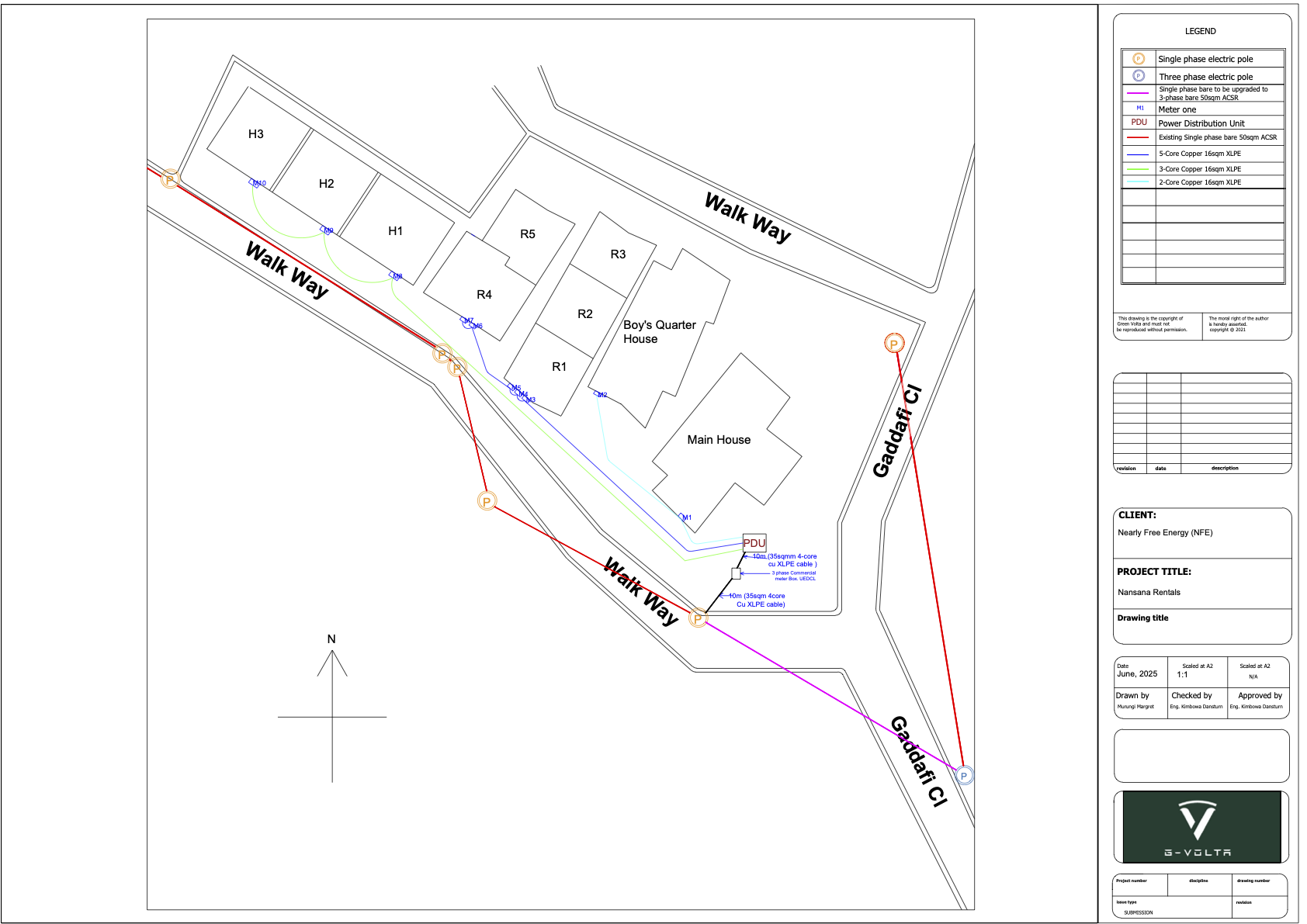
Site Layout
Procurement Pictorial
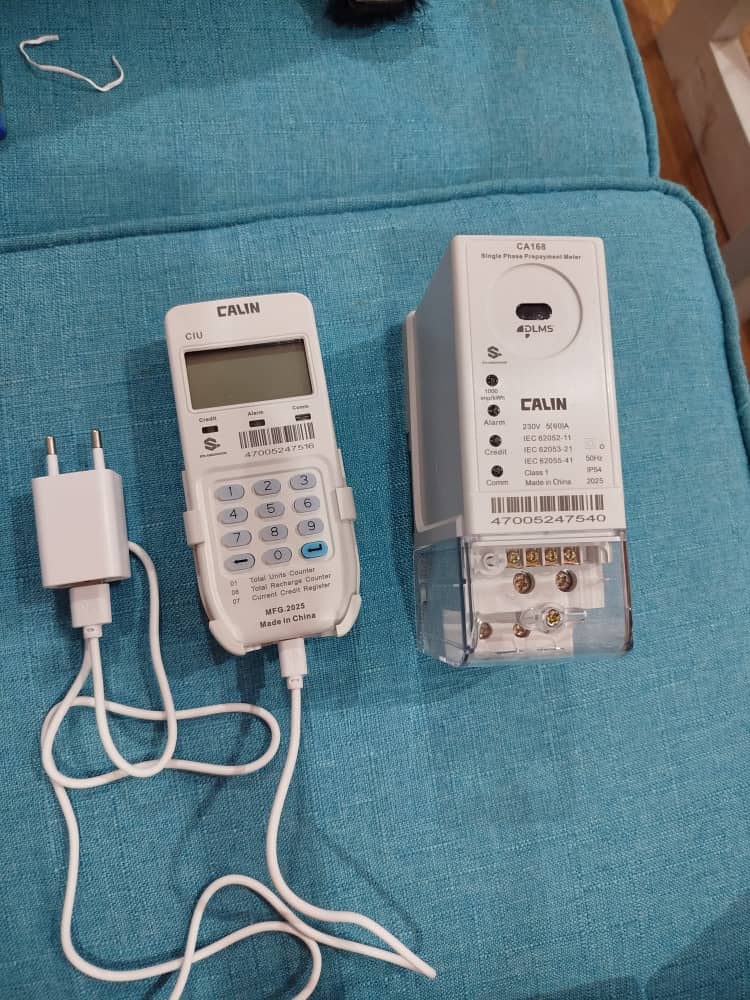
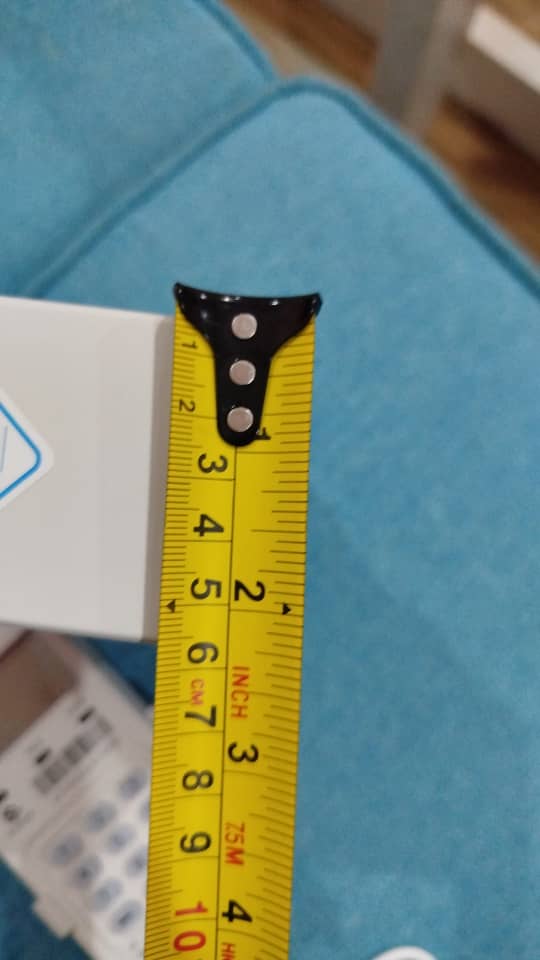
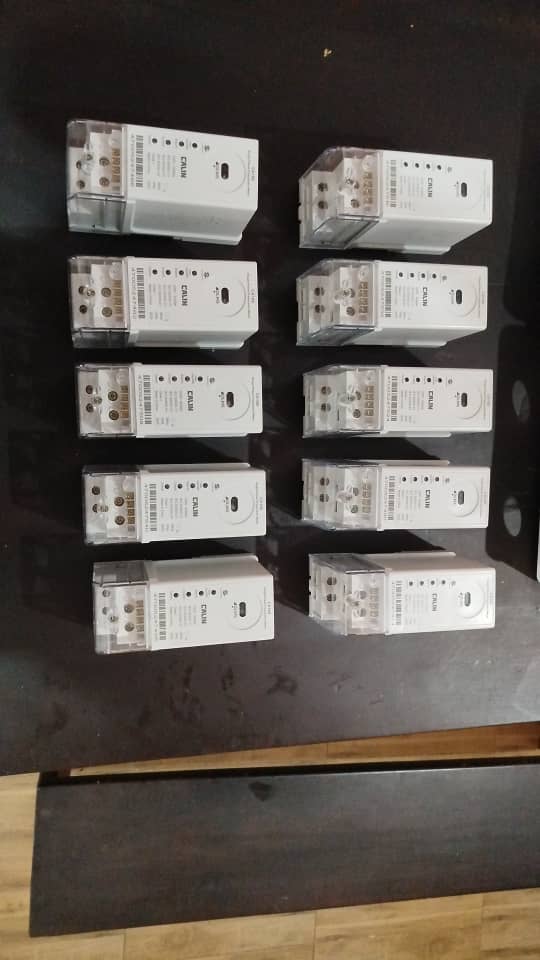
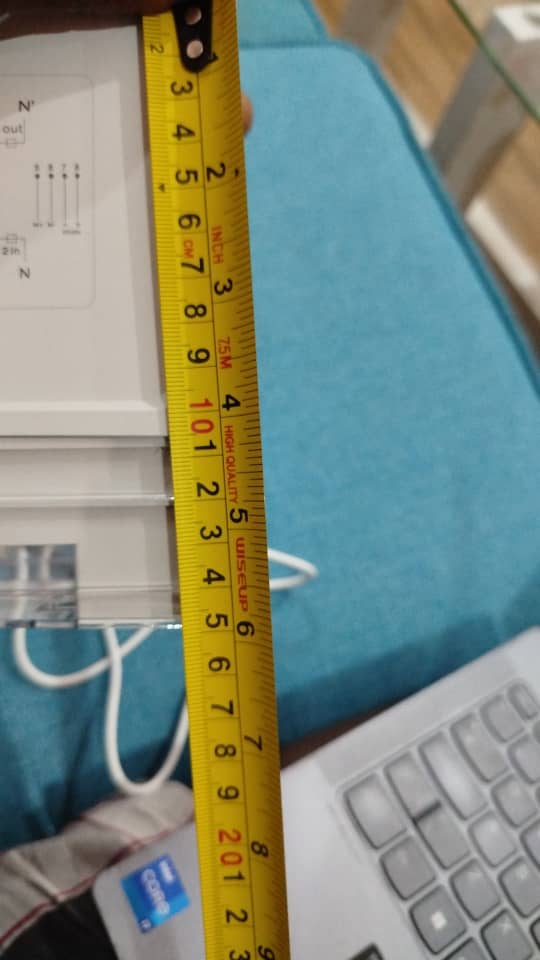
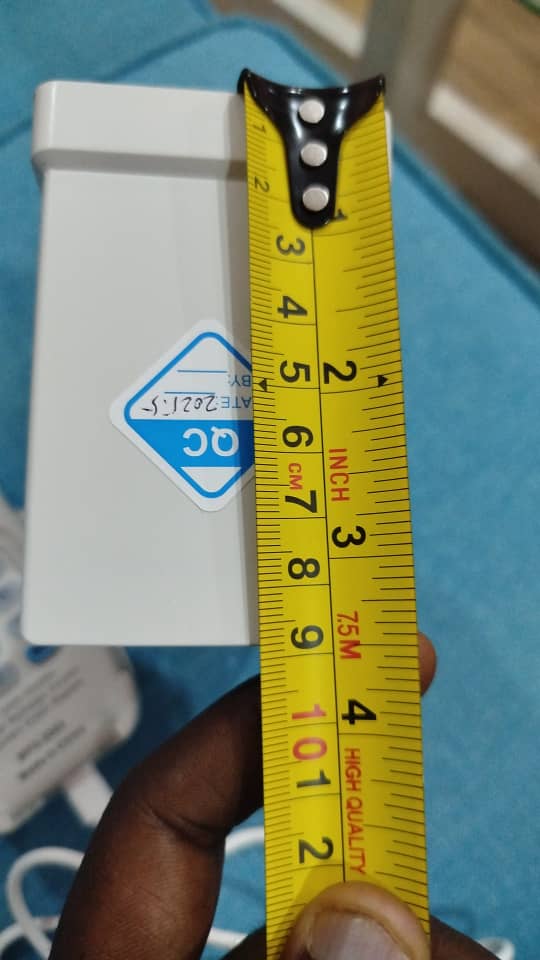
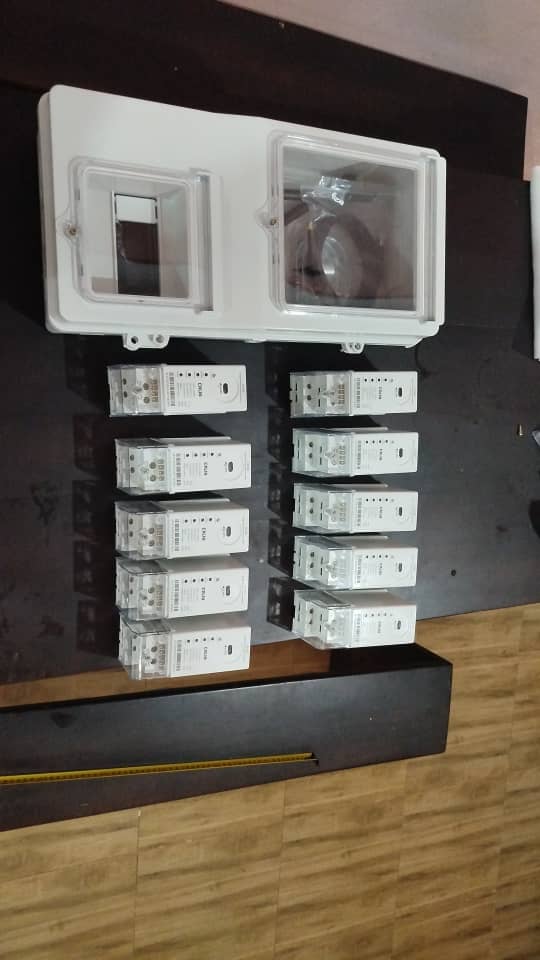
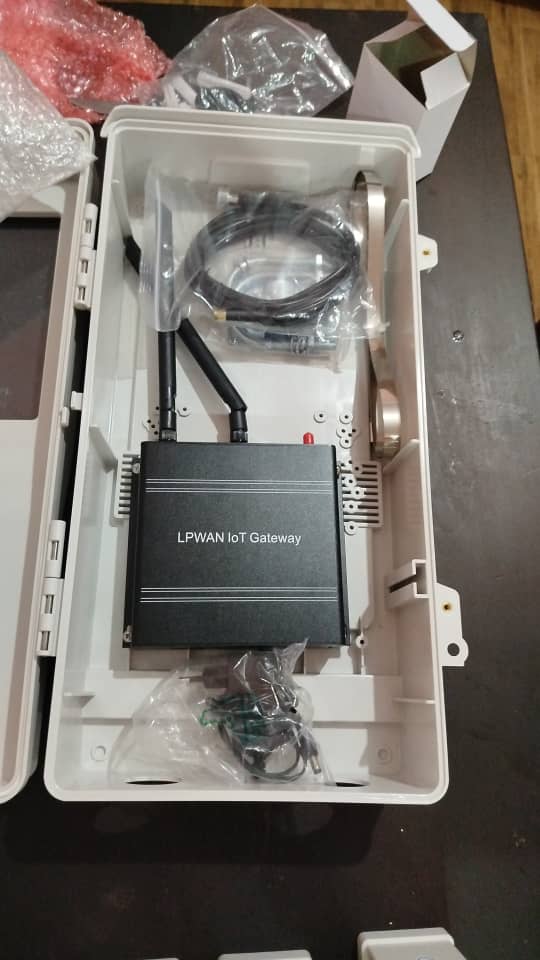
Monthly Finances
Energy Sales
We are making these sales projects based on what they spend today and not the power they use.
- Number of Customers: 10
- Average historical spend per customer: 80,000 UGX per month (about 3kWh per day, for 30 days)
- Total Revenue: 800,000 UGX per customer (800 UGX per kWh)
Expenses
- Bulk Purchase of power: 491,760 UGX (546.4 per kWh at 3kWh per day for 30 days for 10 customers)
- Taxes (18% VAT) - Charge to customer?
- Operations: 100,000 UGX
- Real time expenses tracked here on Open Collective
Net Returns
- Sales - Expenses: 308,240 UGX
Sezibwa Site Plan for Phase 2

Ownership (Membership)
This project is community owned as per the model described here.
Funders
- NFE - 21,300,071 UGX
- Unallocated - 3,936,929 UGX
Workers
- NFE
Customers
- Non Eligible yet
Phase 1 Pictorial
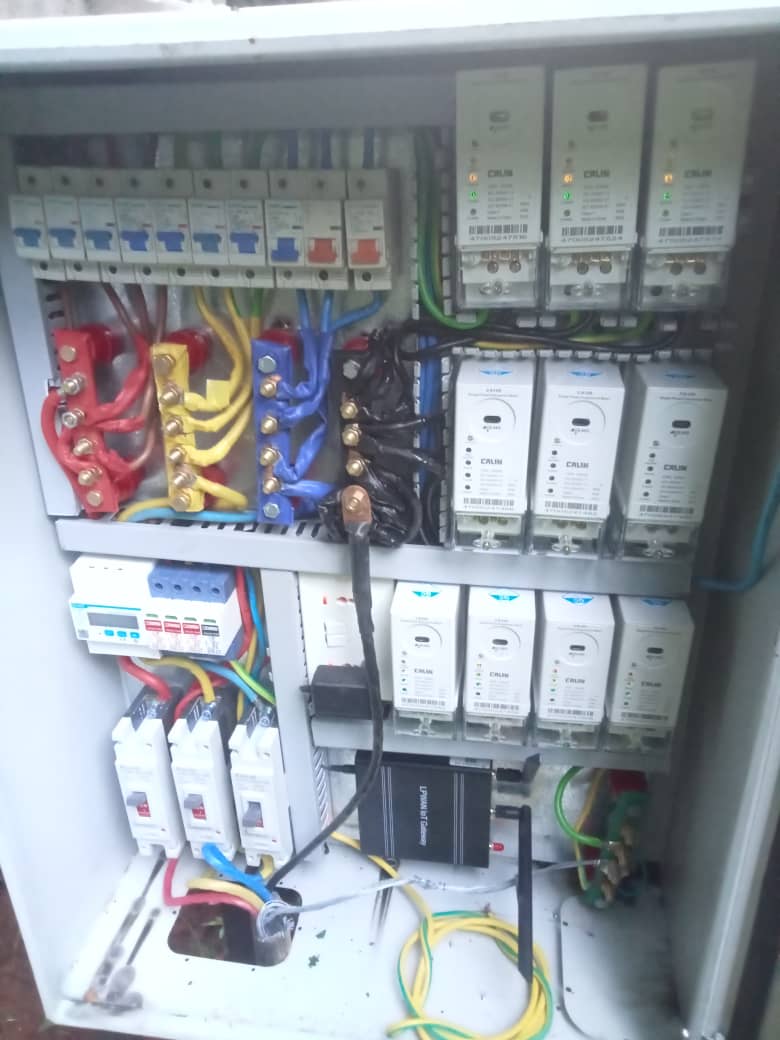
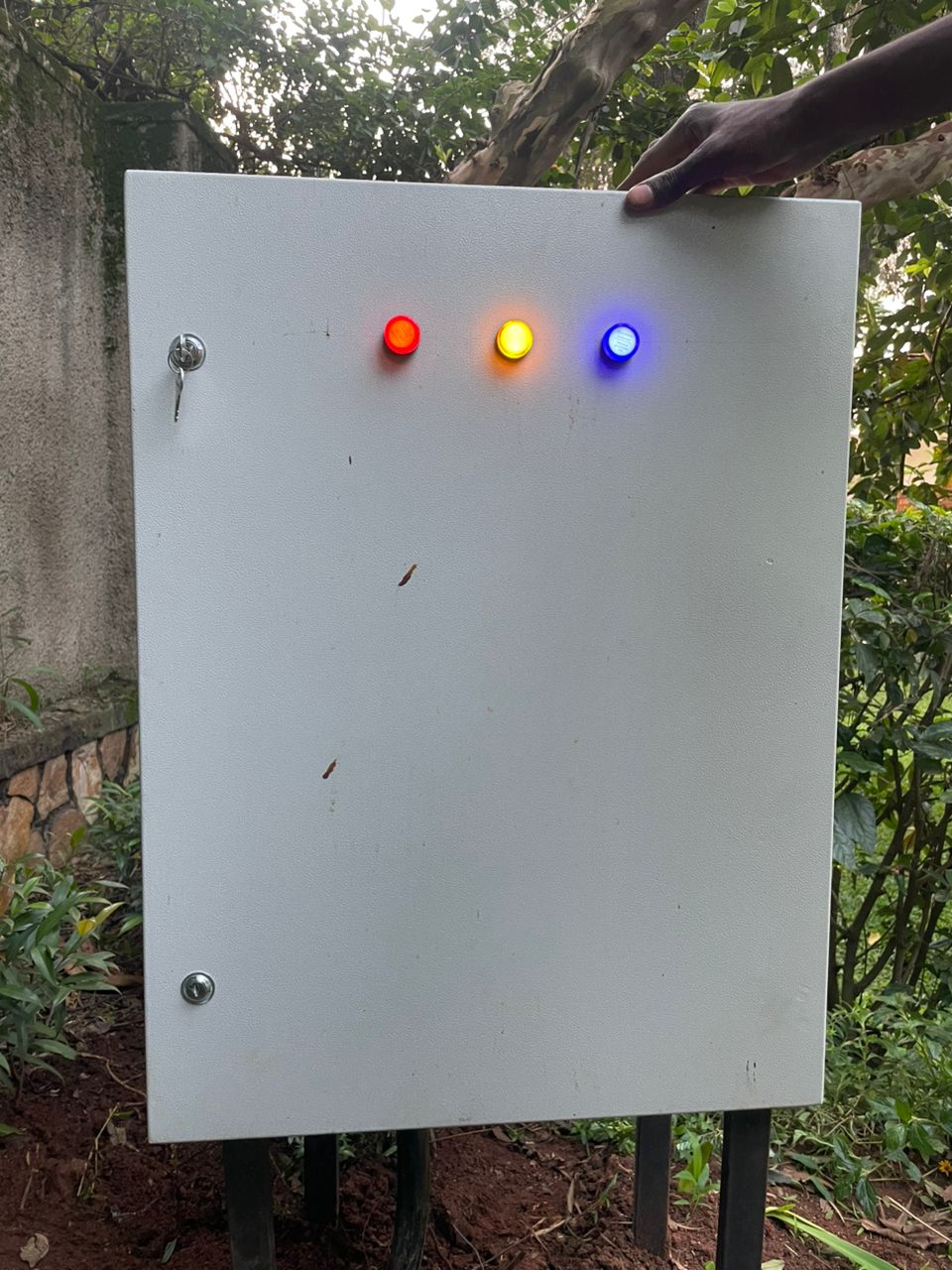
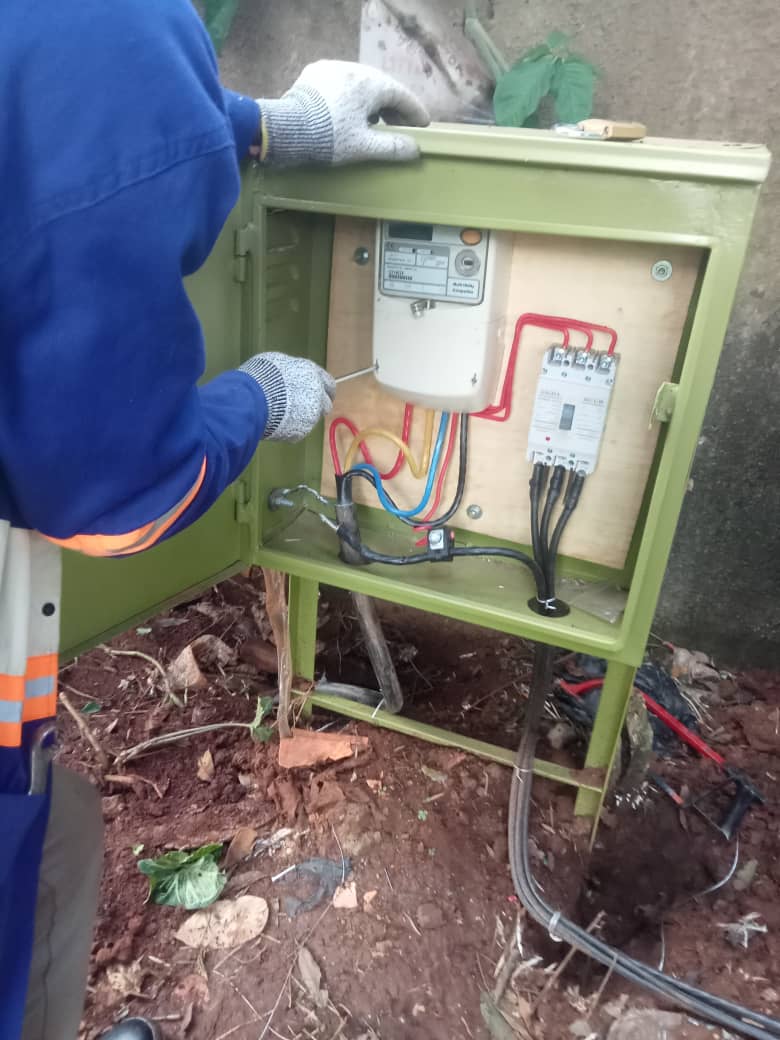
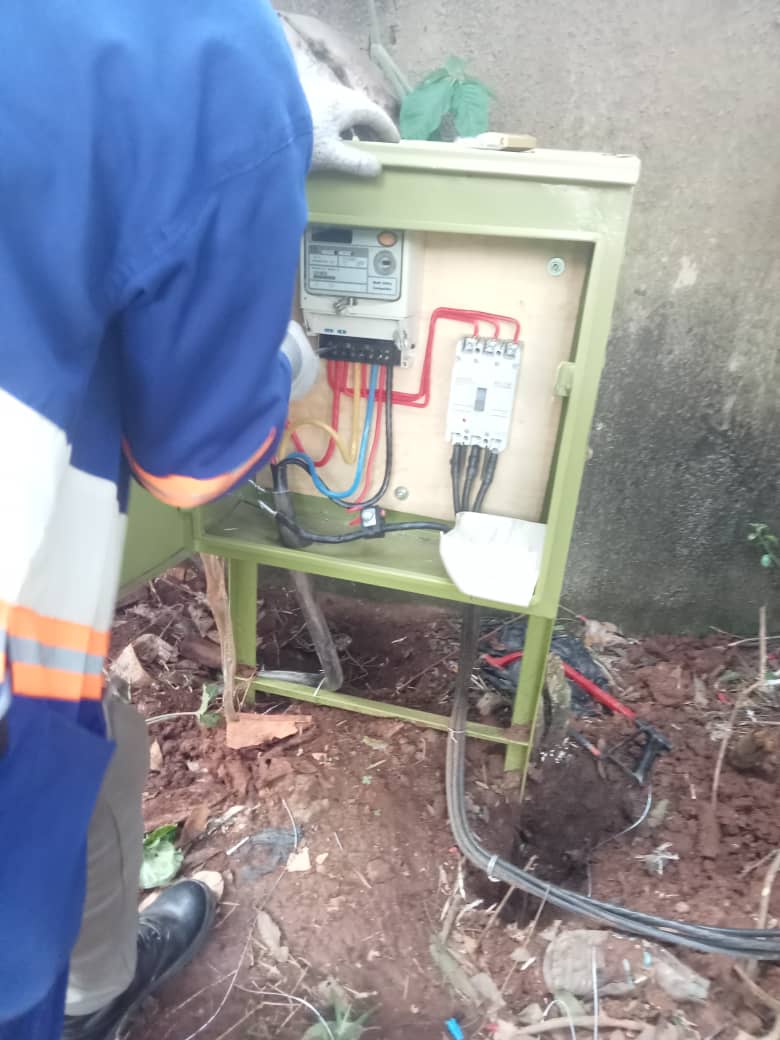
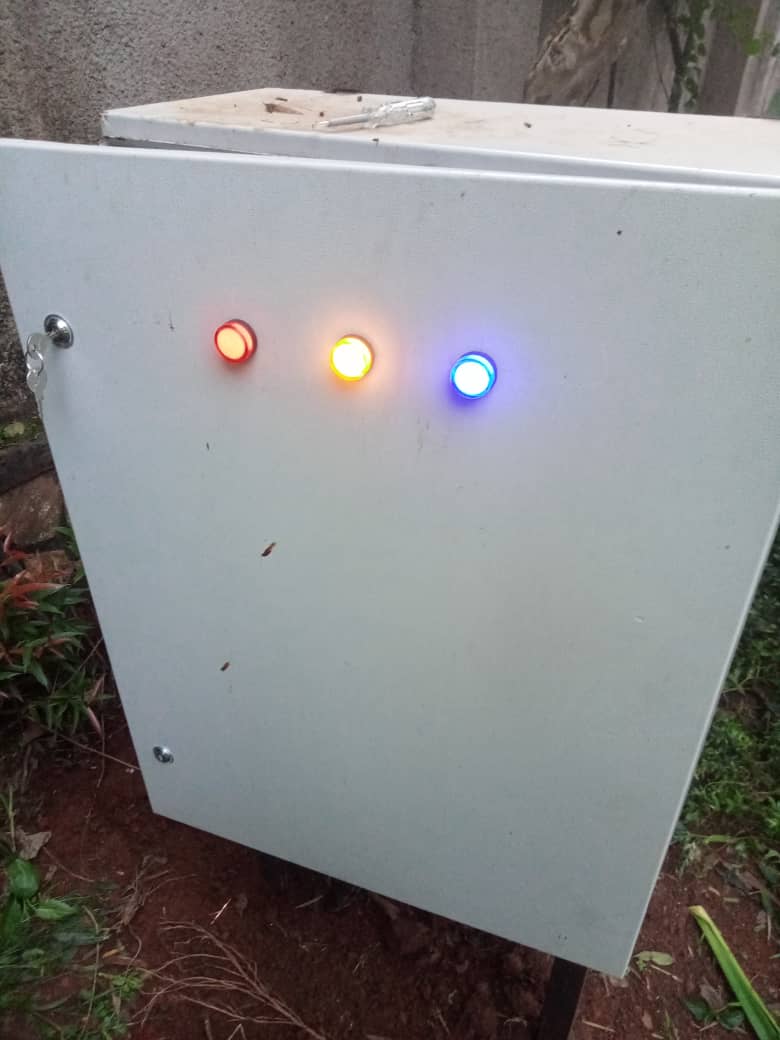
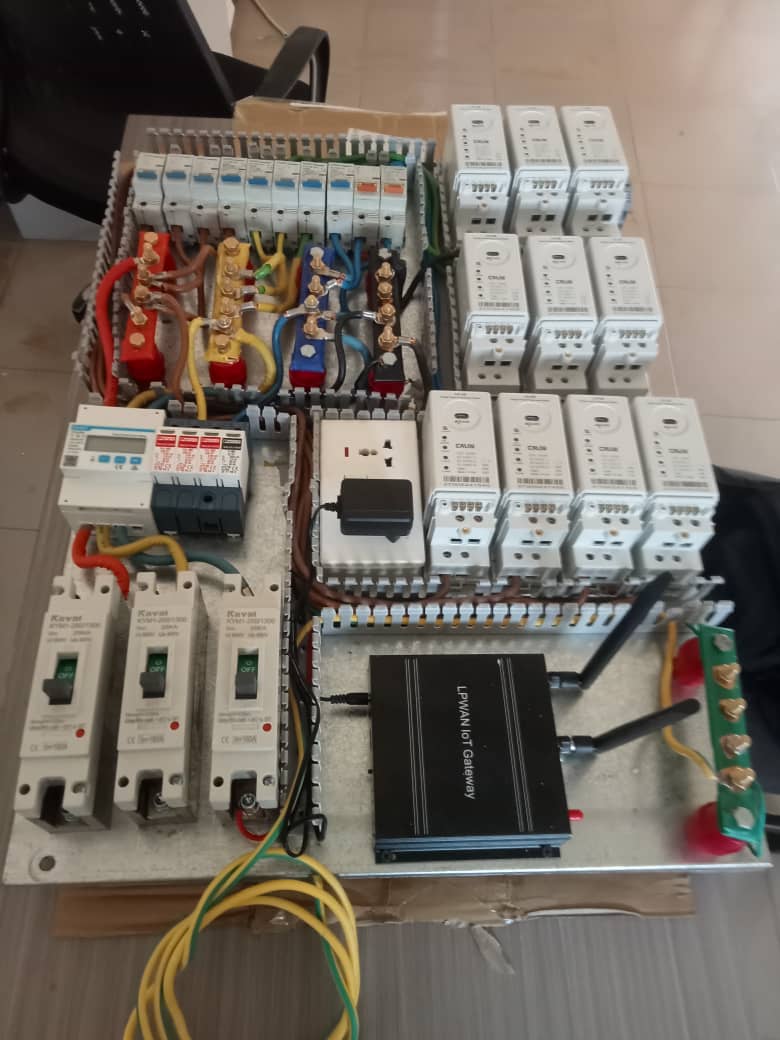
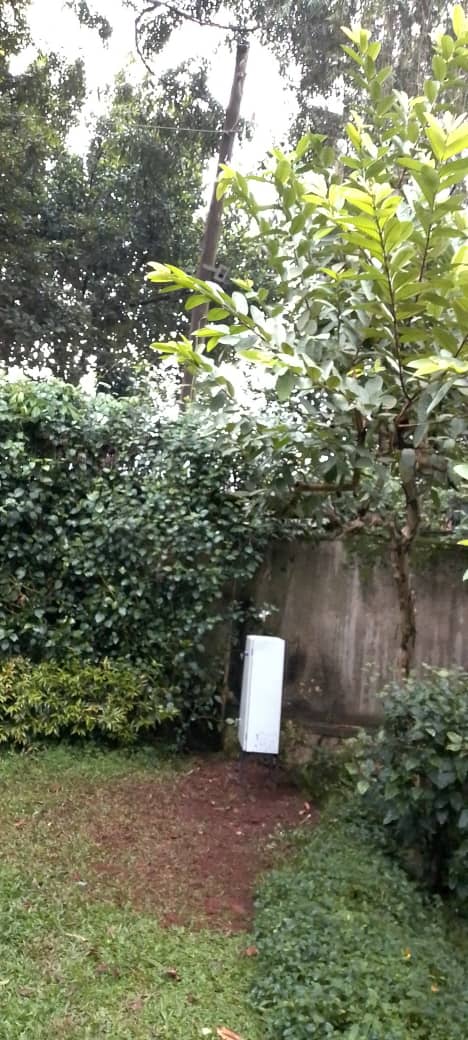
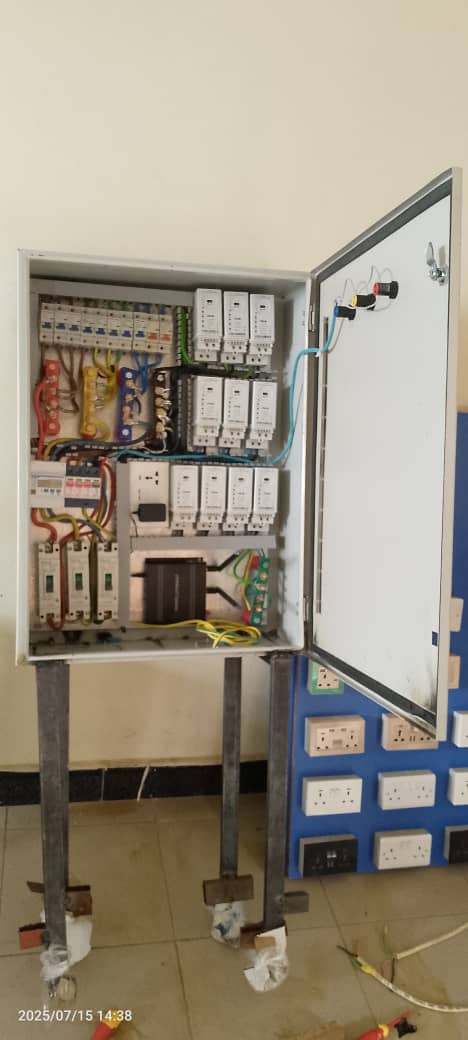
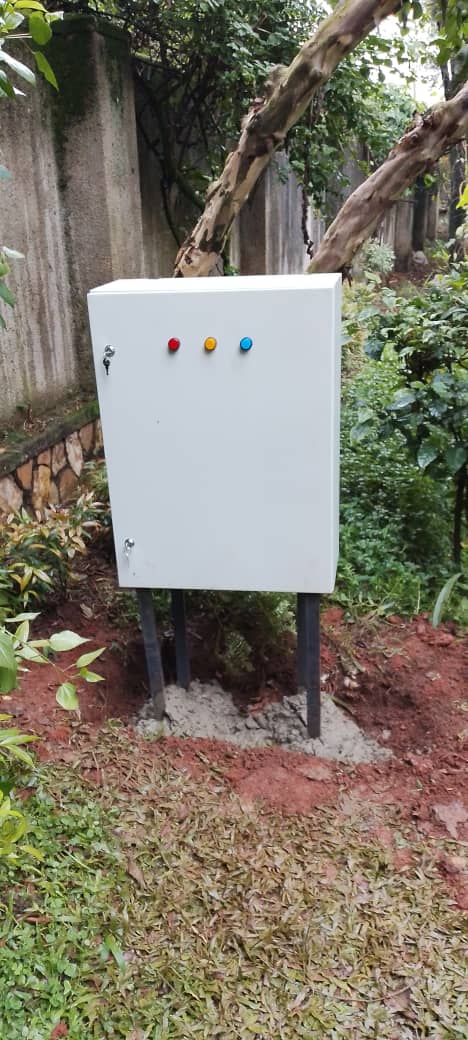
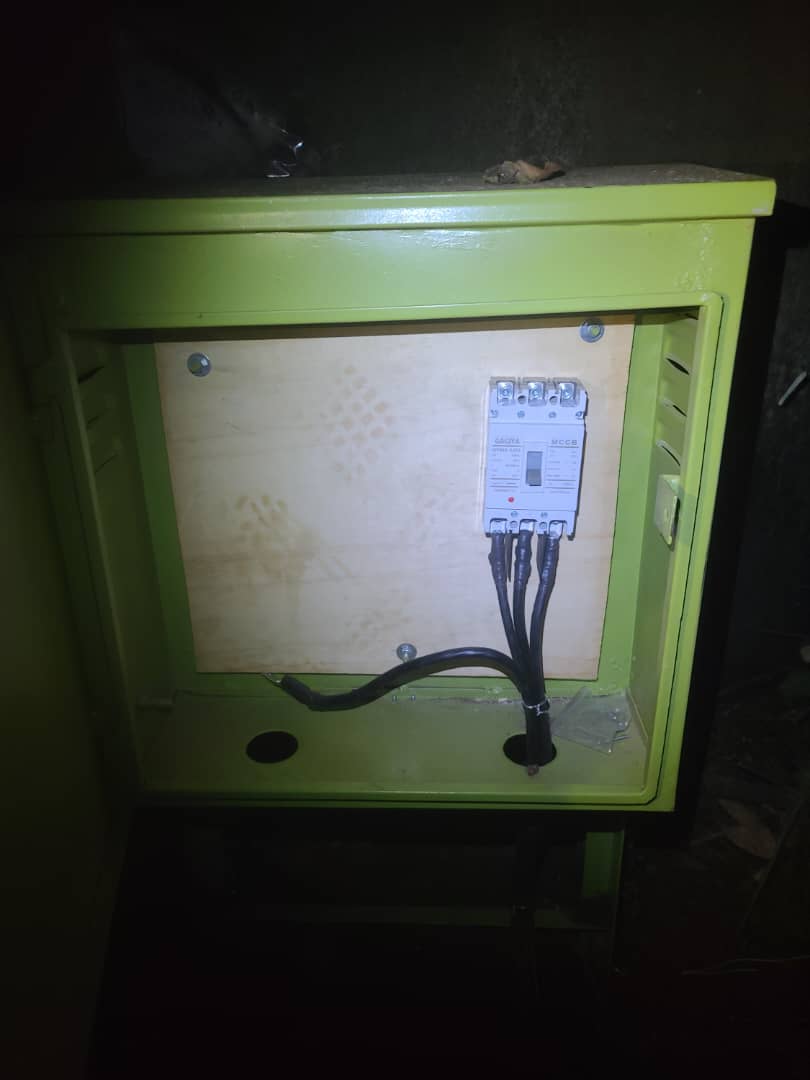
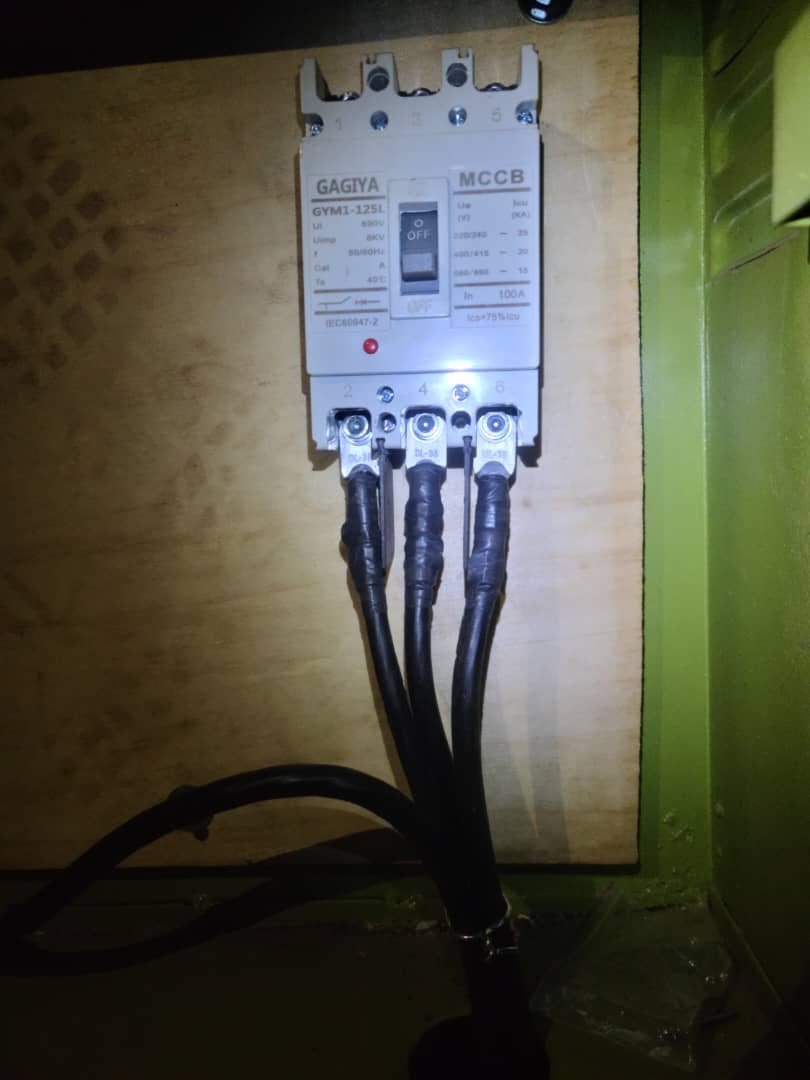
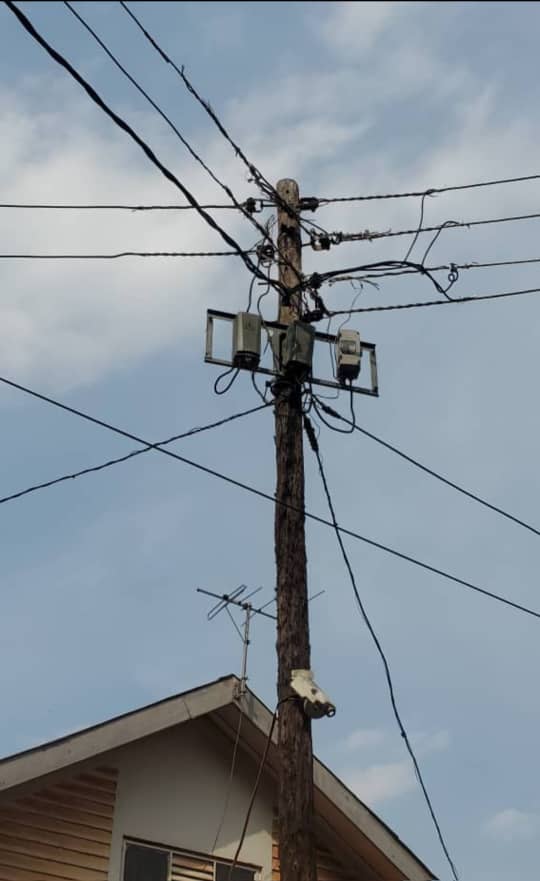
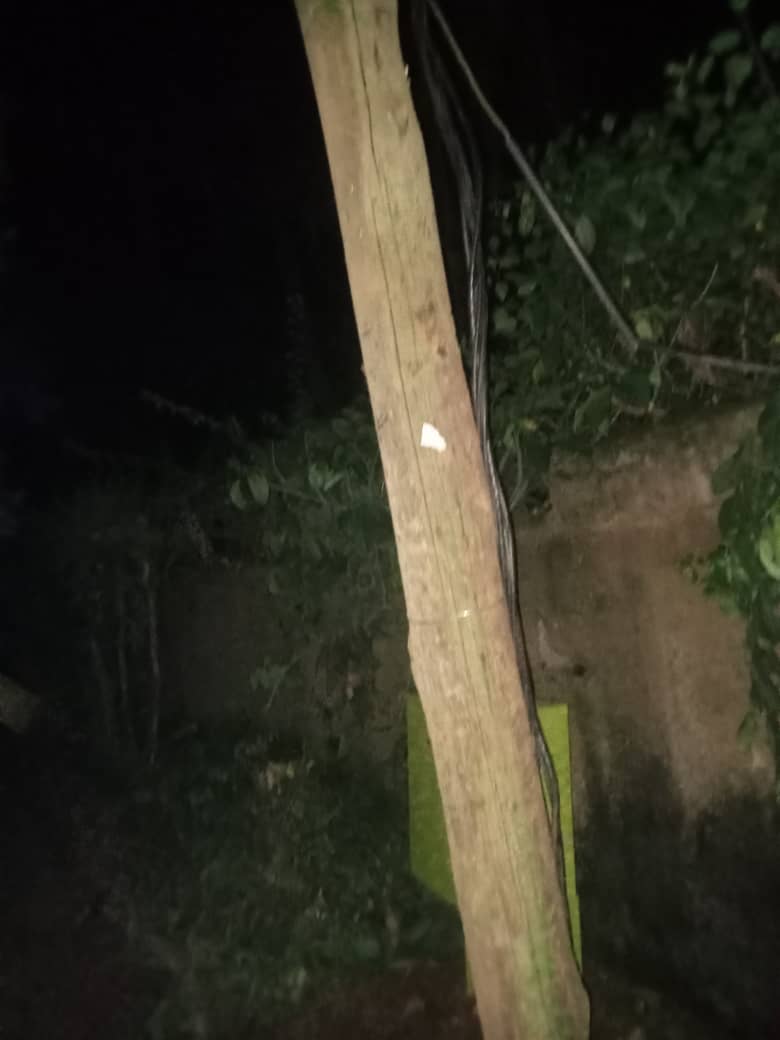
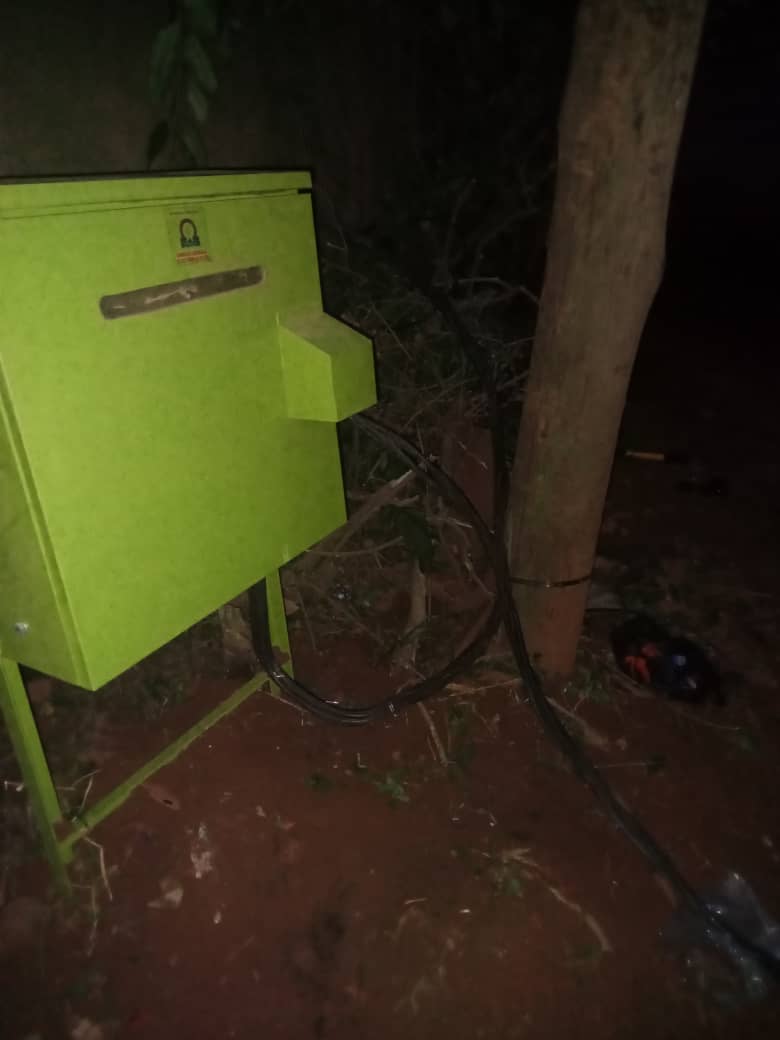
Customer Registry
| Name | House Number | Contact | Meter Number |
Inspection Document
Welcome Note to Customers
Hello, This is Aaron from Nearly Free Energy. We provide reliable electricity to neighbourhoods like yours.
Your landlady has agreed to work with us to bring reliable power to your neighborhood. This will be done in the a 3 phase process.
Phase 1: Smart Metering:
We will switch you from Yaka to Smart Meters. This is needed in order for us to monitor when UEDCL power goes off so that we can size your neighbourhood backup correctly.
Phase 2: Backup installation:
We will install the right sized battery backup so that when UEDCL goes off, you power remains on. These batteries will be charged when UEDCL is on so that they can be ready when UEDCL is off. This backup will come on automatically so you should not notice when UEDCL is off.
Phase 3: Solar Generation:
We will install solar panels on your roof to help charge the batteries when UEDCL is off for much longer periods like several weeks.
Frequently asked Questions
If Yaka is gone, how will I pay for power?
You will switched from prepaid to postpaid. This is the same way you pay for your water bill. You receive a monthly bill from us via SMS and you will have 5 days to pay the bill via Mobile Money, Visa or Mastercard.
How can I know how much I have used at anytime during the month?
Please contact us on our Whatsapp business account. We shall check your smart meter and share with you our usage.
What happens when I don't pay my monthly bill by the 5th day of the month?
Your smart meter will automatically turn off power to your house. Once you pay the bill, the meter automatically turns power back on.
When will Phase 1 be completed?
Phase 1 is currently in progress. We are targeting to complete phase 1 by end of this week.
When will Phase 2 be completed?
We are targetting to start Phase 2 in December 2025, I should be completed within a month depending on transport logistics of the batteries. They are being imported from supplier overseas.
When will Phase 3 be completed?
The timelines for Phase 3 are not yet determined but will likely be within 2026.
How much will I be paying for power?
The cost of power will not change. IT is determined by ERA (Electricity Regulatory Authority). You will be paying the same domestic rate you are paying today: https://www.uedcl.co.ug/approved-tariffs. You will charged domestic rate fees per unit you use + VAT (18%) + monthly service charge (5320 UGX). All these charges exist on your Yaka bills. The only change here is that it's postpaid not prepaid.
What if I want to still pay using prepaid token like Yaka?
At this time, our system doesn't support this payment mode. But we think postpaid is better for most customers so we think you will find it more convenient than yaka tokens.
What happens to my current yaka balance and yaka meter?
UEDCL will entually reposes that yaka meter. The timelines for this are unclear. However please contact us and share your current Yaka balance, we will credit the units to your monthly bill for next month.
How can I contact you?
You can email us on team@nearlyFreeEnergy.com or Whatsapp us on 077
Outage log
| Date | Duration | Reason | Impact | Remarks |
| 1 September 2025 | 8 hours | 2/3 phases with voltage too low due to a broken link, this one impacted a wider area (whole of Nansana) | all 10 customers impacted because deployment was still in progress | Known to happen fairly often and could we temporarily resolved locally with a phase selector |
| 6th September 2025 | 1 hour | Meter Alarm triggered for Main house | Main house only | Need to investigate reason why alarm/relay was triggered |
| 9th September 2025 | 6 hours | Transmission team doing substation maintenance so they shut down the line | 10/10 houses impacted. |
Phase 1.1
Goal
- Install phase selectors to increase reliability when some phases have low voltage
| Item | Specification | Quantity | Unit Price | Amount | Remarks |
| PDU | 80cm*60cm*25cm | 1 | 900,000 | 900,000 | We need a bigger PDU in order to fit the phase selectors |
| Phase selectors | 3 | 300,000 | 900,000 | ||
| Labor | - | - | |||
| Total | 18,000,000 |
Phase 2.0
Goal: Adding Battery Capacity. We are estimating that we need to add 15 to 25 kWh of battery capacity. We are yet to do some analysis on the consumption and outage profile for the community to determine what would be the ideal capacity.
PDU layout
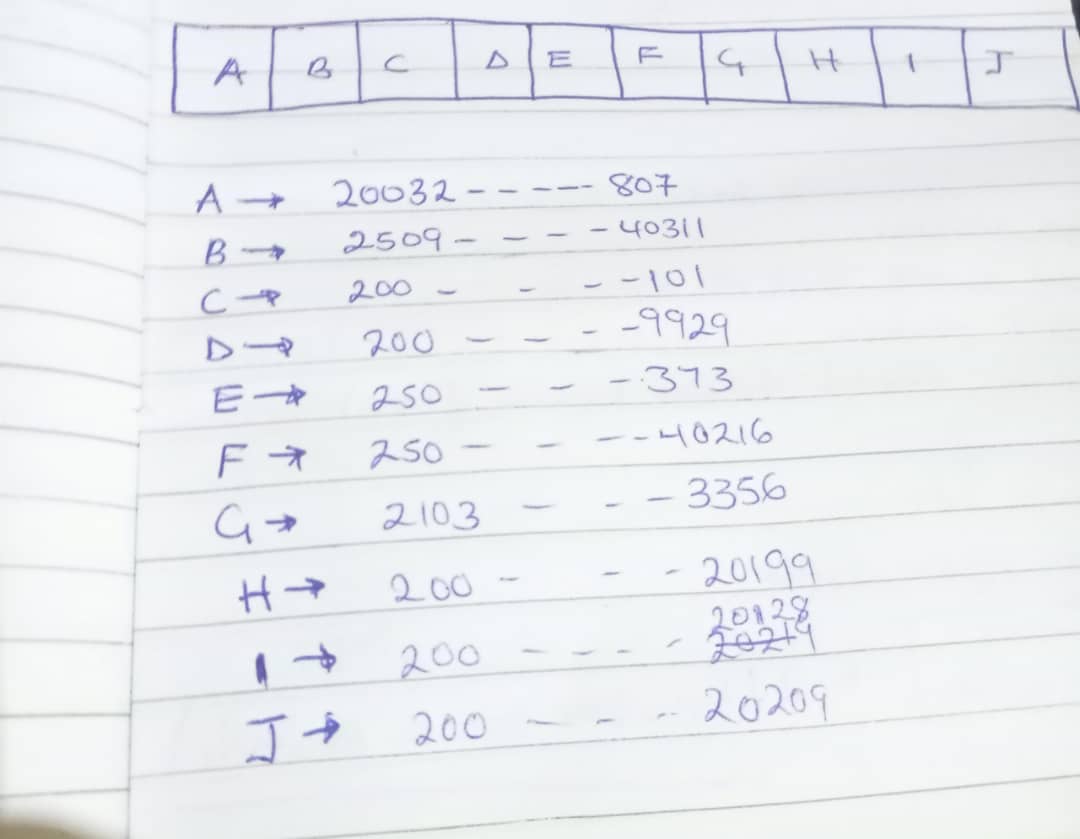
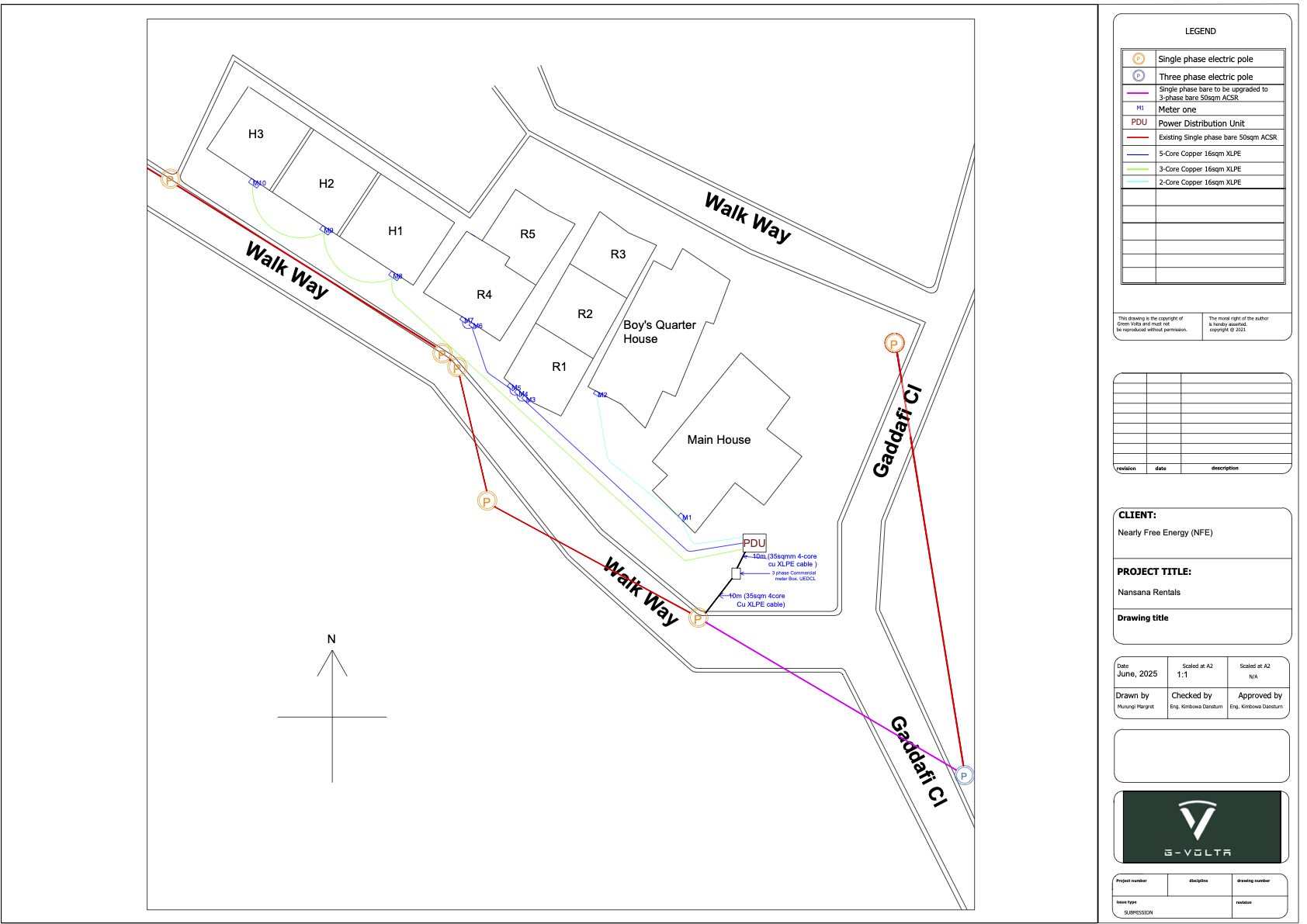
H3 - 200326020209
H2 - 210302003356
H1 - 200326020101
R1 - 250902040216
R2 -
R3 - 200326020199
R4 - 250902040373
R5 - 200326019807
Boys Q - 200326019929
Main House - 200326020128
Nansana Community Microgrid Pilot
Demonstrating Open-Source Community Energy Systems on Unreliable Grids
Executive Summary
Nearly Free Energy (NFE) is developing a new generation of community-owned microgrids designed for urban and peri-urban communities connected to unreliable electricity grids. Unlike traditional rural electrification microgrids, NFE's approach focuses on improving reliability, resilience, and long-term energy abundance for communities that already have a grid connection but experience frequent outages and poor service quality.
To validate this approach, NFE deployed its first pilot microgrid in Nansana, Uganda. The pilot currently serves 10 households and provides a real-world environment for testing smart metering, distributed energy resource (DER) management, battery-backed reliability services, and open-source microgrid control technologies.
The pilot has successfully demonstrated the technical feasibility of NFE's Microgrid OS architecture and provided valuable operational data that is informing the design of larger community deployments.
The Problem
Over the past decade, electricity access has improved significantly across Africa. However, millions of households remain connected to grids that suffer from frequent outages, voltage instability, and poor reliability.
Nansana reflects this challenge. While households are connected to the national grid, they regularly experience power interruptions that affect household activities, communications, education, and small businesses.
Traditional backup solutions such as petrol and diesel generators are expensive, noisy, polluting, and inaccessible to many households.
NFE believes that community microgrids can provide a more affordable, scalable, and sustainable alternative.
Project Objectives
The Nansana pilot was established to:
-
Validate NFE's Microgrid Cultivation Blueprint.
-
Test open-source energy management technologies in real operating conditions.
-
Evaluate customer demand for improved electricity reliability.
-
Develop and test smart metering infrastructure.
-
Demonstrate battery-backed community energy services.
-
Generate operational data for future commercial deployments.
Pilot Configuration
Location
Nansana, Wakiso District, Uganda
Community Served
10 households
System Components
-
Smart meters installed at participating households.
-
Community battery storage system.
-
Backup power infrastructure.
-
Raspberry Pi 4B controller running OpenEMS.
-
Communications network for remote monitoring and management.
-
MicroPowerManager integration for metering and operational functions.
Operational Phase
The pilot currently operates within the Monitor and Backup phases of NFE's Microgrid Cultivation Blueprint.
Technical Innovation
One of the most important outcomes of the pilot was the transition from a proprietary gateway architecture to an open-source Microgrid OS architecture.
Initial Architecture
The original system relied on a proprietary gateway capable of communicating only with specific smart meter vendors.
This approach limited flexibility, interoperability, and scalability.
Current Architecture
The pilot now uses a Raspberry Pi 4B running OpenEMS.
This controller can communicate with:
-
Smart meters using Modbus.
-
Battery systems.
-
Inverters.
-
Future distributed energy resources.
This transition has significantly improved interoperability and established the foundation for NFE's Microgrid OS platform.
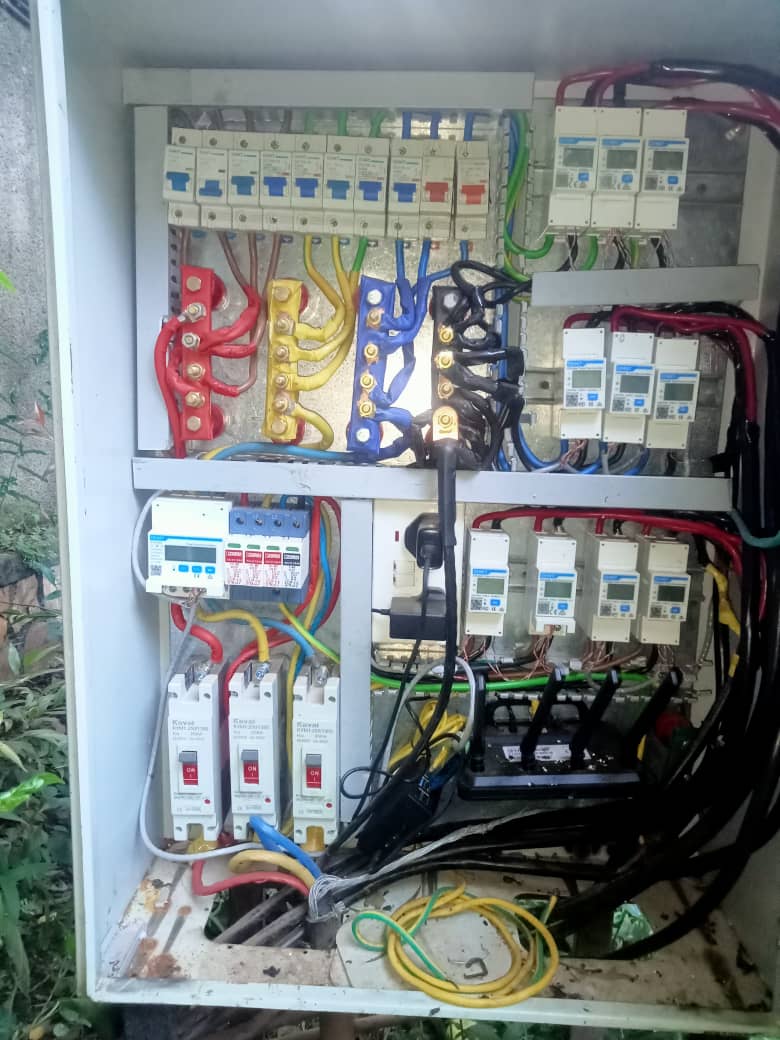
Images from site
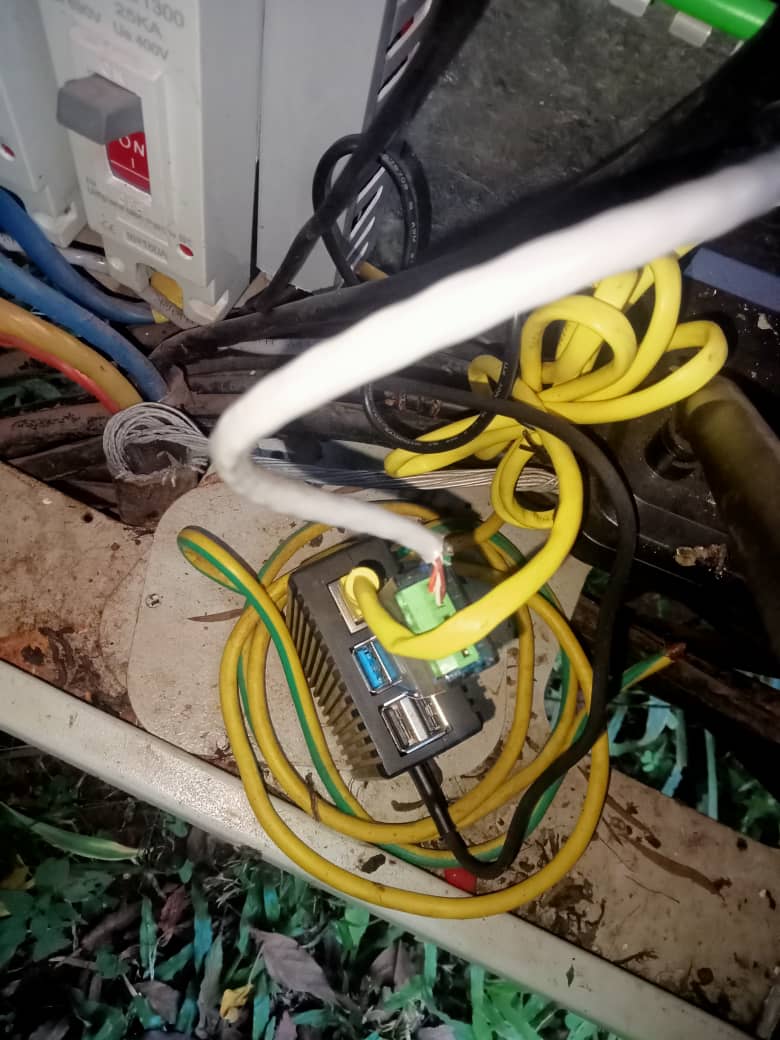
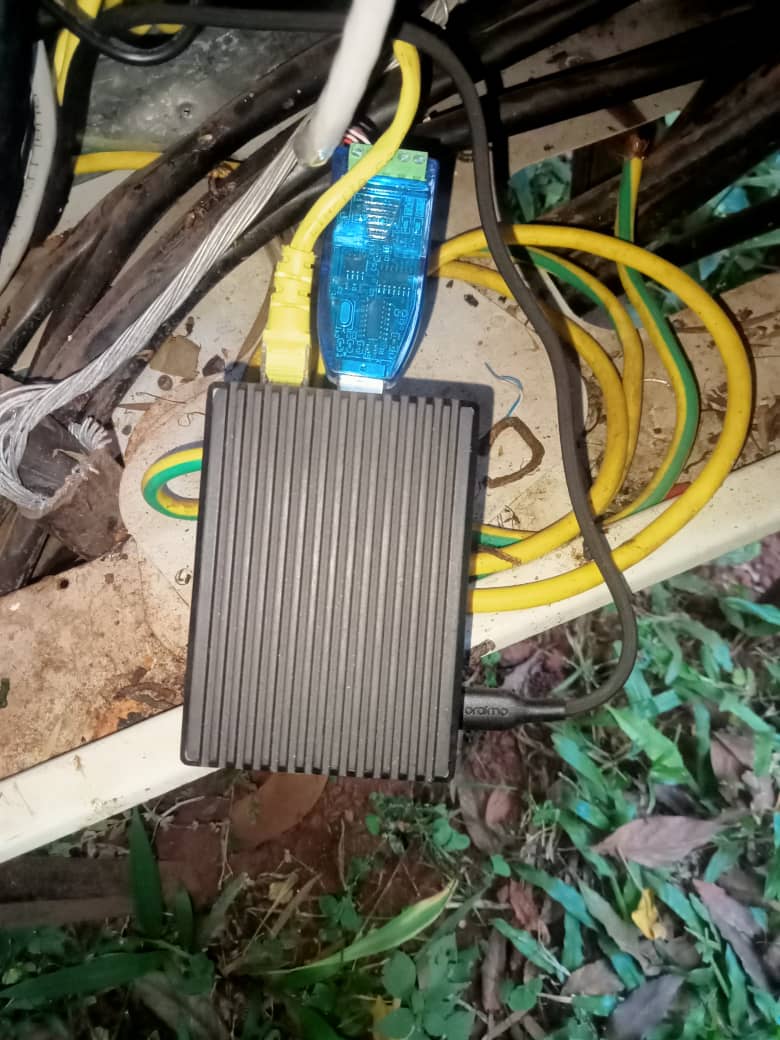
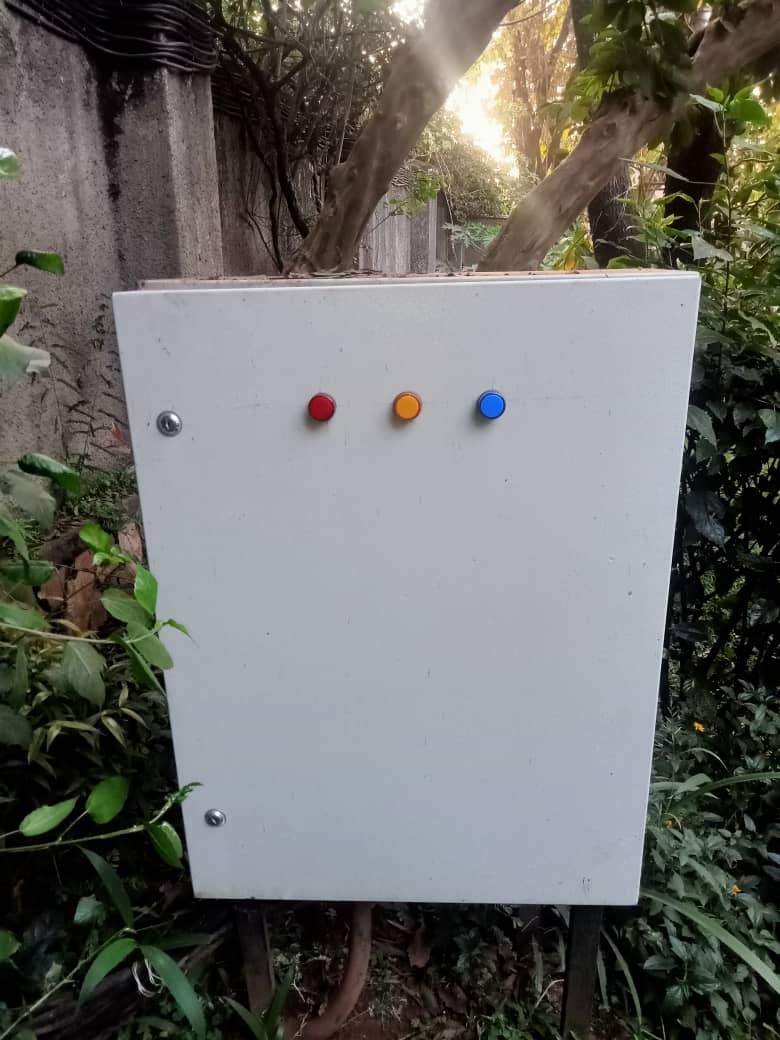
Key Learnings
Open Standards Enable Scalability
The pilot confirmed that open standards such as Modbus can support interoperability across multiple device types and vendors.
Communities Value Reliability
Participating households consistently identified reliability as a higher priority than simply having access to electricity.
Software is as Important as Hardware
The ability to monitor, orchestrate, and automate distributed energy resources is essential for scalable community microgrids.
Phased Adoption Reduces Risk
The Monitor → Backup → Backbone → Community Power Plant progression allows communities to adopt advanced energy services gradually while minimizing technical and financial risks.
Next Phase
The next phase of development will expand the solution from 10 households in Nansana to approximately 100 households in Garuga.
Key objectives include:
-
Development of an open-hardware controller based on the NPE X500 CM4 platform.
-
Deployment of additional battery and solar assets.
-
Expansion of smart metering infrastructure.
-
Enhancement of Microgrid OS capabilities.
-
Validation of autonomous microgrid operation.
-
Progression toward the Backbone phase of the Microgrid Cultivation Blueprint.
Long-Term Vision
NFE's long-term vision is to enable thousands of households across Africa to benefit from reliable, resilient, and increasingly abundant clean energy through community-owned microgrids.
The Nansana pilot represents the first step toward a scalable platform that combines:
-
Open-source software.
-
Open-hardware controllers.
-
Distributed energy resources.
-
Community ownership.
-
Autonomous microgrid operations.
By demonstrating these capabilities in a real-world environment, the pilot has established the technical and operational foundation for future deployments and broader adoption across Africa.
Microgrid Cabinet Line Diagram

Sezibwa rooftop solar: panel layout and installer brief
For: the Green Volta installers and the NFE site team. Owner: Aaron Tushabe. Last reviewed: 21 Oct 2026. Status: proposed. The layout was worked out from satellite imagery, so do the site checks below before drilling.
The plan
- What: 8 × Golden Sun GS600N-144M (600 W, 2278 × 1134 mm, 30 kg each), 4.8 kWp in total, from the Muden quote.
- Where: the long north-west-facing face of the house at about 0.36236, 32.53602 (Nansana). The pin 0.36245, 32.53592 lands on the neighbour's roof about 15 m to the north-west.
- How: one row in portrait (long side up the slope), split into two groups of 4 with a 1.5 m gap around a vent or flue. The top edge sits about 0.4 m below the ridge. Flush-mounted at the roof pitch.
- Wiring: all 8 panels in one series string into PV1 of the SRNE ASP48120SH3. PV2 stays free.
Why this roof face
At 0.36° N the sun is close to overhead all year, so the direction a face points makes little difference:
| Roof face | kWh per year | Worst month (kWh/day) |
|---|---|---|
| North-west (chosen) | 6,780 | 16.8 (Nov) |
| South-west | 6,770 | |
| South-east | 6,660 | 15.7 (Jun) |
| North-east | 6,640 |
PVGIS (SARAH3 data, 2005 to 2023), 20° pitch, 14% system losses, no tree shade.
The trees decide it. Tall trees stand against the north, north-east and east sides of the house, and big trees to the south and south-west. The north-west face looks away from most of them. All 8 panels are on one string, so shade on one panel pulls down all 8. The north-west face also gives the steadiest output through the year.
Site checks before drilling
Words used in these checks
| Word | What it means | How to check it on site |
|---|---|---|
| Ridge | The top line of the roof, where the two roof faces meet. | |
| Eave | The bottom edge of the roof, where the gutter is. | |
| Roof face | One sloping side of the roof. Ours is the side facing the alley (north-west). | |
| Pitch | How steep the roof is, in degrees. | Lay a phone level app on the sheet, pointing up the slope. Or use a 1 m level and the table in picture 4. |
| Face depth | The distance from the eave to the ridge, measured along the sheet (following the slope, not on the ground). | Run a tape up one rib from the gutter edge to the ridge. It must be at least 3.0 m. |
| Purlin | Wooden strips under the iron sheets, running the same way as the ridge. The sheets are nailed to them, and the L-feet must screw into them. | Each straight row of roofing nails across the roof is a purlin. Measure the gap between rows (picture 2). |
| Rafter | The sloping timbers under the purlins, running from eave to ridge. | Look inside the roof space if you can, and check for rot or termite damage. |
| Crest and valley | The high ribs and the low channels of the corrugated sheet. | Drill only through a crest. Rain runs down the valleys (picture 3). |
- Vent or flue. Satellite shows two dark marks about halfway along the face, roughly 8.7 m from the north-east end. If nothing is there, close the gap between the groups to about 0.3 m (keep the two rail pairs separate) and centre all 8 panels on the face.
- Pitch. Measure it and write it on this page. Anything from 10° to 25° is fine.
- Face depth. Eave to ridge along the slope must be at least 3.0 m (2.28 m panel, 0.4 m at the ridge, margin at the gutter). The satellite estimate is about 4.7 m.
- Purlins. Find their positions and spacing. Each rail has to sit on a purlin line.
- Shade.
- Stand at the array position at about 8 am, noon and 4 pm, or use a sun-path app.
- Trim the trees on the north, north-east and east sides and on the south and south-west sides to below ridge height.
- Check that the neighbour's roof (north-west, across the alley) is not higher than our ridge.
- Roof condition. Replace rusty or loose sheets and rotten timber under the array first.
- Cable route. Measure from the drop point to the inverter so the 6 mm² cable can be ordered.
Mounting
The hardware on the Muden quote matches this layout exactly: two 5.1 m rails per group of 4 portrait panels.
| Item | Per group | Total | On the quote |
|---|---|---|---|
| Rail, 5100 mm | 2 | 4 | 4 |
| End clamp | 4 | 8 | 8 |
| Inter clamp | 6 | 12 | 12 |
| L-foot | 6 | 12 | 12 |
- Rail position: rails run parallel to the ridge, about a quarter of the panel length (about 570 mm) in from the top and bottom edges, so about 1.14 m apart.
- The panel datasheet does not give the clamping zone, so check Golden Sun's installation manual.
- Move the rails within that zone so they land on purlins.
- L-feet: 3 per 5.1 m rail gives spans of about 2.25 m. Check the rail's span table. 4 per rail (about 1.5 m spans) is safer: that's 4 more L-feet, about 48,000 UGX at the quoted price.
- Fixing: fix the L-feet into the purlins, not just the iron sheet. Go through the crest of the corrugation, with EPDM washers and sealant.
- Airflow: leave about 100 mm under the panels. Cooler panels produce more.
- Load: about 240 kg of panels plus rails, spread over about 21 m².
Wiring: one string of 8 into PV1
| String of 8 | SRNE ASP48120SH3, per PV input | OK | |
|---|---|---|---|
| Open-circuit voltage | 422 V at 25 °C, about 440 V on a cold morning | 800 V max | ✓ |
| Max-power voltage | 359 V, about 310 V on a hot afternoon | 200 to 650 V tracking range | ✓ |
| Current | 13.4 A at max power, 14.0 A short-circuit | 22 A max | ✓ |
| Power | 4.8 kW | 9 kW max | ✓ |
The hot and cold figures assume typical n-type temperature coefficients (open-circuit voltage −0.27 %/°C, max-power voltage −0.30 %/°C), because the panel datasheet does not give them.
- Two strings of 4 will not work. They would run at about 155 to 180 V, below the inverter's 200 V minimum. The 4 + 4 split is physical only.
- Panel to panel: panels 1 to 4 connect directly with their 300 mm leads. A short jumper crosses the gap to panel 5, then panels 5 to 8 connect directly.
- Return lead: the string's + leaves panel 1 and its − leaves panel 8, so one lead runs back along the row (about 11 m).
- Tie it under the panels along the lower rail.
- Drop both leads at whichever end is nearer the inverter.
- Keep + and − together all the way to the inverter. A small loop picks up less lightning surge.
- Cable: 6 mm² UV-rated PV cable (the 4 mm² was out of stock). Voltage loss over a 30 m run is under 1%.
- MC4 connectors: crimp them with the proper tool and mate only with compatible connectors.
- At the inverter:
- The 32 A 4-pole DC isolator, wired to its diagram for 500 V+ DC (usually two poles in series on each polarity).
- Then the 1000 V DC surge protector, with a short lead to earth.
- The inverter is IP20, so it must be indoors.
- Earthing: bond every rail and panel frame to the site earth with at least 6 mm² copper.
Not on the Muden quote: bring these
- 6 mm² PV cable for the return lead (about 11 m), the jumper and the run to the inverter. Measure first; 30 to 40 m was budgeted.
- Earthing conductor, lugs or bonding clips, and the connection to the earth rod.
- Roof sealant, EPDM washers, UV-rated cable ties or clips.
- Optional: 4 extra L-feet.
Commissioning
- Before closing the isolator: check polarity and measure the string's open-circuit voltage.
- Expect about 370 to 425 V in daylight. It reads lower when the panels are hot.
- About 50 V low means a panel is left out of the string.
- About 100 V low means one panel is connected backwards.
- Insulation test: if a tester is available, test + and − to earth.
- Close the isolator. Check PV1 voltage, current and power on the inverter display and in OpenEMS.
- Photos: the panel labels and serial numbers (for the warranty), the finished array, the isolator and the surge protector.
- Update this page with the as-built positions, the measured pitch and the voltage reading.
Commissioning log
| Date and time (EAT) | Check | Result |
|---|---|---|
| 26 Oct 2026, about 16:45 | String open-circuit voltage at the bottom of the 6 mm² drop cable, isolator open (INGCO DM360011 meter, 600 V DC range) | 379 V, positive on the red probe. All 8 panels are in series, none reversed, and the drop cable is continuous. |
Expected output
Average kWh per day by month, unshaded, north-west face at 20° (PVGIS):
| Jan | Feb | Mar | Apr | May | Jun | Jul | Aug | Sep | Oct | Nov | Dec |
|---|---|---|---|---|---|---|---|---|---|---|---|
| 18.6 | 20.0 | 20.4 | 19.7 | 18.7 | 18.5 | 19.1 | 18.2 | 18.2 | 17.7 | 16.8 | 17.2 |
That is about 6,780 kWh a year. It agrees with the 5.2 peak-sun-hour assumption in the sizing re-run (about 19.5 kWh/day). Single days swing a lot with the weather. A month that comes in well below these figures points to shade or a wiring fault.
Assumptions
- Roof dimensions come from Google and Esri satellite imagery, scaled from the Google Maps scale bar, and are good to about ±0.5 m. The pitch is assumed to be 20°.
- The PVGIS figures include no tree shading.
- Sources: Golden Sun GS600N-144M datasheet; SRNE ASP 8 to 12 kW three-phase datasheet V1.0.
Related pages
- Sezibwa solar purchase: final Muden quote (19 Oct 2026)
- Solar Sizing Re-run, Sept 2026 (600 Wp panels)
- SRNE ASP48120SH3 Safe Settings Write: design, registers, and commissioning
- Microgrid Cabinet Line Diagram
As built, 26 Oct 2026
- All 8 panels in one row on two continuous rail lines; the unused vent was removed (landlord agreed), so no gap.
- Clamps: the one-row layout needs 14 inter + 4 end clamps; 12 + 8 were supplied, so the 4 spare end clamps were used back to back at one joint.
- 6 mm² PV cable (negative 25 m, positive 15 m; ~0.4% drop). FMPV32 4-pole DC isolator, manual layout 4B; 1000 V DC surge protector across +/−; inverter PV1 (PV2 unused).
- Readings: 379 V open circuit at 16:45 EAT; inverter PV1 152 V at sunset (18:39).
- Open: earthing (no earth point on site) for the surge protector and rails; possible tree shading at one end of the array.
- Operating plan and commissioning log: Sezibwa Solar + Battery Operating Plan.
Business Model
Business Models for the NFE Microgrid OS
[!info] Current working basis — August 2026
Tariff: UEDCL Code 10.2, Q3 2026: Peak 666.5 / Shoulder 562.1 / Off-Peak 429.7 UGX/kWh. The full tariff schedule must remain a configurable model input because ERA/UEDCL rates change periodically. Sezibwa base case: zero export value until site eligibility, interconnection terms, and the applicable export credit are confirmed. All commercial offers should be re-run with site-specific load, tariff, capex, financing, and reliability assumptions before commitment.
Update, October 2026: Commercial RPMs. For commercial facilities NFE has chosen the NFE-owned energy-service model, with reliability included in a utility-matched tariff (no separate reliability fee) and a 50% minimum monthly payment. That differs from the "explicit reliability tier" and "partner-led first" guidance below, which came from the Sezibwa community case. See NFE Commercial Reliable Power Microgrids and the Commercial RPM decision log.
Purpose
NFE Microgrid OS needs a business model that creates durable recurring revenue while improving the economics and reliability of community energy systems. Two ownership models remain viable, but the current Sezibwa evidence suggests a clear sequencing principle: scale first through partner-owned deployments, while using NFE-owned projects selectively where the project return and strategic value justify tying up capital.
The operating system is the common product in both models. Ownership determines who funds the assets, carries performance risk, and receives the energy margin.
Current evidence from Sezibwa
The Sezibwa analysis is not a universal tariff card, but it gives NFE a grounded reference case for product and commercial decisions:
| Question | Current finding | Business implication |
|---|---|---|
| What should be added to the existing inverter and 8.9 kWh battery? | Solar first. Adding battery at today's price lowers NPV. | The OS should recommend marginal investments based on the assets already installed, not sell a standard hardware bundle. |
| How much solar? | 4 kWp is the low-spill efficiency sweet spot; 5 kWp is the maximum-NPV optimum. | The recommendation depends on the customer's objective: capital efficiency and minimal curtailment versus maximum total value. |
| What does battery arbitrage contribute? | About 22,000–40,000 UGX/month before fully pricing degradation, depending on backup reserve. | Arbitrage is incremental value from sunk hardware, not the core investment case. Dispatch must exceed marginal degradation cost and preserve the agreed reserve. |
| When does more storage pay? | At the 5 kWp anchor, the first added unit breaks even around 367,000 UGX/kWh, versus about 626,000 UGX/kWh today. | Treat battery price as a procurement trigger. Additional storage may still be justified separately for outage resilience. |
| Can surplus solar be sold? | Not assumed in the Sezibwa base case. | Use zero export value until site-specific arrangements are confirmed; show export as a separate upside scenario. |
Detailed evidence: Solar Plus Battery Economic Case, Battery Arbitrage Economic Case, Optimal Solar and Battery Allocation, and Battery Price Break-Even.
1. NFE-owned energy-service model
NFE finances and owns the supported microgrid assets and sells an energy and reliability service to a landlord, estate, community entity, or other contracted counterparty. The exact structure—PPA, lease, energy-service agreement, or another permitted form—must be confirmed against the applicable licensing, tariff, consumer-protection, and metering requirements.
Assets and responsibilities
NFE funds, owns, and operates the contracted system: submeters, solar, batteries where justified, inverters, communications, and the NFE Microgrid OS control and billing layer. NFE carries financing, asset-performance, collections, maintenance, and technology-obsolescence risk.
Revenue and value capture
- Energy-service revenue: contracted charges for electricity supplied or bills avoided, subject to the approved commercial structure.
- Reliability service: an explicit availability or backup tier rather than an assumed premium hidden inside the energy price.
- Operating efficiency: lower losses, better collections, solar self-consumption, reserve-aware dispatch, and tariff-aware control increase project margin.
- Optional services: installation, maintenance, reporting, or financing fees where separately contracted.
Optimization is not revenue by itself. It improves the margin or service quality of a contracted energy product. The commercial model should therefore distinguish customer charges from internally generated savings.
Investment test
Approve an NFE-owned project only when the site-specific model shows acceptable NPV, IRR, downside resilience, and debt-service capacity after turnkey capex, losses, degradation, maintenance, collections, taxes, and financing. At Sezibwa, the attractive next investment is solar on hardware already owned; that result should not be generalized to a greenfield site where inverter and battery costs are not sunk.
Best fit
- High-confidence load and collections data.
- A creditworthy counterparty or enforceable payment mechanism.
- Strong solar self-consumption and limited dependence on unconfirmed export revenue.
- A strategically important reference site or a return high enough to justify NFE capital.
Key tradeoff
This model captures the most project economics and operational learning, but it is capital-intensive and concentrates construction, credit, regulatory, and long-term asset risk on NFE.
2. Partner-owned managed-platform model
A developer, landlord, estate, community entity, or energy-service partner finances and owns the physical assets. NFE supplies the operating platform, supported controls, deployment services, and ongoing technical operations.
Partner role
The partner funds and owns solar, batteries, submeters, inverters, communications hardware, and other site infrastructure. The partner retains asset-financing risk and receives the energy margin, subject to the commercial agreement.
NFE role
- NFE Microgrid OS licensing and supported device integration.
- Metering, customer accounts, billing, collections data, and settlement reporting.
- Monitoring, alerts, remote operations, and performance reporting.
- Tariff-aware, forecast-aware, reserve-aware, and degradation-aware dispatch.
- Site modelling, investment recommendations, commissioning, and lifecycle support.
NFE revenue
- Deployment fee: site assessment, modelling, integration, commissioning, and training.
- Recurring platform fee: a base site fee plus a usage driver such as connected meters, managed assets, or energy settled.
- Managed-operations fee: optional monitoring, dispatch, incident response, reporting, and maintenance coordination.
- Performance component: only where savings can be baselined and audited; use a share of verified incremental value rather than gross electricity sales.
Hardware support and maintenance
NFE should publish a supported-hardware list and define responsibility by asset. Partner-owned equipment remains the partner's financial responsibility. NFE may provide maintenance directly or coordinate approved providers under a separate service level. Unsupported third-party assets, including generators, are excluded unless explicitly integrated and contracted.
Key tradeoff
This model produces less revenue per site than ownership but requires much less NFE capital, limits balance-sheet exposure, and can scale faster across heterogeneous sites.
Common modelling and operating rules
- Keep tariffs configurable. Store the entire time-of-use schedule, effective dates, fixed charges, taxes, and export credit separately from model logic. Re-run forecasts whenever ERA/UEDCL publishes a revision.
- Model the actual site. Use interval load, outages, collections, existing assets, weather, and installed quotations. Do not transfer Sezibwa results unchanged to another microgrid.
- Separate sunk and new capital. Dispatching an owned battery can create incremental value; buying another battery requires a separate investment case.
- Separate energy and resilience value. Energy NPV should stand on its own. Backup reserve, outage avoidance, and service availability should be quantified and priced explicitly where possible.
- Use a Sezibwa-specific zero-export-value base case. Add export value only as a documented scenario with confirmed eligibility, interconnection limits, and credit terms.
- Price degradation at the margin. Arbitrage should run only when avoided tariff cost exceeds conversion losses, marginal battery wear, and the opportunity cost of reducing backup reserve.
- Treat second-life storage as a hypothesis. Recycled batteries may become attractive, but require a second-life-specific techno-economic model covering acquisition, testing and grading, BMS and pack integration, safety, warranty, heterogeneous health, remaining life, and replacement.
Strategic recommendation
| Situation | Preferred approach |
|---|---|
| Partner has capital and wants operating capability | Partner-owned managed platform |
| Site has strong verified economics, reliable collections, and strategic value | Consider NFE ownership after investment committee review |
| Demonstration or product-learning site | NFE-owned or co-invested, with an explicit learning budget |
| Economics depend on unconfirmed export revenue or speculative battery pricing | Do not finance on the upside case; validate first |
The near-term portfolio should therefore be partner-led and platform-first, with a small number of deliberately selected NFE-owned or co-invested sites. This builds recurring software and operations revenue, expands the data set behind the optimizer, and preserves NFE capital for projects where ownership offers exceptional return or strategic learning.
Decisions and evidence still required
- Define the minimum recurring platform fee and its pricing driver: site, meter, managed asset, or energy settled.
- Define a measurable baseline and audit method before offering performance-based fees.
- Set NFE-owned project hurdle rates, concentration limits, credit requirements, and downside tests.
- Confirm the permitted contracting and electricity-resale structures for each customer segment.
- Publish supported hardware, warranty boundaries, maintenance responsibility, and service levels.
- Build the second-life-specific techno-economic model before presenting recycled batteries as a validated strategy.
- Turn the current optimizer into a repeatable site proposal that reports energy value, resilience value, capex, financing, NPV, IRR, payback, tariff sensitivity, and export sensitivity separately.
Solar Plus Battery Economic Case (Sezibwa)
Data provenance
Underlying data: the aggregate meter meter_100 plus the 10 customer sub-meters, over 2026-03-19 to 2026-08-10, from the modbus energy-logger archive (sources: pi-direct and nextcloud-import), i.e. the pre- and early-OpenEMS period. Load basis is a conservative 21.3 kWh/day.
Note (2026-08-20): the site has since migrated to OpenEMS, which is now the live source. OpenEMS-sourced daily figures from mid-August show inconsistencies (the aggregate roughly doubled exactly at the source switchover, and on some days the customer-meter sum exceeds the aggregate), so they are treated as a data-quality issue to resolve before use; this analysis stays on the validated archive. Phase assignments reflect the wiring as observed up to about May 2026 and should be re-verified against the current OpenEMS setup if any connections have been changed.
Battery Arbitrage Economic Case (Sezibwa)
Data provenance
Underlying data: the aggregate meter meter_100 plus the 10 customer sub-meters, over 2026-03-19 to 2026-08-10, from the modbus energy-logger archive (sources: pi-direct and nextcloud-import), i.e. the pre- and early-OpenEMS period. Load basis is a conservative 21.3 kWh/day.
Note (2026-08-20): the site has since migrated to OpenEMS, which is now the live source. OpenEMS-sourced daily figures from mid-August show inconsistencies (the aggregate roughly doubled exactly at the source switchover, and on some days the customer-meter sum exceeds the aggregate), so they are treated as a data-quality issue to resolve before use; this analysis stays on the validated archive. Phase assignments reflect the wiring as observed up to about May 2026 and should be re-verified against the current OpenEMS setup if any connections have been changed.
Optimal Solar and Battery Allocation (Sezibwa)
Data provenance
Underlying data: the aggregate meter meter_100 plus the 10 customer sub-meters, over 2026-03-19 to 2026-08-10, from the modbus energy-logger archive (sources: pi-direct and nextcloud-import), i.e. the pre- and early-OpenEMS period. Load basis is a conservative 21.3 kWh/day.
Note (2026-08-20): the site has since migrated to OpenEMS, which is now the live source. OpenEMS-sourced daily figures from mid-August show inconsistencies (the aggregate roughly doubled exactly at the source switchover, and on some days the customer-meter sum exceeds the aggregate), so they are treated as a data-quality issue to resolve before use; this analysis stays on the validated archive. Phase assignments reflect the wiring as observed up to about May 2026 and should be re-verified against the current OpenEMS setup if any connections have been changed.
Battery Price Break-Even (Sezibwa)
Data provenance
Underlying data: the aggregate meter meter_100 plus the 10 customer sub-meters, over 2026-03-19 to 2026-08-10, from the modbus energy-logger archive (sources: pi-direct and nextcloud-import), i.e. the pre- and early-OpenEMS period. Load basis is a conservative 21.3 kWh/day.
Note (2026-08-20): the site has since migrated to OpenEMS, which is now the live source. OpenEMS-sourced daily figures from mid-August show inconsistencies (the aggregate roughly doubled exactly at the source switchover, and on some days the customer-meter sum exceeds the aggregate), so they are treated as a data-quality issue to resolve before use; this analysis stays on the validated archive. Phase assignments reflect the wiring as observed up to about May 2026 and should be re-verified against the current OpenEMS setup if any connections have been changed.
Solar Sizing Re-run, Sept 2026 (600 Wp panels)
This page re-runs the solar sizing from Solar Plus Battery Economic Case (Sezibwa) on three months of live OpenEMS load. It answers one question: is 7 to 8 panels (600 Wp each) still the best PV size for Sezibwa, and does it cut the energy bill in half?
Answer
Yes. With 600 Wp panels:
- 6 panels (3.6 kWp) cut the energy bill by half.
- 7 panels (4.2 kWp) cut it by 55%.
- 8 panels (4.8 kWp) cut it by 58% and give the best 20 year return (highest NPV).
Past about 5 kWp each extra panel adds little. The battery is already full by midday, and without grid export the surplus is wasted.
What changed since August
| Input | August model | This re-run |
|---|---|---|
| Load data | Modbus logger archive, Mar to Aug 2026 | OpenEMS aggregate meter DTSU666 (serial 221123297561), 1 Jul to 28 Sep 2026, 76 days of data |
| Average load | 21.3 kWh/day | 25.8 kWh/day |
| Baseline energy bill | about 374,000 UGX/month | about 454,000 UGX/month |
| Panel size | kWp only | 600 Wp panels |
The model code and economics are otherwise unchanged. One correction was made: the daily average now divides by the hours actually covered by data, not the calendar span, so data gaps (for example the site internet outage of 25 to 26 Sep) no longer understate the load.
Cost of an 8 panel install (at cost)
Priced from the Rincol catalogue (August 2026 buy prices), with the railing at 421,000 UGX per 4 panel kit:
| Item | Qty | Cost (UGX) |
|---|---|---|
| 600 Wp mono panel (GS600N-144M) at 320,250 | 8 | 2,562,000 |
| Railing kit (4 panels per kit) at 421,000 | 2 | 842,000 |
| 6 mm2 UV solar cable at 12,000/m | 40 m | 480,000 |
| PV combiner box (MC4) | 1 | 80,000 |
| DC circuit breaker 20 A | 1 | 25,000 |
| Surge protector (a DC rated one is still to be sourced) | 1 | 35,000 |
| Earthing (rod, clamps, conductor) | 1 | 80,000 |
| MC4 connectors (estimate) | 6 pairs | 48,000 |
| Labour and transport | 1 | 250,000 |
| Total | 4,402,000 |
Panels and railing are 3.4M, and the rest of the balance of system and labour adds about 1.0M. The inverter (3.84M) and battery (5.57M) are already paid for, so these are the only new costs.
Results (600 Wp panels, no grid export, at cost)
| Panels | kWp | Saving per month (UGX) | Bill cut | Solar wasted | Cost (UGX) | Simple payback | IRR | NPV at 15% (UGX) |
|---|---|---|---|---|---|---|---|---|
| 5 | 3.0 | 199,406 | 44% | 4% | 3.44M | 1.4 yr | 69% | 10.9M |
| 6 | 3.6 | 225,904 | 50% | 10% | 3.76M | 1.4 yr | 71% | 12.4M |
| 7 | 4.2 | 247,923 | 55% | 16% | 4.08M | 1.4 yr | 72% | 13.6M |
| 8 | 4.8 | 263,462 | 58% | 22% | 4.40M | 1.4 yr | 71% | 14.3M |
| 9 | 5.4 | 273,637 | 60% | 28% | 5.14M | 1.6 yr | 63% | 14.3M |
| 10 | 6.0 | 281,205 | 62% | 33% | 5.46M | 1.6 yr | 61% | 14.5M |
| 11 | 6.6 | 287,350 | 63% | 38% | 5.78M | 1.7 yr | 59% | 14.6M |
| 12 | 7.2 | 292,746 | 64% | 42% | 6.10M | 1.7 yr | 56% | 14.6M |
Cost is built per panel count: panels, one railing kit per 4 panels, and a fixed 40 m of cable, combiner, breaker, surge protector, earthing, connectors and labour. 4 panels is left out because a 4 panel string (about 175 V) is below the inverter's 200 V MPPT minimum. The SRNE ASP48120SH3 has 2 MPPT inputs of up to 9 kW each at 200 to 650 V, so 6 to 14 panels fit on one string. A 5 panel string (about 224 V at 25 °C) drops to about 194 V on hot afternoons, just under the minimum, so the 5 panel row in the table above is optimistic.
For a turnkey quote at Rincol selling prices, add roughly 20 to 25% (the August 7 panel quote was 5.02M at sell prices against 4.16M at cost).
Battery only (the existing SRNE, no panels) saves about 34,000 UGX/month (8%) on the model's arbitrage policy.
How to read it
Recommendation
Install 8 panels of 600 Wp (4.8 kWp) on the existing SRNE inverter and battery, for about 4.4M UGX at cost. That cuts the energy bill by 58% (about 263,000 UGX/month) and pays back in about 1.4 years. 7 panels (4.1M, 55%) is the cheaper option. Going above 8 only makes sense with grid export (net metering) or more battery storage.
Assumptions and caveats
- Weather is modelled, not measured: 5.2 peak sun hours, 0.78 performance ratio, and a seeded day to day variation. Measured site irradiance would firm this up.
- Tariff is UEDCL Code 10.2 Q3 2026 (off peak 429.7, shoulder 562.1, peak 666.5 UGX/kWh). The Q4 schedule takes effect on 1 Oct and should be checked.
- Capex uses August 2026 Rincol catalogue buy prices and the 421,000 railing kit. The catalogue has no DC rated PV surge protector yet (the 35,000 line is the AC one), so budget more for that. Confirm current prices before buying.
- Load covers July to September only, so there is no seasonal variation.
- Battery use: with solar, the battery is charged from solar and discharged through the shoulder and peak periods. It replaces the current grid arbitrage (off peak charge, 21:30 to 23:30 discharge). A 30% reserve is held for backup.
- Per phase limit: the inverter delivers at most 4 kW per phase on battery (see the 27 Sep outage report). Solar does not change that limit.
Reproduce
The model is versioned in the nfe-modbus-energy-logger repository under scripts/solar_sim/ (issue #89, PR #90, in review). From the repo root:
python3 scripts/solar_sim/sweep_bom.py scripts/solar_sim/m100_openems.csv
python3 scripts/solar_sim/nfe_solar_model.py scripts/solar_sim/m100_openems.csv
m100_openems.csv holds the site aggregate energy in 15 minute steps (site totals only, no per customer data).
Sezibwa solar purchase: final Muden quote (19 Oct 2026)
Sezibwa (Nansana) solar purchase: final quote, 19 Oct 2026
The final proforma invoice from Muden Systems for the 8-panel string, as sent in the "NFE Nansana panel installation" WhatsApp group on 19 Oct 2026. The PDF is attached to this page. The design is in Solar Sizing Re-run, Sept 2026 and the discussion is in the Element solar thread (business room, "Sezibwa solar: where we are").
Quote: MS/SOLAR/10-26, dated 19 Oct 2026, addressed to Nearly Free Energy, valid 15 days or while stock lasts. Delivery to Nansana.
| # | Item | Qty | Unit price (UGX) | Amount (UGX) | Warranty |
|---|---|---|---|---|---|
| 1 | Delivery cost | 1 | 100,000 | 100,000 | |
| 2 | 600 W monocrystalline panel | 8 | 370,000 | 2,960,000 | 10 years |
| 3 | Aluminium rail 5100 mm | 4 | 140,000 | 560,000 | |
| 4 | End clamp | 8 | 7,000 | 56,000 | |
| 5 | Inter clamp | 12 | 8,000 | 96,000 | |
| 6 | L-feet | 12 | 12,000 | 144,000 | |
| 7 | 32 A 4-pole DC isolator | 1 | 320,000 | 320,000 | |
| 8 | 1000 V DC surge protector | 1 | 110,000 | 110,000 | |
| 9 | MC4 connector | 4 | 15,000 | 60,000 | |
| Sub total | 4,406,000 |
The invoice's grand total is UGX 4,406,000. The lines add up correctly.
Not on the invoice
- PV cable. The earlier quote (4,426,000) included 30 m of 6 mm² cable at 360,000. This one does not, so the cable is bought separately (the 4 mm² cable was out of stock).
- Installation labour. The line is blank (labour via Green Volta, separate).
- VAT. The 18% line is blank, so VAT on the invoice is not shown.
Changes from the earlier quote (7 Oct)
- The 2-pole 32 A 500 V DC breaker (80,000) became a 32 A 4-pole DC isolator (320,000). For a single string of 8 panels (Voc about 422 V, about 437 V cold) a 2-pole device rated for the voltage is normally enough; a 4-pole isolator is often wired as two poles in series for extra breaking capacity. Worth confirming what was intended.
- The 1000 V surge protector (150,000 earlier) is now 110,000.
- Delivery is a separate line (100,000).
Terms (from the invoice)
- Warranty: 10 years on panels; 1 year manufacturing defect warranty on the rest, on a back-to-base basis. No warranty against misuse, surges or acts of God.
- Title of goods stays with Muden Systems until fully paid.
- Validity: 15 days or until stock runs out.
To do on delivery
- Check every line against this table, including panel count and rating.
- Take photos of labels (panel model, serials) for the warranty record.
- Confirm cable, labour and VAT with the supplier and the installer.
Market Intelligence
Market, grid-reliability and macroeconomic context behind NFE's business case: outage studies, customer prospects, sector reports and economic outlooks.
Opinions on what causes Power Outages
We are sending out to this form to Ugandans in Urban areas to collect general opinions on what is causing power outages in Urban Communities
https://nextcloud.nearlyfreeenergy.com/apps/forms/s/SaPBZqB6DMetHXs6REMDwPTF
AES: From Backup to Backbone: Community Microgrids to boost National Grid Reliability
Africa has made significant progress expanding electricity access, yet a growing challenge is emerging: reliability. Millions of households and businesses remain connected to national grids that experience frequent outages, disrupting economic activity, education, healthcare, and daily life. In response, many consumers rely on costly and fragmented backup solutions such as diesel generators, batteries, and standalone solar systems.
This paper presents a community microgrid model for urban and peri-urban communities connected to unreliable national grids. Rather than replacing the utility grid, the model leverages shared solar and battery infrastructure to improve reliability, reduce costs, and strengthen local energy resilience. Communities begin by monitoring electricity consumption and outage patterns, then progressively deploy distributed energy resources (DERs) that evolve from backup systems into primary community energy infrastructure.
Drawing on lessons from a pilot deployment in Uganda, the paper examines the technical, economic, governance, and regulatory considerations required to implement community-owned microgrids at scale. Particular attention is given to cooperative ownership, affordability, grid integration, and digital platforms for managing DERs. The paper further explores how community microgrids can reduce peak demand on local transformers and substations, improving network performance and reliability for both participating and neighboring customers.
The paper argues that community microgrids can complement national electrification efforts while supporting utility networks. It also examines policy and regulatory frameworks that could enable wider deployment of community-scale microgrids and unlock private and community investment in local energy infrastructure.
Potential Customers
Prospects now live in ERPNext. Since 5 November 2026, NFE tracks prospective customers in the ERPNext CRM: Opportunities (the pipeline, by sales stage), Prospects (organisations) and Leads (people). Add and update prospects there; Aaron, Dansturn and Hillary have access. The table below is the list as it stood on 5 November 2026. Sezibwa Homes (an operating customer) and Arkright Estates were not carried over. How we use it: Tracking prospects in ERPNext CRM.
| Name | Size | Customer Contact | NFE Contact | Phase |
| Sezibwa Homes | 10 bungalows | Samuel Kisakye | Aaron Tushabe | Phase 1 operations |
| Pearl Marina - Bellavista Apartments | 360 apartments ( 1 MW) | Bellavista HOA | Aaron Tushabe | Proposal. Sawa Energy has also proposed a lease-to-own system (benchmark) |
| Arkright Estates | 26 bungalows | TBD | Aaron Tushabe | Discovery |
| Bugolobi Flats | Over 300 apartments | TBD | Aaron Tushabe | Discovery |
| Wandera Homes | 13 households | Nimrod Wandera | Aaron Tushabe | Discovery |
| Ntinda Flats | 30 apartments | John W. Matovu | Aaron Tushabe | Discovery |
| Innocent's Appartments (Serena heights owner) | 35 apartments | Davi Mute | Hillary Arinda | Discovery |
| Worship Harvest | Commercial facility, ~6.9 MWh/month (Commercial RPM) | Via Dansturn Kimbowa | Aaron Tushabe | Proposal (sent 6 Oct 2026) |
| Kampala Club | Members' club, Plot 8 Ternan Avenue, Nakasero. Grid plus generator today; consumption not yet known (Commercial RPM) | Michael Wamuwaya (GM); Lauben Ahimbisibwe (Hon. Secretary) | Aaron Tushabe; Dansturn Kimbowa (on site) | Discovery: intro email sent 5 Nov 2026 (Aaron is a member); meeting requested for Fri 6 Nov, 11:00 at the Club |
Macro outlook: shilling, rates and NFE (15 Oct 2026)
Macro outlook: shilling, interest rates and NFE (15 Oct 2026)
Asked by Aaron in the NFE leads chat. Facts are from public reporting found on 15 Oct 2026 (links at the end). Where sources disagree or I could not confirm, it is marked UNVERIFIED. NFE's own cost and funding numbers are not all known to this note; the "what we need" list at the end says which.
What happened
- 14 Oct, special MPC meeting: Bank of Uganda raised the Central Bank Rate from 9.75% to 12% (+225 bp), the first move after eight holds. (Aaron's chat said 9.5%; the reports say 9.75%.) Reasons given: shilling down about 12% this year, higher oil prices, strong dollar demand from fuel importers, foreign investors leaving government bonds.
- Shilling: weakest in 33 years, about 4,143 to 4,153 per US dollar on 12 to 13 Oct. It reportedly strengthened more than 2% after the decision, but the reports give different levels (UNVERIFIED which is right). It passed 4,000 on 5 Oct.
- Inflation: headline 3.7% (June); energy, fuel and utilities 11.9% year on year, diesel up 37%. BoU now expects headline inflation to average 7 to 7.5% over the next 12 months (core 5.5 to 6%) and cut 2026/27 growth to 6 to 6.5%.
- Credit: the cash reserve requirement rose from 11% to 13.5% on 24 Sep, so banks have less to lend. In August, shilling loans averaged 17.9% and foreign-currency loans 7.5% (before the hike). Post-hike lending rates: not found.
- Electricity tariffs (ERA): Q4 2026 (Oct to Dec) appears unchanged from Q3 (domestic 779.4 UGX/kWh above the lifeline band, commercial 562.1). UNVERIFIED against the ERA PDF. ERA cited a 4.22% shilling depreciation when it held Q3.
How it reaches NFE
| Channel | Direction | Why |
|---|---|---|
| Hardware (inverters, batteries, panels, meters, Pis) | Cost up | Priced off the dollar. Local quotes follow the shilling within weeks. |
| Solar quote (Mudde, UGX 4,426,000 materials) | Cost up | About USD 1,067 at 4,150. See table below. |
| Customer tariff in MGM | Lagged support | MGM bands mirror ERA's domestic tariff (250 / 779.4 / 412 / 779.4 UGX/kWh, UGX 7,320 service charge, 18% VAT). ERA reviews quarterly and has named the exchange rate as an input, so retail prices follow the dollar with about one quarter of delay. |
| Arbitrage (peak 666.5 vs off-peak 429.7 UGX/kWh, Code 10.2) | Mild support | The saving is set in shillings, so it grows only if ERA raises tariffs. Today about 189 UGX per shifted kWh, roughly UGX 35,000 a month on one site at 6 kWh a night. Small against hardware costs. |
| Borrowing | Cost up | CBR at 12% points to higher shilling loan rates (assumption: not yet seen). Dollar loans look cheaper (7.5%) but turn expensive if the shilling keeps falling. |
| Customers (Sezibwa households) | Risk | Fuel and food inflation cuts what households can spend; September's pilot bill was UGX 552,197 for 8 households, so a few late payers matter. |
| Cloud and SaaS (Hetzner in EUR, Claude Team, API credits) | Cost up, small | Charged in foreign currency. The Claude credits (USD 1,000) and any USD grant gain value in shillings. |
| Grid reliability | Possible risk | Fuel cost and import pressure can strain UEDCL. Our 20:00 to 22:30 L3 sag pattern is already grid-side. |
Sensitivity: the Mudde solar materials quote (UGX 4,426,000 at 4,150/USD)
| UGX per USD | Materials cost (UGX) | Change |
|---|---|---|
| 3,950 | 4,212,700 | -5% |
| 4,150 | 4,426,000 | base |
| 4,500 | 4,799,300 | +8% |
| 4,800 | 5,119,200 | +16% |
| 5,000 | 5,332,500 | +20% |
The quote is valid to about 22 Oct. Labour is extra and local (Green Volta).
What I would do
- Decide the solar order before the quote lapses (about 22 Oct) or ask Mudde to hold the price in writing. Every 5% shilling move is about UGX 220,000 on materials.
- Buy hardware earlier rather than later for anything already planned (spare meters, Pis, a second inverter), while the shilling is firmer after the hike.
- Keep any USD funding in USD (grant, credits) until a shilling cost needs paying.
- Keep customer tariffs on the ERA bands and re-read the ERA schedule every quarter (next: the Q1 2027 schedule, due about the end of December).
- Avoid new shilling debt at the current rates unless the project pays back well inside a year; compare with a dollar-linked option only if income is dollar-linked.
- Watch the cash side of billing: track unpaid bills in MGM monthly, because households are the first to feel inflation.
What we need to finish this properly
- The next hardware order (items, supplier currency, timing) and any quotes in USD.
- How the grant (about USD 3,000) is held and when it is spent.
- Any loan or financing plan for the next site.
- Whether solar panels, inverters and batteries now carry import duty or VAT: not found in the 2026/27 budget reports (UNVERIFIED). Check URA and EAC tariff lines 8541, 8504 and 8507.
- Post-hike commercial lending rates (next BoU Financial Stability or bank rate releases).
Sources
- Pulse Uganda: Bank of Uganda raises CBR to 12% (14 Oct 2026)
- bne IntelliNews: Uganda central bank raises rate to 12% at emergency meeting as shilling hits record lows
- Investing.com: Uganda central bank raises rates to 12% to support shilling
- UBC: Bank of Uganda raises interest rate to 12% as inflation and shilling pressures mount (14 Oct 2026)
- Pulse Uganda: Uganda shilling falls to lowest level in 33 years
- UG Business: Bank lending grows at its fastest rate since 2015
- Monitor: High fuel prices push Uganda's inflation to 3.7 per cent
- ERA: Approves electricity tariffs for the third quarter of 2026; Monitor and Watchdog Uganda on Q4 2026 tariffs
- KPMG and Forvis Mazars: Uganda Budget Brief 2026/27
Sawa Energy's Bellavista proposal (competitor benchmark)
What Sawa Energy offered Bellavista Apartments (Pearl Marina) for solar and storage, and what NFE took from it for the Commercial RPM. Bellavista is also in NFE's pipeline (see Potential Customers). Based on Sawa's proposal document "Bellavista (576kW) Proposal_Lease to Own_Battery", reviewed 18 Sep 2026. Owner: Aaron Tushabe.
Sawa's offer
| Item | Sawa's Bellavista proposal |
|---|---|
| Solar | 576 kWp |
| Battery | 691 kWh (about 2 hours) |
| Ground area | 3,200 m² |
| Stated system value | UGX 4.762 billion |
| Upfront cost to the customer | None |
| Monthly lease | USD 17,038 (operating lease USD 13,068 + O&M USD 3,970) |
| Term | 25 years |
| Security deposit | 3 months (USD 51,113) |
| Ownership | Optional purchase from year 3 at a declining, predefined price; transfer for USD 1 after 25 years |
| Share of consumption covered | 43% overall; 85% of daytime consumption |
| Included | Monitoring, maintenance, insurance, warranty management, panel washing and repairs, with inverter replacement about every 7 years and battery replacement about every 10 years ("set it and forget it") |
| Sizing | Subject to validation by logging actual consumption |
The lease comes to about USD 204,000 a year, or about USD 5.1m over 25 years before escalation or discounting. Bellavista pays it whether it uses a little electricity or a lot.
How it compares with a Commercial RPM
| Sawa (lease-to-own) | NFE Commercial RPM | |
|---|---|---|
| Customer pays for | Equipment: a fixed monthly lease | Electricity used, per kWh at the utility tariff, with a 50% minimum |
| Who carries volume risk | The customer | Mostly NFE, above the 50% floor |
| Reliability | Comes with the equipment | Part of the service and included in the price |
| Proposal is built around | The asset (kWp, kWh, system value) | The service (the power stays on at the same price) |
| Capital | The full system up front | In phases: measure first, then build what the data supports |
| Ownership | From year 3; USD 1 at year 25 | Optional purchase from year 5 |
What NFE adopted
- "Set it and forget it" risk allocation. NFE owns, monitors, maintains, repairs, insures and replaces the equipment for as long as it runs the system, all covered by the energy price.
- A predefined buyout schedule agreed at signing, so the customer always has a path to ownership at a known price.
- An onboarding sequence: data logging → credit assessment → site assessment → final design → contract → deployment. Sawa asks for corporate documents, utility bills or audited statements, credit references and site or roof information.
What NFE does differently, on purpose
- Bills for energy, not for equipment.
- Leads proposals with the service, with the hardware list secondary.
- Deploys capital in phases as consumption is proven, rather than financing the whole system on day one.
UMEME → UEDCL transition: market impact
Summary
UEDCL (government-owned) has taken over national electricity distribution from UMEME (private). Since then, people have been complaining publicly about a sharp drop in service. This page records what we know and what it means for NFE.
What's being said
A widely read X post by Ronald Amanyire (19 Oct 2026, ~12.8K views) argues that the decline comes from incentives and institutional culture, not infrastructure. In his view a state entity has less pressure to perform, and patronage and weak teamwork make it worse. He also points out that UEDCL's remote service areas were already struggling before the handover. His conclusion is that customers judge a distributor only on reliability. Source
What it means for NFE
- Grid reliability is a live concern for customers, so energy independence and backup power are timely conversations.
- The strongest prospects are commercial and institutional customers on the main grid: health, cold chain, hospitality, manufacturing, telecom/offices and schools.
- Pitch reliability and fault response, not just equipment.
- Remote and off-grid sites support mini-grid and standalone system work.
Caveats
This is based on opinion, not outage data. Add ERA/UEDCL figures and customer evidence here as we collect them.
Owner: Aaron Tushabe · Last reviewed: 28 Oct 2026
Tracking prospects in ERPNext CRM
Since 5 November 2026, NFE tracks prospective customers in ERPNext's CRM, not in the Library's Potential Customers table. This page explains how we record a prospect, which sales stage and probability to use, and how to keep the pipeline current. Owner: Aaron Tushabe.
Where to look
- The pipeline: Opportunities, one per deal, with its stage, probability and owner.
- Organisations: Prospects. People: Leads.
- Reports: Sales Pipeline Analytics and Opportunity Summary by Sales Stage. Both count Opportunities only, which is why every prospect gets one.
Access: Aaron, Dansturn and Hillary have Sales User and Sales Manager (granted 5 November 2026; see the ERPNext access review addendum). Anyone else who needs the CRM asks Aaron.
How we record a prospect
| ERPNext record | What it holds | Example |
|---|---|---|
| Prospect | The organisation or site. One per prospective customer | Example Heights Apartments |
| Lead | A named person there, added to the Prospect's Leads table | Jane Example (Property Manager) |
| Contact | Made automatically from each Lead | Jane Example |
| Opportunity | The deal, raised from the Prospect | CRM-OPP-2026-NNNNN |
Adding a new prospect
- Prospect. Give the organisation name, Customer Group (Commercial; Non Profit for churches and NGOs; Government), Territory Uganda, Industry (Real Estate for housing), and Prospect Owner, the NFE person leading it. On the Notes tab, add the size (apartments, households or MWh/month), how we met them, and a link to any Library page.
- Leads. Make a Lead for each named person (first and last name, organisation, job title, Lead Owner), then add it to the Prospect's Leads table. Skip this step until you have a name.
- Opportunity. On the Prospect, use Create → Opportunity. Set Opportunity Type Sales, the Sales Stage and Probability from the table below, the Opportunity Owner, and the Contact Person if there is one. Add the amount and expected closing date once you know them.
Always set Probability. A new Opportunity starts at 100%, which inflates the pipeline.
Claude can do all three steps with the erpnext-api skill, using your own key, so you show as the owner (see Using ERPNext with Claude). Don't create CRM records through mcphub, which records them as Administrator's.
Sales stages and probabilities
| Where the deal is | Sales Stage | Probability |
|---|---|---|
| We know of the site but haven't reached anyone yet | Prospecting | 10% |
| In conversation with a named contact; screening the site (for Commercial RPMs, see Assessing a Commercial RPM lead) | Qualification | 20% |
| Proposal sent | Proposal/Price Quote | 40% |
| Negotiating terms | Negotiation/Review | 60% |
We don't use ERPNext's other stages (Needs Analysis, Value Proposition, Identifying Decision Makers, Perception Analysis).
Keeping it current
- After every meeting, call or email that moves a deal: add a note on the Opportunity's Notes tab, and update its Sales Stage and Probability.
- Leave Status at Open while a deal is live. ERPNext closes Opportunities left at Replied for 15 days (CRM Settings).
- Lost: set Status to Lost. ERPNext asks for a reason, and the list starts empty, so add one if none fits (for example "Chose a competitor").
- Paused: use Close on the Opportunity, and Reopen when talks restart.
- Won: tell Aaron. We haven't yet decided how a won deal becomes an ERPNext Customer, since NFE's customers aren't in ERPNext yet.
- Keep the long-form story (site details, economics, history) on the customer's Library page, as for Worship Harvest, and link it from the Prospect's notes.
Not in the CRM
- Sezibwa Homes is an operating customer, not a prospect.
- Arkright Estates was left out when the list moved to ERPNext on 5 November 2026.
Last reviewed 5 November 2026 by Aaron Tushabe.
Commercial RPMs
Reliable Power Microgrids for commercial facilities using at least 2 MWh a month: the offer and terms, decisions, how to assess leads, economics and financing, and customer files.
NFE Commercial Reliable Power Microgrids
Summary page, current as of 21 October 2026. Owner: Aaron Tushabe. The detail lives in the pages linked below. The 18 Sep "Team Review Pack v0.1" this page used to hold is in its revision history.
What it is
A Commercial Reliable Power Microgrid (RPM) is NFE's Energy as a Service offer for commercial facilities. NFE designs, finances, installs, owns and operates the battery, inverter, solar, metering and controls behind the facility's power supply. The customer buys electricity per kWh at the applicable ERA Code 10.2 time-of-use tariff, the same rate it pays UEDCL, with reliability included and no equipment to buy. It can choose to buy the system from year 5.
The offer: current terms (set 6 Oct 2026)
These were agreed for the Worship Harvest proposal and are the model the funders' pitch describes.
| Term | Position |
|---|---|
| Energy price | The applicable ERA Code 10.2 time-of-use tariff per kWh. Applicable taxes are shown separately. |
| Reliability | Included in the energy price. No separate reliability fee. |
| Upfront cost to the customer | None. NFE funds and owns the equipment. |
| Minimum monthly payment | From commissioning, the greater of the actual metered energy charge or 50% of the reference monthly energy charge agreed after Phase 1. It replaces a lower bill and is never added on top. Service-performance credits apply if NFE fails to deliver. |
| Utility account | NFE prefers to manage and pay the customer's UEDCL bill and issue one consolidated energy bill. The customer decides during Phase 1. Formal transfer of the account only if needed. |
| Regulatory approval | ERA certificate of registration for the microgrid. |
| Ownership | Optional purchase from year 5 ("Ownership stage"), subject to agreed terms. |
| Not yet standard | Contract term (15 years in the first proposal), deposit, SLA wording, tariff indexation and early termination. See the open questions below. |
Why each term was chosen: Commercial RPM decision log.
Who it is for
| Monthly consumption | Fit | What to do |
|---|---|---|
| Below ~1.5 MWh | Below the preliminary economic threshold | Generally outside the target |
| 1.5–2 MWh | Marginal | Assess selectively |
| 2–3 MWh | Meets the screening threshold | Target for assessment |
| 3 MWh and above | Stronger candidate | Prioritise |
Beyond volume, good candidates use most of their electricity in the day and evening (shoulder and peak periods), pay their utility bills reliably, and have roof or ground space for solar. Typical targets: churches, schools, clinics, hotels, offices, supermarkets and small factories. Facilities that run generators for reliability are especially good fits, because replacing the diesel adds to the customer's savings.
How to screen, size and check the margin on a lead: Assessing a Commercial RPM lead.
How a Commercial RPM is delivered
| Phase | What happens | Typical timing |
|---|---|---|
| 1. Measure & Manage | NFE submeters the facility at 15-minute intervals or finer, ideally after the grid/generator changeover so generator-supplied load is captured. We learn peak demand, evening, Sunday and event loads, outages and generator use, and agree the reference monthly energy charge. The customer decides whether NFE takes over the UEDCL bill. | Usually 3 months |
| 2. Reliable Power | NFE installs the battery, the inverter, enough solar to pay for the reliability, and its metering and Microgrid Manager platform. Energy billing and the minimum payment start at commissioning. | Installation 3–6 months after the load and outage profiles are confirmed |
| 3. Energy Optimization | NFE adds solar or storage and tunes dispatch as demand and outages change, so the grid and generator become secondary sources. | Ongoing |
| 4. Ownership (optional) | The customer may buy the system from year 5 at a buyout set in the contract. The price must at least clear any outstanding project debt. | From year 5 |
These phases adapt NFE's Microgrid Cultivation Blueprint for commercial customers. In customer documents, call phase 4 the "Ownership stage" so it isn't confused with step 4 ("Install and commission") of the delivery plan.
Why the economics work
- Commercial Phase 2 is a right-sized battery for reliability plus enough solar to pay for it. Solar isn't needed to get through an evening outage, but at tariff parity NFE earns little on grid electricity it simply passes through. Solar is what funds the reliability.
- The battery works every day. Solar charges it in the daytime and it supplies the 18:00–24:00 peak (UGX 666.5/kWh). If the grid fails in the evening, the battery keeps doing what it was already doing.
- Worship Harvest base case (6.9 MWh/month; 120 kWh battery, 50 kW inverter, 40 kWp solar): about UGX 34.8m a year of grid purchases avoided, about UGX 24.5m a year of cash flow after maintenance, admin and a battery and inverter replacement reserve, and about a 15% project return over 15 years. CAPEX is a range of UGX 120–145m until we have EPC quotes. Worship Harvest is one of the larger sites we expect to build; most commercial sites are planned at 30–80 kWh of battery.
- Financing works with shilling debt at 12% or less over 10 years or more (debt service cover of about 1.6–1.9x). Ordinary commercial bank debt at 18–19% does not work well. Target concessional or climate finance, and later a portfolio vehicle (SPV).
Assumptions, sensitivities and financing structures: Commercial RPM economics and bankability.
Where things stand (21 Oct 2026)
- Worship Harvest, the first commercial customer: the proposal (with the company profile) and a one-page summary for their leadership went out on 6 Oct. Next step: Worship Harvest agrees to start Phase 1. See Worship Harvest.
- Website: the Products section presents Residential RPMs (50–500 residents) and Commercial RPMs (at least 2 MWh/month) under "Energy as a Service, not another equipment project" (since 1 Oct).
- Strategy: NFE plans to build more commercial than residential microgrids (2 Oct). The Roadmap doesn't show this yet.
- Funders' pitch: a revision presenting Commercial RPMs as the near-term expansion priority alongside Residential RPMs is in draft (v0.1, 21 Oct). The provisional raise is US$500,000 to target ten new RPMs over about 18 months, seven commercial and three residential (Funding target). Deployment milestones still need settling before the web page changes.
- Competition: Sawa Energy sells lease-to-own solar and storage. See Sawa Energy's Bellavista proposal.
Open questions
- Reliability promise. Hours of backup, availability %, or both? What the SLA covers and how service credits work.
- Tariff mirroring. Which UEDCL charges we mirror (fixed or service charges, VAT) and how tariff changes flow through to the customer.
- Hardware. Commercial customers and EPCs may expect SMA- or BYD-class equipment (Hillary, 12 Sep). Our CAPEX benchmarks use budget-brand retail prices, so we need a C&I hardware scenario.
- Thresholds. The 1.5 and 2 MWh/month thresholds came from the first, lighter model. Re-run them with the bankability model's replacement reserve and the 50% minimum payment.
- Financing. Which lenders (for example UDB's climate finance facility), how much debt on early projects, and when to set up a project or portfolio SPV. Shilling borrowing is likely to get dearer after the 14 Oct rate rise (Macro outlook).
- Standard term sheet. Deposit, early termination payment, site access, insurance and the year-5 buyout method.
- A shared model. The calculations so far live in a ChatGPT conversation. Build a spreadsheet the team can use and check.
Related pages
- Commercial RPM decision log
- Assessing a Commercial RPM lead
- Commercial RPM economics and bankability
- Worship Harvest (Commercial RPM customer #1)
- NFE Commercial RPM Finance Glossary
- Sawa Energy's Bellavista proposal (benchmark)
- Funding target: ten Reliable Power Microgrids (Oct 2026)
- Business Models for the NFE Microgrid OS
- Team discussions: NFE checkin 12/09/2026 and NFE Checkin 18/09/2026
Source: Aaron's ChatGPT working session "Commercial RPM Modeling" (18 Sep–21 Oct 2026) and the check-ins above. Last reviewed 21 October 2026 by Aaron Tushabe.
Commercial RPM decision log
Decisions about the Commercial RPM model, newest first. When the team decides something, add a row at the top. Don't rewrite old rows: if a decision changes, add a new row and say which one it replaces. Current terms in one place: NFE Commercial Reliable Power Microgrids. Owner: Aaron Tushabe.
| Date | Decision | Why | Who / where |
|---|---|---|---|
| 21 Oct 2026 | Fundraising target (provisional): US$500,000 of total programme capital to target ten new RPMs over about 18 months: seven Commercial and three Residential (70% commercial, within the 60–80% range). US$550,000 if we want room for a fourth residential site. Replaces the US$650,000 working estimate from earlier the same evening. | Sized to deploy about ten microgrids with a commercial majority. The first estimate used Worship Harvest's scale for every commercial site. | Aaron set the scope; budget worked up in his ChatGPT session. See Funding target |
| 21 Oct 2026 | Planning assumption: Worship Harvest (~120 kWh) is one of the larger Commercial RPMs, not the typical size. Budget most commercial sites as smaller (30–40 kWh, ~US$15,000 installed) or medium (60–80 kWh, ~US$25,000). | Aaron's expectation of the commercial pipeline. | Aaron |
| 21 Oct 2026 | The funders' pitch will present Commercial RPMs as NFE's near-term expansion priority alongside Residential RPMs, with Worship Harvest kept anonymous. Draft v0.1 is in review. The web page stays unchanged until the fundraising amount and deployment milestones are set. | NFE's growth plan has shifted toward commercial customers. | Aaron |
| 6 Oct 2026 | Price: ERA Code 10.2 time-of-use tariffs, with applicable taxes shown separately. Reliability is included; no separate reliability fee. | "Reliability baked in" is the pitch. A fee would change the offer. | Aaron, after a teammate's review of the Worship Harvest proposal |
| 6 Oct 2026 | Minimum monthly payment: from commissioning, the customer pays the greater of the actual metered energy charge or 50% of the reference monthly energy charge agreed after Phase 1 submetering. The baseline kWh is fixed in the contract and tariff changes adjust its value. It replaces a lower bill and is never added on top. Service-performance credits apply if NFE fails to deliver. Replaces "no hard minimum" (18 Sep). | Pure pay-as-you-use left NFE with all the volume risk for 15 years. A 50% floor gives lenders some revenue protection, while the customer's use can fall a long way before it applies. | Aaron |
| 6 Oct 2026 | Utility account: NFE prefers to manage and pay the customer's UEDCL bill and issue one consolidated energy bill. The customer decides during Phase 1. Formal account transfer only if needed. If the customer keeps paying UEDCL directly, agree a reconciliation so they aren't charged twice. | One bill is simpler for the customer, and NFE has to be the billing layer to capture the solar margin. | Aaron |
| 6 Oct 2026 | Approvals: the ERA requirement is a certificate of registration for the microgrid. Replaces the broader "confirm licensing, registration or exemption" wording. | Sets out the one approval NFE needs. | Aaron |
| 6 Oct 2026 | Ownership wording: customer documents say "Optional purchase from year 5 (Ownership stage), subject to agreed terms", not "Phase 4". | "Phase 4" clashed with step 4 ("Install and commission") of the delivery plan. | Aaron, on a teammate's suggestion |
| 6 Oct 2026 | Savings illustrations use the customer's historical weighted Code 10.2 tariff (Worship Harvest: UGX 567.1/kWh) plus assumed 18% VAT (UGX 669.2/kWh). The UGX 800/kWh figure is dropped. Sunday demand will come from Phase 1 submetering. | The proposal priced energy at the tariff but illustrated savings at UGX 800, which nothing explained. | Aaron, after a teammate's review |
| 2 Oct 2026 | NFE's roadmap will include more commercial than residential microgrids. | — | Aaron |
| 2 Oct 2026 | Phase 1 (load and outage monitoring) normally lasts 3 months. Installation follows 3–6 months after the load and outage profiles are confirmed. | Size each microgrid from measured data. | Aaron |
| 2 Oct 2026 | NFE's platform is called Microgrid Manager in all documents, not MicroPowerManager. | NFE now uses Microgrid Manager. | Aaron |
| 1 Oct 2026 | The website Products section shows two products: Residential RPM (50–500 residents) and Commercial RPM (at least 2 MWh/month). Customer-facing pages leave out internal economics and financing. Headline: "Energy as a Service, not another equipment project". | Prospects need to know whether they fit and what to prepare before contacting us. | Aaron |
| 19 Sep 2026 | Pursue Worship Harvest, but treat the financial and engineering figures as unvalidated until reviewed. Peak demand is the biggest gap: meter after the grid/generator changeover, capture generator and event loads, and add avoided diesel to the model. | Worship Harvest runs a 200 kVA generator on Sundays and for events, so its bills understate both demand and the value at stake. | Team, check-in |
| 18–19 Sep 2026 | Screen commercial leads at ≥2 MWh/month (≥3 MWh is stronger). Preliminary. | Modelled break-even was about 1.5 MWh/month; 2 MWh leaves room for downside cases. | Aaron's model; team check-in |
| 18 Sep 2026 | Commercial Phase 2 = a battery for reliability + enough solar to finance it. | At tariff parity, solar is what pays for the reliability. | Aaron's model; confirmed at the 19 Sep check-in |
| 18 Sep 2026 | Fund the battery and inverter replacement reserve explicitly in the model (lenders won't accept a generic % of CAPEX). Present Worship Harvest CAPEX as a range (UGX 120–145m; UGX 140m in the model), not as "UGX 143m". | UGX 143m was a conservative modelling number, not a quote. | Aaron |
| 18 Sep 2026 | Commercial RPMs keep NFE's Energy as a Service model: per-kWh billing at utility-tariff parity, NFE owns and runs the equipment, four phases with an ownership option. Not an equipment lease like Sawa's, but borrow Sawa's "set it and forget it" risk allocation and predefined buyout. | Keeps the offer simple: pay for power, not power equipment. | Aaron |
| 12 Sep 2026 | Explore a commercial/industrial model as an adjacent opportunity, without distracting from the residential/community strategy. Superseded by the 2 Oct shift toward commercial. | A business with a predictable UGX 4–5m monthly bill could fund a system from its existing energy spend. | Team, check-in |
Source: Aaron's ChatGPT working session "Commercial RPM Modeling" (18 Sep–21 Oct 2026) and the linked check-ins.
Assessing a Commercial RPM lead
How to decide whether a commercial facility is worth a Phase 1 proposal, and how to do a first-pass Phase 2 sizing and margin check from its utility bills. The results are screening estimates, not quotes. Worked example: Worship Harvest. Owner: Aaron Tushabe.
1. Ask the prospect for
- Utility bills for the last 12 months (at least 4), showing kWh by time-of-use period. UEDCL commercial bills split peak (18:00–24:00), shoulder and off-peak.
- An account statement or payment history for the same months
- Operating hours, including evenings, weekends and events
- Critical loads that must stay on in an outage, and how outages affect them today
- Generators: size, when they run, and monthly fuel and maintenance spend
- Roof or ground space for solar, and who owns the premises (a landlord would have to agree)
- Peak demand in kW or kVA, if they know it
- Who decides, and who signs
The website lists the same items under "Before you reach out", so many prospects will already have them.
2. Screen
| Check | Pass | Worship Harvest |
|---|---|---|
| Monthly consumption | ≥2 MWh/month (≥3 is stronger; 1.5–2 is marginal) | ~6.9 MWh |
| Load shape | Most kWh in shoulder and peak periods, when solar and storage can serve them | 81% shoulder + peak |
| Payment record | Bills cleared within each billing cycle | Cleared every month, June–August |
| Site | Space for the solar; ownership of the premises clear | Owns its premises |
| Extra value | Generators run for reliability (diesel the RPM can replace) | 200 kVA generator all day on Sundays |
A facility that uses most of its electricity at night is a weaker fit even at high volumes, because solar can only reach that load through a much bigger battery.
3. Read the load from the bills
- For each bill, note peak, shoulder and off-peak kWh. Average them to a typical month and work out each period's share.
- Weighted tariff = (peak kWh × peak rate + shoulder kWh × shoulder rate + off-peak kWh × off-peak rate) ÷ total kWh
- NFE energy revenue at tariff parity = the same sum per month, before VAT
- If recent bills or payments are rising, run a second case at the recent level.
Code 10.2 rates used so far (Q3 2026, before VAT): peak UGX 666.5/kWh, shoulder 562.1, off-peak 429.7. ERA reviews tariffs every quarter, so check the current schedule before each proposal.
4. First-pass Phase 2 sizing
Evening energy (E) = peak-period kWh per month ÷ 30. This is what the battery must cover for six hours from 18:00.
Battery, nominal kWh = E × 1.15 ÷ (0.90 × 0.95) ≈ E × 1.35 (15% reliability reserve, 90% usable depth of discharge, 95% inverter efficiency)
Inverter, kW. Bills show energy, not instantaneous demand. Allow generous headroom over the average evening load (E ÷ 6 hours), check against large motor loads and the size of any generator, and confirm the real peak kW in Phase 1 before buying.
Solar, kWp. Enough to charge the battery for the evening peak and serve daytime load directly, without counting on export. Estimate output at 1,500 kWh per kWp per year (conservative for Uganda).
- Solar needed to supply the peak through the battery ≈ annual peak kWh ÷ 0.90 (round-trip efficiency)
- The rest of the solar output offsets shoulder kWh directly, up to the facility's shoulder consumption
- Solar beyond what peak + shoulder demand can absorb needs export arrangements or load growth
5. Check the margin
- Avoided grid purchases per year = (peak kWh supplied from the battery × peak rate) + (solar kWh used directly × shoulder rate)
- Cash flow (CFADS) = avoided grid purchases − routine O&M (~1.5% of CAPEX) − NFE monitoring, billing and admin (UGX 1.2m per site) − battery and inverter replacement reserve (~5% of CAPEX in the Worship Harvest case)
- RPM margin per kWh = CFADS ÷ the customer's annual kWh
- Capital recovery needed per year = CAPEX × r ÷ (1 − (1 + r)^−n). At NFE's 15% target over 15 years the factor is 0.171. CFADS should at least match it, with room to spare.
In Sep 2026, a 120 kWh / 50 kW / 36–40 kWp system cost an estimated UGX 120–145m on budget-brand retail prices. Benchmarks and caveats: Commercial RPM economics and bankability.
6. Add the customer's side of the case
The customer pays the same per kWh, so its savings come from what the RPM removes: diesel and generator maintenance, generator rentals for events, UPS and backup equipment, staff time spent managing backup, and outage losses. None of this is NFE revenue, but it often decides the sale. Worship Harvest spends about UGX 900,000 on diesel every Sunday (UGX 46.8m a year).
7. Decide and propose
- If the lead passes the screen and the margin covers capital recovery with room to spare, propose Phase 1 on the current terms.
- Phase 1: submeter after the grid/generator changeover at 15-minute intervals or finer for about 3 months, covering normal days, evenings, weekends, events and generator periods. Then redesign Phase 2 from the measured data.
- Present system sizes and CAPEX as indicative until Phase 1 and EPC quotes are done.
Worship Harvest in numbers
| Step | Result |
|---|---|
| Average month | 6,912 kWh: 2,017 peak / 3,565 shoulder / 1,330 off-peak (29% / 52% / 19%) |
| Weighted tariff | UGX 567.1/kWh, so revenue of UGX 3.92m/month (UGX 47.0m/year) before VAT |
| Evening energy | 67 kWh a night on average; 88 kWh at the August run-rate |
| Battery | 88 × 1.35 ≈ 118 → 120 kWh (about 103 kWh usable, or ~17 kW for 6 hours) |
| Inverter | 50 kW three-phase, for headroom over an average evening load of 11–15 kW. The 200 kVA generator means Phase 1 must confirm this. |
| Solar | The first model needed ≥32 kWp for a 15% return; with the full replacement reserve, 40 kWp gives ~15%. Around 46 kWp, solar covers all peak + shoulder demand. |
| Avoided grid purchases (40 kWp) | 24,207 kWh of peak via the battery + ~33,100 kWh directly against shoulder ≈ UGX 34.8m/year |
| CFADS | 34.77 − 2.14 O&M − 1.20 admin − 6.91 replacement reserve = UGX 24.5m/year (~UGX 296 per kWh sold) |
| Capital recovery at 15% over 15 years | UGX 140–143m × 0.171 ≈ UGX 24.0–24.4m/year, so a project return of about 15% |
Limits of this method
- It uses monthly and annual averages. Real use varies from day to day, so less solar is used on cloudy or quiet days. Move to an hourly model once Phase 1 data exists.
- The ≥2 MWh/month threshold came from a lighter version of this calculation (smaller replacement reserve). Treat it as a screen, not a guarantee of profitability.
- Utility bills don't show generator-supplied consumption, such as Worship Harvest's Sundays.
Last reviewed 21 October 2026 by Aaron Tushabe.
Commercial RPM economics and bankability
The numbers behind the Commercial RPM: where NFE's margin comes from, the Worship Harvest Phase 2 model, the customer-size threshold, and how a project can be financed. These are internal screening figures, not quotes or investment commitments. Model built 18 Sep 2026; terms updated to 21 Oct 2026. Owner: Aaron Tushabe.
Summary
- NFE charges the utility tariff, so its margin is the grid electricity it no longer has to buy: solar used directly in the daytime, and solar stored for the 18:00–24:00 peak. The margin sits inside the customer's existing price, not on top of it.
- Worship Harvest base case (120 kWh / 50 kW / 40 kWp; CAPEX modelled at UGX 142.8m): revenue UGX 47.0m/year, avoided grid purchases UGX 34.8m/year, cash flow available for debt service (CFADS) UGX 24.5m/year, project return (IRR) about 15% over 15 years.
- Financing works with shilling debt at 12% or less over 10 years or more (debt service cover, DSCR, of 1.6–1.9x). At ordinary commercial rates of about 18–19%, DSCR falls to about 1.25x and the equity return to about 10%.
- First projects: 50–55% debt, a 6-month debt service reserve, and a 15-year customer contract. Later, pool sites into a portfolio SPV.
Terms are defined in the NFE Commercial RPM Finance Glossary.
1. Where the margin comes from
RPM margin per kWh = (customer revenue − grid purchases − RPM operating costs) ÷ kWh sold
- Grid electricity NFE passes through at the same tariff earns nothing.
- Solar used directly replaces shoulder-rate grid electricity (UGX 562.1/kWh).
- Solar stored in the battery and used in the evening replaces peak-rate electricity (UGX 666.5/kWh), after about 10% round-trip losses.
- The battery cycles every day, so reliability, solar shifting and peak avoidance all come from the same asset.
- NFE has to be the billing layer for the facility's electricity. If the customer kept paying UEDCL for normal grid power and bought only backup power from NFE, this margin would not exist.
Charging the battery from the grid off-peak to sell at peak adds a little, but it is not the investment case (see Business Models for the NFE Microgrid OS).
2. Model structure
Customer → Load → System → Dispatch → Economics → Financing
- Customer: tariff, monthly bill, generator costs, outage frequency and cost, credit quality
- Load: annual and monthly kWh, peak/shoulder/off-peak split, maximum kW, critical kW, interval profile
- System: solar kWp, battery kWh and kW, inverter kW, CAPEX, useful life
- Dispatch: solar used directly, battery throughput, grid and generator kWh, curtailed solar, unserved energy
- Economics: revenue, energy costs, O&M, replacement reserve, CFADS, project IRR
- Financing: debt share, rate and tenor, DSCR, debt service reserve, equity IRR, buyout schedule
3. Base assumptions
| Assumption | Base value | Validate with |
|---|---|---|
| Customer tariff | Applicable Code 10.2 time-of-use tariff. Q3 2026, before VAT: peak 666.5, shoulder 562.1, off-peak 429.7 UGX/kWh. Q4 2026 reportedly unchanged. | ERA schedule at each proposal date |
| Load (Worship Harvest) | 82,940 kWh/year; 29% peak / 52% shoulder / 19% off-peak | 12 months of bills and Phase 1 interval data |
| Solar yield | 1,500 kWh/kWp/year (a Soroti solar plant averaged ~1,670) | Site-specific PV simulation |
| Battery | 90% round-trip efficiency; 90% depth of discharge | Supplier datasheet and warranty |
| Inverter efficiency | 95% | Datasheet |
| Reliability reserve | 15% on battery sizing | SLA definition |
| Routine O&M | UGX 2.14m/year (~1.5% of CAPEX) | O&M quotes |
| NFE monitoring, billing and admin | UGX 1.2m per site per year | NFE operating costs |
| Battery and inverter replacement reserve | UGX 6.91m/year (~5% of CAPEX) | Warranty terms, cycle life, replacement prices |
| CAPEX | UGX 120–145m (model run at 142.8m) | At least two EPC/vendor quotes |
| Contract term | 15 years; no residual value; no export income | Contract |
| Tariff escalation | None (real terms) | Indexation clause |
| Target project return | 15% | Investment decision |
4. Worship Harvest results
Energy flows (40 kWp)
| Flow | kWh/year |
|---|---|
| Customer consumption | 82,940 |
| Solar production (40 kWp × 1,500) | 60,000 |
| Peak load supplied through the battery | 24,207 |
| Solar used directly against shoulder load | ~33,100 |
| Grid purchases replaced | ~57,300 |
| Grid purchases remaining | ~25,600 |
| Share of consumption met by solar and battery | ~69% |
Cash flow (bankability model, 40 kWp)
| Item | UGX m/year |
|---|---|
| Customer energy revenue, before VAT | 47.0 |
| Grid electricity NFE still buys | (12.3) |
| Avoided grid purchases (gross margin) | 34.77 |
| Routine O&M | (2.14) |
| NFE monitoring, billing and admin | (1.20) |
| Battery and inverter replacement reserve | (6.91) |
| CFADS | 24.52 |
| CFADS per kWh sold | ~UGX 296 |
| Project IRR, 15 years, before financing | ~15.1% |
Solar size sensitivity (first, lighter model)
| Solar | CAPEX (UGX m) | Annual contribution (UGX m) | Margin per kWh (UGX) | 15-year IRR |
|---|---|---|---|---|
| 32 kWp | 135.5 | 23.4 | 282 | 15.2% |
| 36 kWp | 139.1 | 26.7 | 322 | 17.5% |
| 40 kWp | 142.8 | 30.0 | 361 | 19.6% |
| ~46 kWp | 148.6 | 35.2 | 425 | 22.6% |
The first model combined O&M and replacements at 2.5% of CAPEX. The bankability model funds battery and inverter replacement explicitly, which lowers the 40 kWp return from about 19.6% to about 15.1%. The "around 20%" return discussed at the 19 Sep check-in came from the first model.
5. Customer-size threshold
The model was scaled to hypothetical customers with Worship Harvest's load shape, sizing the battery, inverter and solar for each and checking the 15-year return (first, lighter model):
| Monthly consumption | Result at the 15% target |
|---|---|
| 1.0 MWh | Below target |
| 1.25 MWh | Below target |
| ~1.5 MWh | About 15% (break-even ~1,490 kWh/month) |
| 2.0 MWh | Attractive (for example ~30 kWh battery, 15 kW inverter, ~12 kWp solar) |
| 3.0 MWh | Strong |
| 5.0 MWh | Very good |
| Downside case | Break-even consumption |
|---|---|
| Base | ~1.49 MWh/month |
| Solar yield 1,350 kWh/kWp | ~1.68 |
| CAPEX +15% | ~2.09 |
| Required return 20% | ~2.24 |
| Reliability reserve 30% | ~1.64 |
| Site overhead UGX 2m/year | ~1.81 |
Several reasonable downside cases land near 2 MWh/month, which is why it became the screening threshold. Caveat: these runs used the lighter replacement assumption. Re-run them with the bankability assumptions and the 50% minimum payment before treating 2 MWh/month as firm.
6. Financing
Structures compared
CAPEX UGX 142.8m, CFADS UGX 24.52m/year, 10-year loan with level annual repayments:
| Debt share | Rate | Debt service (UGX m/year) | DSCR | Equity IRR |
|---|---|---|---|---|
| 60% | 12% | 15.16 | 1.62x | ~15.7% |
| 60% | 18.7% (commercial bank) | 19.54 | 1.25x | ~10% |
| 50% | 18.7% (commercial bank) | 16.28 | 1.51x | ~11% |
| 60% | 10% | 13.94 | 1.76x | ~17.4% |
| 60% | 8% | 12.77 | 1.92x | ~19.2% |
| 55% | 12% | 13.90 | 1.76x | ~15.6–16.0% |
| 50% | 12% | 12.64 | 1.94x | Not calculated |
Equity IRR treats the 6-month debt service reserve as cash tied up for the term. In the 60% / 12% case, LLCR is about 1.62x and PLCR about 1.95x.
Rates context: Bank of Uganda reported weighted shilling lending rates of about 18.7% in Q4 2025, and shilling loans averaged 17.9% in August 2026. On 14 Oct 2026 the Central Bank Rate rose from 9.75% to 12% (Macro outlook), so commercial debt is likely dearer now. That strengthens the case for concessional finance.
Volume risk (60% debt at 12%)
| Useful energy vs today | CFADS (UGX m) | DSCR |
|---|---|---|
| Base | 24.52 | 1.62x |
| −5% | 22.78 | 1.50x |
| −10% | 21.04 | 1.39x |
| −15% | 19.30 | 1.27x |
| −20% | 17.56 | 1.16x |
A lender wanting DSCR of at least 1.30x needs about 86% of today's throughput (about 5.95 MWh/month). At 50% debt, a 20% drop still leaves about 1.39x. The 50% minimum monthly payment (agreed 6 Oct) adds a revenue floor. This table hasn't been re-run with it yet.
Recommended structure for the first projects
| Item | Position |
|---|---|
| Debt | 50–55% of CAPEX, shilling, 10 years or more, 12% or less |
| Equity (NFE and investors) | 45–50% |
| Debt service reserve (DSRA) | 6 months of debt service |
| Customer contract | 15 years |
| Customer deposit | About 2 months of electricity bills |
| Minimum payment | 50% of the reference monthly energy charge (agreed 6 Oct) |
| Early termination | Payment covering outstanding debt, demobilisation and a defined share of unrecovered investment |
| Export income | None in the base case |
At 55% debt: debt UGX 78.5m, equity plus DSRA about UGX 71m, debt service UGX 13.9m/year, DSCR 1.76x.
Capital stack to aim for
- 50–60% concessional or project debt at 8–12% in shillings, over 8–10 years or more
- 30–40% NFE and investor equity
- 0–20% climate grant, guarantee or first-loss capital
One candidate is Uganda Development Bank's Climate Finance Facility, which describes concessional debt, equity, guarantees and grants, and supports solar mini-grid projects. Once 5–10 sites have an operating history, pool them in a portfolio SPV (for example 20 sites × UGX 150m ≈ UGX 3bn) with portfolio-level DSCR and a central reserve. Lenders prefer that to financing one site at a time.
7. Ownership option and buyout
The year-5 purchase price must at least repay the outstanding senior debt and any prepayment costs, plus the NFE residual value agreed at signing. Outstanding debt in the 60% / 12% / 10-year case:
| End of year | Senior debt outstanding |
|---|---|
| 3 | UGX 69.2m |
| 5 | UGX 54.7m |
| 8 | UGX 25.6m |
| 10 | 0 |
8. Cash-flow waterfall
- The customer pays NFE for metered electricity (or the minimum payment).
- NFE (or the SPV) pays for grid electricity and other energy costs.
- Routine O&M and operating costs are paid.
- The battery and inverter replacement reserve is funded.
- What remains is CFADS.
- Scheduled senior debt service is paid.
- The debt service reserve is topped up if needed.
- The rest goes to NFE and equity investors.
9. Risks and mitigations
| Risk | Mitigation |
|---|---|
| Customer uses less electricity | 50% minimum monthly payment; lower debt on early sites; credit review; early termination payment |
| Tariff changes | Mirror the Code 10.2 structure; define indexation in the contract |
| Late or missed payments | Payment history, deposit, remote metering, clear default procedures, a diversified portfolio |
| Battery and inverter replacement | Explicit reserve, manufacturer warranties, standard equipment, remote health monitoring |
| Solar or storage underperforms | Conservative yield, commissioning tests, reserve margins |
| Peak demand underestimated | Phase 1 metering after the grid/generator changeover; size the inverter from measured kW |
| Regulatory | ERA certificate of registration for the microgrid before operation |
| Construction | Competitive quotes, fixed-price scope where possible, acceptance tests, EPC warranties |
| Currency | Equipment is priced in dollars; the shilling has fallen about 12% this year (Macro outlook) |
10. Equipment cost benchmarks (Sep–Oct 2026)
| Item | Price | Source and caveat |
|---|---|---|
| 61.44 kWh high-voltage LFP battery (Felicity) | ~UGX 32.77m incl. VAT | Uganda retail listing, Sep 2026 |
| 50 kW three-phase hybrid inverter (Felicity) | ~UGX 14–15m | Uganda retail listings, Sep 2026 |
| 580 W solar module (Felicity) | ~UGX 405,000 (~UGX 700/W) | Uganda retail listing, Sep 2026 |
| 600 W mono solar module | UGX 370,000 (~UGX 617/W), VAT not shown | Muden Systems quote, 19 Oct 2026 (page) |
| Packaged 120 kWh / 50 kW / 55 kWp C&I system | ~UGX 144.69m incl. VAT | Uganda retail listing, Sep 2026 |
| Packaged 60 kWh / 50 kW / 26.4 kWp system | ~UGX 96m | Uganda retail listing, Sep 2026 |
| Protection, changeover, mounting, cabling, switchgear | ~UGX 8–12m | Estimate |
| NFE metering, controls and installation | ~UGX 6–9m | Estimate |
| SRNE equipment for a ~120 kWh / 60 kW / 40 kWp system | ~US$30,750, before the remaining installation costs | NFE's SRNE wholesale price list (Uganda), 23 Jul 2026 |
These are budget-brand retail prices. Hillary pointed out on 12 Sep that commercial customers and EPCs may expect SMA- or BYD-class equipment, so get quotes for that too. Dollar-priced equipment follows the shilling within weeks.
Installed planning allowances used for the Oct 2026 funding target: about US$15,000 for a smaller commercial site (30–40 kWh), US$25,000 for a medium site (60–80 kWh) and US$45,000 for a Worship Harvest-scale site (~120 kWh), each including solar, inverters and installation. Worship Harvest is one of the larger sites, not the typical one. See Funding target.
How the Worship Harvest CAPEX moved: UGX 118m in the first estimate (~28 kWp) → UGX 135.5m (32 kWp) → UGX 142.8m (40 kWp, with more conservative installation, project and contingency allowances). Present it as UGX 120–145m until EPC quotes arrive.
11. Before an investment decision
- Replace CAPEX with at least two EPC quotes, including an industrial-grade option
- 12 months of bills plus Phase 1 interval data, including generator-supplied load
- Site-specific solar simulation
- Lender term sheets (rate, tenor, minimum DSCR, reserve requirements)
- Re-run the threshold and volume-risk tables with the 50% minimum payment
- Move from annual averages to a monthly or hourly dispatch model
- Never quote the IRR, DSCR or 2 MWh threshold without the assumptions behind them; they are outputs of this model, not constants
Source: Aaron's ChatGPT working session "Commercial RPM Modeling" (18 Sep–21 Oct 2026). Last reviewed 21 October 2026 by Aaron Tushabe.
Worship Harvest (Commercial RPM customer #1)
Customer file for Worship Harvest, NFE's first Commercial RPM prospect. Stage: proposal sent 6 Oct 2026; Dansturn meets the Apostle on 3 Nov to ask for Phase 1 (monitoring). NFE lead: Aaron Tushabe. Point of contact on the ground, and introductions to decision-makers: Dansturn Kimbowa. Last updated 2 Nov 2026.
Next steps
- Dansturn meets the Apostle (3 Nov): ask permission to install NFE monitoring and share weekly reports, then propose a solution from the data
- Prepare the alternatives with costs: voltage stabilisers, the generator, UEDCL fixes, a move to Code 20 (Dansturn)
- Check whether Worship Harvest qualifies for Code 20 rather than Code 10.2
- Check the roof areas of both towers and the church against the panels needed (Aaron)
- Worship Harvest leadership decides on the proposal and Phase 1
- Phase 1: install NFE submetering after the grid/generator changeover (15-minute data or finer) for about 3 months
- Measure Sunday and event demand, peak kW/kVA and generator run hours
- Worship Harvest decides whether NFE manages and pays its UEDCL bill
- Agree the reference monthly energy charge (this sets the 50% minimum)
- Get at least two EPC quotes for the redesigned system, including an industrial-grade option
- Obtain the ERA certificate of registration for the microgrid before installation
- Attach the final proposal PDF and leadership summary to this page
The site
- A church and community facility. Worship Harvest owns its premises, so no landlord is involved.
- UEDCL commercial customer on the Code 10.2 time-of-use tariff.
- Runs a 200 kVA diesel generator all day on Sundays, even when the grid is up, so services aren't interrupted. This costs about UGX 900,000 per Sunday (about UGX 3.9m a month, UGX 46.8m a year).
- Brings in extra generators for large events, with temporary wiring to outdoor tents, LED screens and sound systems.
- Because the generator supplies Sundays, the utility bills understate the facility's real consumption.
- Two towers and the church, joined together. Panels could go on the other tower's roof as well as the church's.
- Apartments on site, around 40% occupied, sometimes with only four in use.
- Building work on the top apartments, and roof leaks they've been raising with the contractor for some time.
Pain points and how to approach them (check-in, 2 Nov 2026)
From Dansturn, who knows Worship Harvest from the inside. Source: NFE Checkin - 02/11/2026.
- Expensive backup. In an outage the 200 kVA generator runs the whole building, even when the only load is a few apartments. The cost comes up in the budget.
- Voltage problems. Over-voltage and flickering lights start the generator automatically. The facilities manager then calls Dansturn to find a UEDCL technician to change the transformer tap. Dansturn puts it down to the many roadside food vendors on the same supply, with lights of around 200 W and chip fryers of around 2 kW.
- Sundays cost several times more. Dansturn estimates about UGX 6M a month to UEDCL (in line with August's UGX 6.25m bill), or 1.5M a week, plus about UGX 900k for the generator each Sunday. Aaron: the weekday cost is just what power costs. What stands out is paying about UGX 1M for one day, at least four times the price, on Sundays.
- Irregular income. A church that runs on collections won't want to commit upfront capex. No upfront capex is the whole offer, so this works for us.
- They value data. They already produce performance reports, with ChatGPT's help, so weekly outage and consumption reports should land well. Agreed pitch: ask permission to install monitoring, share weekly reports, then propose. Weekly reports keep them engaged, but we need the longer window to show the patterns aren't one unusual week.
- They'll compare alternatives. A church member at Knight Frank recommended voltage stabilisers. Customers often want to know the options before saying yes, so show the alternatives (stabilisers, the generator, UEDCL fixes), what they cost, and why ours is better. Stabilisers bring their own losses.
- Tariff. Dansturn thinks they could qualify for Code 20. Aaron: that could be the first step in fixing their power.
- Ownership. A church that values long-term sustainability may like owning the system eventually. The proposal's optional purchase from year 5 speaks to that.
- Timing. Listen for reasons the timing might be wrong, such as the building work or the roof leaks, rather than pushing.
- Decision-makers. The Apostle first. The facilities manager and the chief architect / project manager follow, and Dansturn expects those to be formalities once the Apostle agrees.
Electricity use from the UEDCL bills
Four bills from the first half of 2026: Jan–Feb, Mar–Apr, Apr–May and May–Jun (the Feb–Mar bill is missing).
| Bill | Peak kWh (18:00–24:00) |
|---|---|
| Jan–Feb | ~1,665 |
| Mar–Apr | ~2,249 |
| Apr–May | ~2,107 |
| May–Jun | ~2,048 |
| Average month | kWh | Share | Code 10.2 rate (UGX/kWh) | Value before VAT |
|---|---|---|---|---|
| Peak | 2,017 | 29.2% | 666.5 | UGX 1.34m |
| Shoulder | 3,565 | 51.6% | 562.1 | UGX 2.00m |
| Off-peak | 1,330 | 19.2% | 429.7 | UGX 0.57m |
| Total | 6,912 | 567.1 weighted | UGX 3.92m/month (UGX 47.0m/year) |
Payment record (UEDCL account statement): the June bill of UGX 4.18m was cleared by 26 June, July's UGX 4.92m by 22 July, and August's UGX 6.25m by 15 August, leaving a small credit. The rising invoices suggest consumption is growing (roughly 7.3 MWh in July and 9.3 MWh in August, estimated from the amounts), so the 6.9 MWh/month base case may be conservative. If that run-rate holds, NFE revenue would be about UGX 4.3–5.3m a month.
Proposed system (indicative, before Phase 1)
| Component | Proposal |
|---|---|
| Battery | 120 kWh LFP |
| Inverter | 50 kW three-phase hybrid |
| Solar | 40 kWp (36–40 kWp range) |
| Metering and control | NFE metering and Microgrid Manager |
| Reliability target | At least 6 hours across the 18:00–24:00 peak |
| CAPEX | UGX 120–145m (the model uses UGX 140–143m) |
Sizing risk (Hillary, 19 Sep): a 50 kW inverter may be far too small if Sunday and event loads come near what the 200 kVA generator supplies. The proposal ties ending routine generator use to measuring Sunday demand in Phase 1.
Scale: Worship Harvest is expected to be one of NFE's larger Commercial RPMs, not the typical size. The Oct 2026 funding target budgets US$45,000 installed for a site of this scale. That is above the UGX 120–145m model CAPEX (roughly US$29–35k), leaving room for a complete deployment. See Funding target.
What we offered (proposal of 6 Oct 2026)
- No upfront equipment cost; electricity at the applicable Code 10.2 tariff with reliability included
- Minimum monthly payment of 50% of the reference energy charge agreed after Phase 1
- NFE's preference to manage and pay the UEDCL bill (one consolidated bill), with Worship Harvest deciding during Phase 1
- ERA certificate of registration for the microgrid
- Phase 1 monitoring for about 3 months; installation 3–6 months after the load and outage profiles are confirmed
- A 15-year term and a deposit as proposed terms; optional purchase from year 5 (Ownership stage)
- NFE company profile appended, with NFE letterhead and watermark throughout
Sunday savings. The proposal's savings illustrations price replacement electricity at UGX 669.18/kWh (the UGX 567.1 historical weighted tariff plus assumed 18% VAT) until Phase 1 measures Sunday use. Example at 500 kWh per Sunday:
| UGX | |
|---|---|
| Generator spend per Sunday | 900,000 |
| Replacement electricity from NFE | 334,590 |
| Saving per Sunday | 565,410 |
| Saving per year (52 Sundays) | ~29.4m |
Economics for NFE (internal)
- Revenue of about UGX 3.92m a month before VAT on the 6.9 MWh base case
- CFADS about UGX 24.5m a year; project return about 15%; at 55% debt and 12%, DSCR about 1.76x
- Detail: Commercial RPM economics and bankability
Documents
| Document | Date | Where |
|---|---|---|
| Proposal (PDF and Word), with the NFE company profile | 6 Oct 2026 (latest version) | Made in ChatGPT; attach the final PDF to this page |
| One-page summary for Worship Harvest leadership (PDF) | 6 Oct 2026 | Made in ChatGPT; attach to this page |
| UEDCL bills (4 photos) and account statement | Received 18 Sep 2026 | Store the originals in Nextcloud and link them here |
History
| Date | What happened |
|---|---|
| 18 Sep 2026 | Bills and statement received; first Commercial RPM model and Phase 2 sizing built from them |
| 19 Sep 2026 | Team check-in: model promising but unvalidated; Sunday and event generator use came to light; peak demand is the main gap |
| 1 Oct 2026 | Proposal drafted with the company profile, letterhead and watermark |
| 2 Oct 2026 | Sunday generator cost added; roadmap section removed; premises ownership, Microgrid Manager and the Phase 1 timeline corrected |
| 6 Oct 2026 | Teammate review handled (tariff basis, 50% minimum, UEDCL bill, ERA registration, Ownership stage wording); one-page leadership summary made |
| 17 Oct 2026 | On the business pipeline agenda at the weekly check-in |
| 2 Nov 2026 | Team check-in: Dansturn's pain points (voltage problems, generator running the whole building, irregular income); data-first pitch agreed; Dansturn booked a meeting with the Apostle for 3 Nov |
NFE Commercial RPM Finance Glossary
Commercial RPM Finance & Energy Glossary
Plain-English reference for NFE commercial microgrid discussions
|
STATUS |
VERSION |
DATE |
|
How to use this glossary |
1. Core product and engineering terms
|
Acronym |
Stands for |
Plain-English meaning |
|
RPM |
Reliable Power Microgrid |
NFE's product model for providing reliable electricity as a service, with NFE owning/operating the enabling infrastructure during the service term and an optional later ownership path. |
|
EaaS |
Energy as a Service |
A commercial model in which the customer buys an energy service (for NFE, metered electricity and reliability) rather than buying the underlying solar, battery and inverter equipment. |
|
C&I |
Commercial and Industrial |
Customer segment covering businesses and institutions such as offices, schools, hotels, clinics, supermarkets, churches and factories. |
|
CAPEX |
Capital Expenditure |
Upfront investment in long-lived assets: batteries, inverters, PV modules, switchgear, cabling, controls, installation and commissioning. |
|
OPEX |
Operating Expenditure |
Recurring costs of running the RPM after construction, such as monitoring, service visits, insurance, communications, billing/admin and some maintenance. |
|
O&M |
Operations and Maintenance |
Activities needed to keep the system safe and performing: monitoring, inspections, cleaning where applicable, repairs, warranty administration and maintenance. |
|
EPC |
Engineering, Procurement and Construction |
The party/scope responsible for final engineering, purchasing equipment, constructing/ installing the system and commissioning it. |
|
BoS |
Balance of System |
All supporting equipment beyond the main PV modules/batteries/inverters: mounting, cabling, protection, switchgear, combiner boxes, earthing and related hardware. |
|
PV |
Photovoltaic |
Solar-electric generation technology that converts sunlight directly to electricity. |
|
BESS |
Battery Energy Storage System |
The complete battery system, including cells/modules and associated controls/safety systems. Often used interchangeably with “battery storage” at project level. |
|
LFP |
Lithium Iron Phosphate |
Lithium-ion battery chemistry commonly used in stationary storage because of its cycle life, thermal characteristics and cost profile. |
|
kW |
kilowatt |
A unit of power: the instantaneous rate at which electricity is being produced or consumed. Inverter size and maximum facility demand are power quantities. |
|
kWh |
kilowatt-hour |
A unit of energy: one kilowatt used for one hour. Customer bills and battery energy capacity are expressed in kWh. |
|
kWp |
kilowatt-peak |
The rated DC output capacity of a PV array under standard test conditions. |
|
DoD |
Depth of Discharge |
The percentage of a battery's nominal capacity that is used before recharging. A 90% DoD on a 120 kWh battery implies up to roughly 108 kWh discharged before other conversion losses/reserves. |
|
RTE |
Round-Trip Efficiency |
The ratio of energy recovered from storage to energy put into it. If 100 kWh charges a battery and 90 kWh is later delivered, RTE is 90%. |
|
EMS |
Energy Management System |
Software/control layer that decides how grid, PV, batteries and other resources operate, and provides monitoring, alarms, data and dispatch logic. For NFE this is part of the Microgrid OS. |
|
TOU |
Time of Use |
A tariff structure in which electricity prices differ by time period, such as peak, shoulder and off-peak. TOU pricing can make stored solar particularly valuable during expensive evening hours. |
|
SLA |
Service Level Agreement |
Contractual definition of the service NFE promises, such as availability, supported critical load, response time or outage-coverage duration. |
|
PPA |
Power Purchase Agreement |
A contract under which one party sells electricity to another under agreed pricing and terms. RPM is broader than a conventional PPA because reliability, storage and operations are central to the service. |
|
SPV |
Special Purpose Vehicle |
A separate legal entity created to own one project or a portfolio of projects. An RPM SPV could hold the equipment, customer contracts, debt and project cash flows separately from NFE's general corporate balance sheet. |
2. Project-finance terms
|
Acronym / term |
Stands for |
Plain-English meaning |
|
CFADS |
Cash Flow Available for Debt Service |
Cash generated by the project that is available to pay principal and interest after defined operating costs. In the current NFE screening model we conservatively calculate CFADS after routine O&M, NFE site overhead and lifecycle reserve contributions, but before debt service. |
|
DSCR |
Debt Service Coverage Ratio |
CFADS divided by scheduled principal + interest for the same period. Example: UGX 24.5m CFADS / UGX 13.9m debt service = about 1.76x. Above 1.0x means modeled cash flow exceeds scheduled debt service; lenders normally require additional cushion. |
|
DSRA |
Debt Service Reserve Account |
Cash reserve maintained to cover debt service if operating cash flow is temporarily insufficient. A 6-month DSRA holds roughly half a year of scheduled debt service. |
|
IRR |
Internal Rate of Return |
The discount rate at which the net present value of an investment's projected cash flows equals zero. In plain English, it is a time-adjusted measure of the return generated by investing capital today and receiving future cash flows. Compare IRR with NFE/investor return requirements and the risks in the assumptions; it is not the same as annual profit margin. |
|
Project IRR |
Project / unlevered Internal Rate of Return |
IRR calculated on the project's operating cash flows before debt financing. It answers: “Does the asset itself generate an adequate return regardless of how we finance it?” |
|
Equity IRR |
Equity Internal Rate of Return |
IRR on the cash invested by NFE/equity investors after accounting for debt drawdown and debt service. Leverage can increase or decrease equity IRR depending on the cost and terms of debt relative to project returns. |
|
NPV |
Net Present Value |
Today's value of future project cash flows after discounting them at a chosen required return. Positive NPV means the modeled project creates value above that required return; negative NPV means it does not. |
|
ROI |
Return on Investment |
A simpler return metric comparing gain to amount invested. Unlike IRR, basic ROI does not inherently account for when cash flows occur. |
|
WACC |
Weighted Average Cost of Capital |
The blended required return/cost of a project's debt and equity capital, weighted by how much of each is used. It is often used as a discount rate or hurdle reference. |
|
LLCR |
Loan Life Coverage Ratio |
Present value of CFADS available during the remaining loan life divided by outstanding debt. It looks beyond a single year's DSCR to the debt coverage over the loan period. |
|
PLCR |
Project Life Coverage Ratio |
Present value of CFADS over the remaining project life divided by outstanding debt. It includes cash flows after the loan matures and is therefore normally higher than LLCR. |
|
LCOE |
Levelized Cost of Energy |
Lifetime cost of producing electricity divided by lifetime electricity produced, discounted over time. Useful for comparing generation technologies, but it does not by itself capture reliability value or the timing value of stored energy. |
|
LCOS |
Levelized Cost of Storage |
Lifetime cost of operating storage divided by the energy delivered from storage, generally accounting for efficiency, degradation and replacement. It is a storage analogue to LCOE. |
|
P50 / P90 |
Probability-based energy cases |
P50 is the energy estimate expected to be exceeded roughly 50% of the time; P90 is a more conservative estimate expected to be exceeded roughly 90% of the time. Lenders often care about conservative production cases. |
3. Non-acronym terms that matter for RPM
|
Term |
Meaning for NFE |
|
Utility-price anchor |
NFE's customer price is tied to the applicable utility tariff or a defined utility-based index, rather than an equipment lease payment. |
|
RPM margin per kWh |
The value NFE creates inside the customer's energy price after accounting for the cost of grid/other energy and RPM operating provisions. It is not automatically an extra charge above the utility tariff. |
|
Lifecycle reserve |
Cash set aside over time to fund major replacements such as batteries and inverters. It prevents the model from looking profitable only because future replacement costs were ignored. |
|
Minimum energy commitment |
A contractual floor on energy purchases that reduces lender volume risk. For Commercial RPMs, NFE uses the minimum monthly energy payment below (agreed 6 Oct 2026) rather than a take-or-pay commitment. |
|
Minimum monthly energy payment |
From commissioning, the customer pays the greater of the actual metered energy charge or 50% of the reference monthly energy charge. It replaces a lower bill and is never added on top, and service-performance credits apply if NFE fails to deliver. Agreed 6 Oct 2026. |
|
Reference monthly energy charge |
The monthly energy charge agreed after Phase 1 submetering: the measured baseline consumption, valued at the applicable Code 10.2 time-of-use tariffs. The kWh baseline is fixed in the contract; tariff changes adjust its value. |
|
Consolidated energy bill |
NFE's preferred billing arrangement: NFE manages and pays the customer's UEDCL bill and issues one bill for all the facility's electricity. The customer decides during Phase 1. |
|
Ownership stage |
The customer-facing name for the optional purchase of the system from year 5, subject to agreed terms. Used in proposals instead of "Phase 4" so it is not confused with step 4 of the delivery plan. |
|
Code 10.2 tariff |
The ERA/UEDCL commercial time-of-use tariff that Commercial RPM pricing mirrors. Q3 2026, before VAT: peak (18:00–24:00) UGX 666.5/kWh, shoulder 562.1, off-peak 429.7. ERA reviews it quarterly. |
|
Take-or-pay |
A stronger form of volume commitment under which a customer pays for a minimum contracted quantity even if it does not consume it. This can improve bankability but may conflict with the desired RPM customer experience. |
|
Early termination payment |
A payment due if a customer voluntarily exits before the contract ends, typically designed to cover outstanding debt, demobilization and a defined portion of unrecovered investment. |
|
Tariff indexation |
Rules that change the customer tariff over time based on a reference such as the applicable utility tariff, inflation or another agreed index. |
|
Critical load |
The subset of facility demand that must remain powered during an outage. Defining critical load can materially reduce battery/inverter size and project cost. |
|
Bankability |
The combination of predictable cash flows, enforceable contracts, acceptable risks, sufficient coverage, credible counterparties and technical/regulatory certainty that makes a lender willing to finance a project. |
4. The four numbers to remember in an RPM financing discussion
|
Number |
Question it answers |
|
IRR |
Is the project/equity return high enough for the risk and capital being committed? |
|
DSCR |
Does current project cash flow comfortably cover this period's debt payment? |
|
CFADS |
How much cash is actually available to service the debt after operating obligations? |
|
CAPEX per site / per supported kW |
How much capital must NFE deploy to deliver the promised reliability and what size portfolio can available capital support? |
|
Practical rule |
See also: Glossary (NFE-wide acronyms) and NFE Commercial Reliable Power Microgrids.