
Nansana Community Microgrid Pilot
Demonstrating Open-Source Community Energy Systems on Unreliable Grids
Executive Summary
Nearly Free Energy (NFE) is developing a new generation of community-owned microgrids designed for urban and peri-urban communities connected to unreliable electricity grids. Unlike traditional rural electrification microgrids, NFE's approach focuses on improving reliability, resilience, and long-term energy abundance for communities that already have a grid connection but experience frequent outages and poor service quality.
To validate this approach, NFE deployed its first pilot microgrid in Nansana, Uganda. The pilot currently serves 10 households and provides a real-world environment for testing smart metering, distributed energy resource (DER) management, battery-backed reliability services, and open-source microgrid control technologies.
The pilot has successfully demonstrated the technical feasibility of NFE's Microgrid OS architecture and provided valuable operational data that is informing the design of larger community deployments.
The Problem
Over the past decade, electricity access has improved significantly across Africa. However, millions of households remain connected to grids that suffer from frequent outages, voltage instability, and poor reliability.
Nansana reflects this challenge. While households are connected to the national grid, they regularly experience power interruptions that affect household activities, communications, education, and small businesses.
Traditional backup solutions such as petrol and diesel generators are expensive, noisy, polluting, and inaccessible to many households.
NFE believes that community microgrids can provide a more affordable, scalable, and sustainable alternative.
Project Objectives
The Nansana pilot was established to:
-
Validate NFE's Microgrid Cultivation Blueprint.
-
Test open-source energy management technologies in real operating conditions.
-
Evaluate customer demand for improved electricity reliability.
-
Develop and test smart metering infrastructure.
-
Demonstrate battery-backed community energy services.
-
Generate operational data for future commercial deployments.
Pilot Configuration
Location
Nansana, Wakiso District, Uganda
Community Served
10 households
System Components
-
Smart meters installed at participating households.
-
Community battery storage system.
-
Backup power infrastructure.
-
Raspberry Pi 4B controller running OpenEMS.
-
Communications network for remote monitoring and management.
-
MicroPowerManager integration for metering and operational functions.
Operational Phase
The pilot currently operates within the Monitor and Backup phases of NFE's Microgrid Cultivation Blueprint.
Technical Innovation
One of the most important outcomes of the pilot was the transition from a proprietary gateway architecture to an open-source Microgrid OS architecture.
Initial Architecture
The original system relied on a proprietary gateway capable of communicating only with specific smart meter vendors.
This approach limited flexibility, interoperability, and scalability.
Current Architecture
The pilot now uses a Raspberry Pi 4B running OpenEMS.
This controller can communicate with:
-
Smart meters using Modbus.
-
Battery systems.
-
Inverters.
-
Future distributed energy resources.
This transition has significantly improved interoperability and established the foundation for NFE's Microgrid OS platform.
Images from site
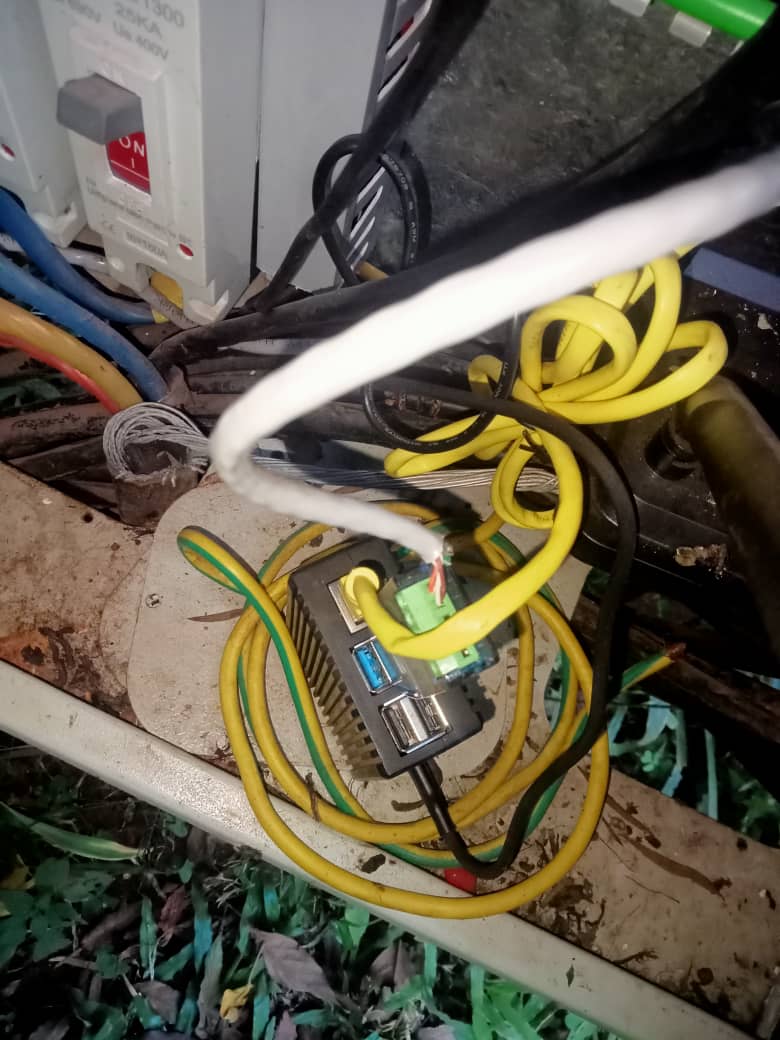
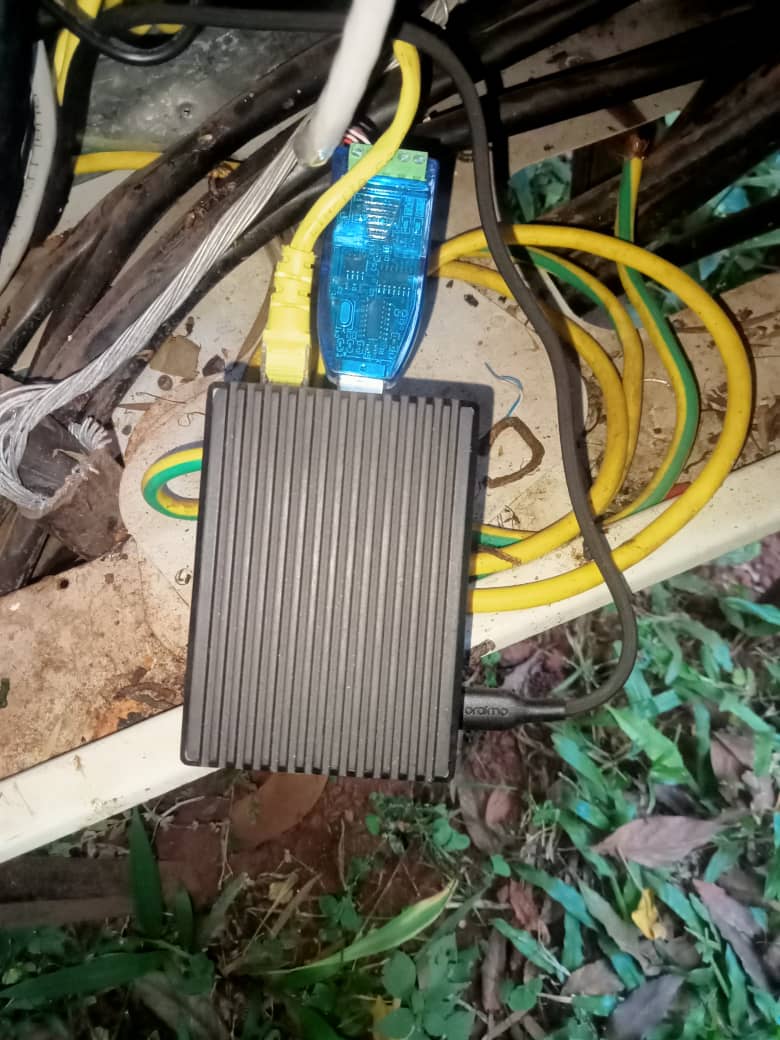
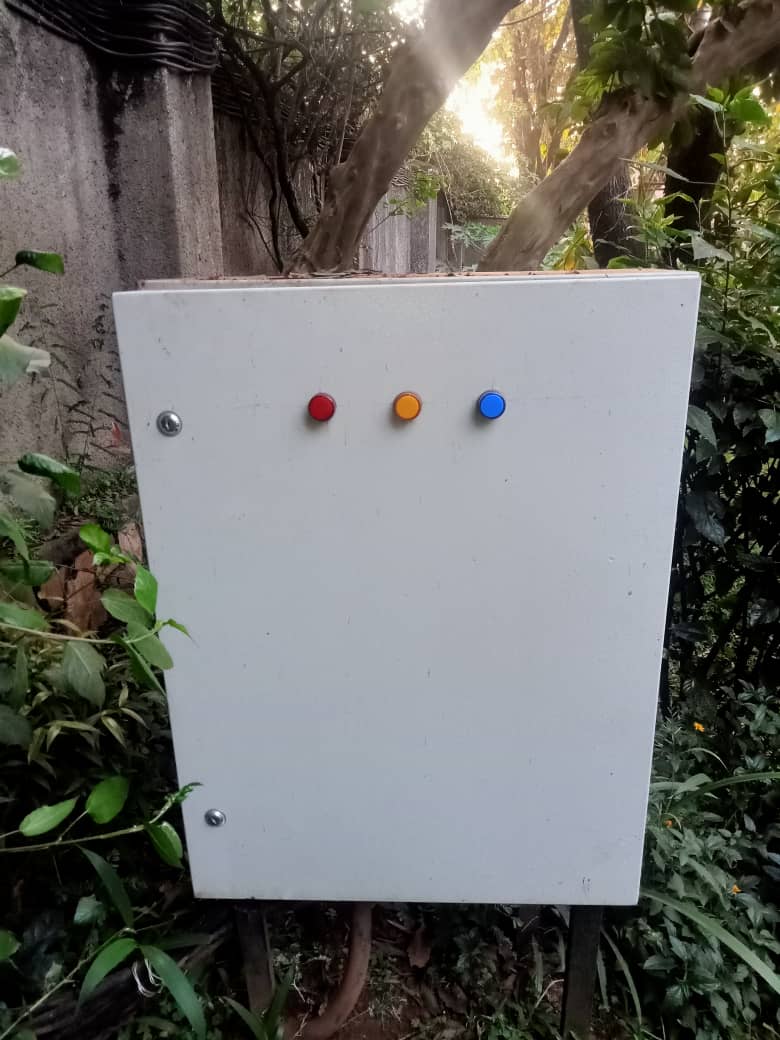
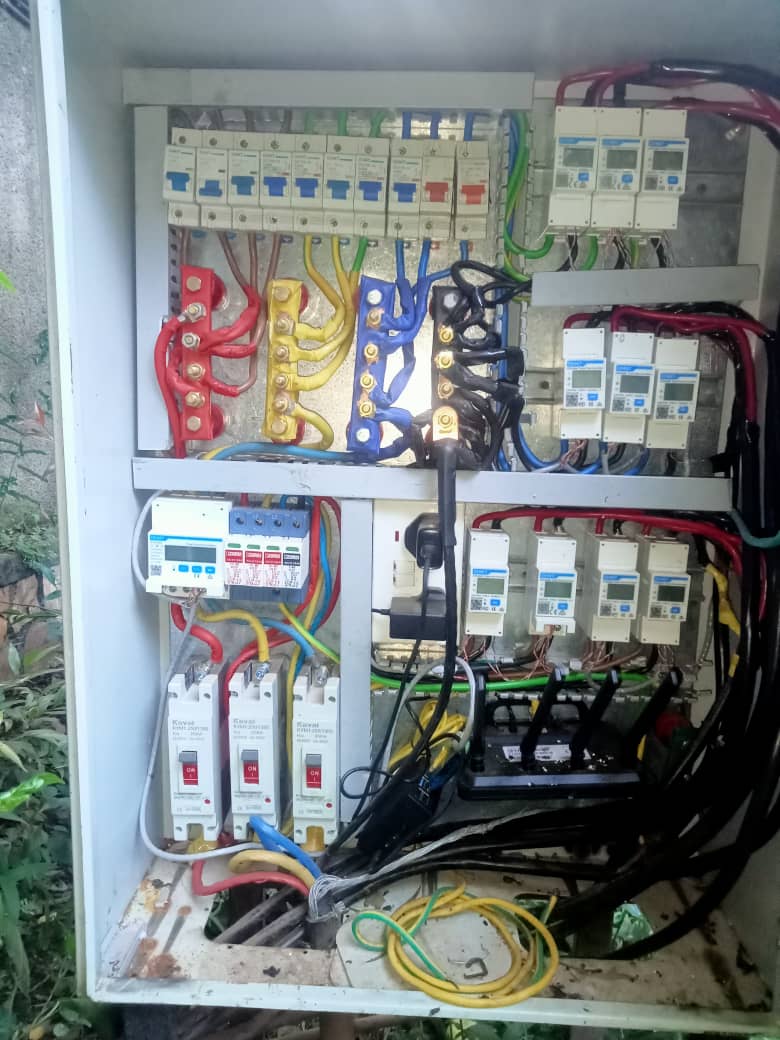
Key Learnings
Open Standards Enable Scalability
The pilot confirmed that open standards such as Modbus can support interoperability across multiple device types and vendors.
Communities Value Reliability
Participating households consistently identified reliability as a higher priority than simply having access to electricity.
Software is as Important as Hardware
The ability to monitor, orchestrate, and automate distributed energy resources is essential for scalable community microgrids.
Phased Adoption Reduces Risk
The Monitor → Backup → Backbone → Community Power Plant progression allows communities to adopt advanced energy services gradually while minimizing technical and financial risks.
Next Phase
The next phase of development will expand the solution from 10 households in Nansana to approximately 100 households in Garuga.
Key objectives include:
-
Development of an open-hardware controller based on the NPE X500 CM4 platform.
-
Deployment of additional battery and solar assets.
-
Expansion of smart metering infrastructure.
-
Enhancement of Microgrid OS capabilities.
-
Validation of autonomous microgrid operation.
-
Progression toward the Backbone phase of the Microgrid Cultivation Blueprint.
Long-Term Vision
NFE's long-term vision is to enable thousands of households across Africa to benefit from reliable, resilient, and increasingly abundant clean energy through community-owned microgrids.
The Nansana pilot represents the first step toward a scalable platform that combines:
-
Open-source software.
-
Open-hardware controllers.
-
Distributed energy resources.
-
Community ownership.
-
Autonomous microgrid operations.
By demonstrating these capabilities in a real-world environment, the pilot has established the technical and operational foundation for future deployments and broader adoption across Africa.
No comments to display
No comments to display